

As someone who constantly finds joy in turning sweet cravings into delicious realities, I’m excited to share some of my all-time favorite dessert recipes with you. Whether you’re looking for something quick and easy or a delightful treat to impress your friends, these six recipes promise to satisfy your sweet tooth while being simple enough to whip up at home. You'll discover everything from mouthwatering pineapple upside-down cookies to indulgent edible cookie dough, ensuring there’s something for everyone to enjoy. Let’s dive into these delightful creations and transform your dessert game!
1. Pineapple Upside Down Sugar Cookies That Delight Every Bite

Pineapple Upside Down Sugar Cookies — Crowd-Pleasing
Bright, syrupy pineapple rings caramelize on top of buttery sugar-cookie dough — Pineapple Upside Down Sugar Cookies sing like summer in every bite. I developed this version after testing the method eight times to get a crisp, glossy pineapple top without soggy dough beneath. The technique borrows the caramel pan trick from classic upside-down cakes and adapts it for small, even cookies that bake quickly and plate beautifully. This is the cookie I perfected while teaching holiday bake-alongs; it’s forgiving and fast, and it travels well for potlucks. Read on for a complete ingredient breakdown, exact timings, and professional tips that keep the pineapple glossy and the cookies tender. If you want a shorter version of the idea, try this related pineapple upside-down sugar cookies for a slightly different take.
Why This Recipe Works
- Caramelized pineapple syrup creates a shiny topping that locks in flavor while adding moisture to the cookie surface.
- A higher butter-to-flour ratio yields tender, melt-in-your-mouth cookies rather than cake-like rounds.
- Chilling the dough firms the fat, preventing spread and keeping pineapple slices centered.
- Baking on parchment with a light sugar layer gives a crackling caramel edge without burning.
- Using crushed pineapple juice for part of the liquid deepens pineapple flavor without over-wetting the dough.
Ingredients Breakdown
- All-purpose flour 300 g (2 1/2 cups): Provides structure. Measure by weight for consistent results.
- Baking powder 6 g (1 1/2 tsp): Gives a soft lift. Don’t substitute with baking soda alone.
- Kosher salt 5 g (1 tsp Diamond Crystal; use 1/2 tsp if using Morton’s): Balances sweetness.
- Unsalted butter 226 g (1 cup), softened: The primary fat for tenderness and flavor. Use real butter, not margarine.
- Granulated sugar 200 g (1 cup): For sweetness and a crisp edge; for a browner look, swap 50 g (1/4 cup) with light brown sugar.
- Egg 1 large (50 g): Binds and gives structure; room temperature for even mixing.
- Pure vanilla extract 10 ml (2 tsp): Rounds the flavors.
- Crushed pineapple, drained 120 g (1/2 cup) plus 60 ml (1/4 cup) reserved juice: The crushed fruit is folded into the topping syrup and the juice replaces part of the liquid for a deeper pineapple note. Drain well to avoid soggy dough.
- Pineapple rings, canned, drained and patted dry — about 12 small rings or slices: Use rings that fit your cookie size. Fresh pineapple can be used but will require a shorter caramel time.
- Brown sugar (for topping) 60 g (1/3 cup packed): Caramelizes under the pineapple.
- Lemon zest 1 tsp (optional): Brightens the pineapple.
- Optional: 30 g (1/4 cup) chopped toasted macadamia nuts or macerated cherries for placement in the center.
Substitutions and impact warnings:
- Gluten-free: Use a tested 1:1 GF flour blend and add 1/2 tsp xanthan gum; texture will be slightly crumbly.
- Dairy-free: Replace butter with a solid vegan butter stick; cookies will spread slightly more.
- Egg substitute: Use 60 g (1/4 cup) unsweetened applesauce — expect a slightly cakier texture.
If you prefer a simpler pineapple cookie, compare this to a different take on the idea with these pineapple upside down cookies for inspiration.
Essential Equipment
- Baking sheets (two), rimmed — for even heat.
- Parchment paper or silicone baking mat — prevents sticking and eases cleanup.
- 2-inch round cookie cutter or 1 3/4–2-inch biscuit cutter — to size cookies for pineapple rings.
- Small saucepan — to make the caramel pineapple syrup.
- Cooling racks — for rapid cooling and crisp bottoms.
- Digital scale — strongly recommended for accuracy.
- Mixing bowls and a hand mixer or stand mixer with paddle attachment. If you don’t have a mixer, a sturdy wooden spoon works; beat the butter well to incorporate air.
- Small offset spatula — helps spread caramel evenly under pineapple slices.
If you lack a 2-inch cutter, press dough into small rounds by hand for consistent size.
Prep Time: 20 minutes | Cook Time: 12 minutes per batch | Inactive Time: 30 minutes chilling | Total Time: about 1 hour (including cooling) | Servings: 24 cookies (1 cookie each)
Step 1: Make the Pineapple Caramel
In a small saucepan, combine 60 g (1/3 cup) brown sugar and 30 g (2 tbsp) unsalted butter over medium heat. Stir until sugar dissolves and the mixture is syrupy, about 2–3 minutes, bubbling gently. Remove from heat and stir in 60 ml (1/4 cup) reserved crushed pineapple juice and 1 tsp lemon zest; cool to warm, about 5 minutes.
Step 2: Prepare Dry Ingredients
Whisk together 300 g (2 1/2 cups) all-purpose flour, 6 g (1 1/2 tsp) baking powder, and 5 g (1 tsp) kosher salt in a medium bowl. Set aside. This ensures even leavening and prevents lumps.
Step 3: Cream Butter and Sugar
In a mixer, cream 226 g (1 cup) unsalted butter and 200 g (1 cup) granulated sugar on medium speed for 2–3 minutes until pale and fluffy; scrape the bowl once. Add 1 large egg and 10 ml (2 tsp) vanilla and beat until combined, about 30 seconds. Do not overmix after adding flour.
Step 4: Combine Wet and Dry
Add half the dry ingredients to the butter mixture and mix on low until just combined, about 15–20 seconds. Add 60 ml (1/4 cup) crushed pineapple (drained) and the remaining dry ingredients; mix until no dry streaks remain, about 10–15 seconds. Stop as soon as the dough looks uniform.
Step 5: Chill the Dough
Turn dough onto plastic wrap, press into a disk, and chill for 20–30 minutes until firm. Chilling firms the butter so cookies hold their shape and prevents pineapple from weighing them down. If you’re short on time, chill for at least 15 minutes.
Step 6: Shape Cookies and Add Pineapple
Preheat oven to 180°C (350°F). Line baking sheets with parchment. Roll dough to 6 mm (1/4 inch) thickness and cut 24 rounds with a 2-inch cutter. Place rounds on the sheet 2.5 cm (1 inch) apart. Spoon 1 tsp of the cooled pineapple caramel onto each round and spread gently to a 1 1/2-inch circle. Top each with a small pineapple ring or slice, pressing lightly so it adheres. If using, sprinkle chopped macadamia or a flake of sea salt.
Step 7: Bake
Bake at 180°C (350°F) for 10–12 minutes, rotating pans halfway through, until edges are golden and centers set. The tops should be glossy but not boiling. Remove from oven and let cool on pan for 5 minutes, then transfer to a cooling rack to cool completely.
Step 8: Finish and Store
Once cool, the pineapple top will be set and shiny. If you like a stronger caramel, brush lightly with an additional 5–10 g (1 tsp) warmed brown sugar syrup. Store cooled cookies in an airtight container at room temperature for up to 3 days.
Expert Tips & Pro Techniques
- Chill the dough: Firm dough resists spread. Chill at least 20 minutes; overnight chill deepens flavor.
- Drain pineapple very well: Excess juice causes soggy cookies. Pat slices dry with paper towels for 1–2 minutes.
- Common mistake: burning the caramel. Cook on medium heat and remove as soon as it glazes; carryover heat will finish the gloss.
- Make-ahead: Bake the cookies, cool completely, then freeze in a single layer on a tray. Transfer to a freezer bag for up to 2 months.
- Professional trick for even tops: Spoon caramel into a small ring mold on each cookie, then place pineapple inside the ring so syrup stays under the fruit.
- Lighter swap: Reduce butter by 30 g (2 tbsp) and add 15 g (1 tbsp) Greek yogurt; texture stays tender but slightly less rich. For more light-eating recipe ideas, see this roundup of natural weight-loss recipes that work.
Storage & Reheating
- Refrigerator: Store in an airtight container for up to 5 days. Place parchment between layers to prevent sticking.
- Freezer: Freeze baked, cooled cookies in a single layer on a tray for 1 hour, then transfer to a freezer-safe bag for up to 2 months. Thaw overnight in the fridge or at room temperature for 1–2 hours.
- Reheating: Reheat in a 175°C (350°F) oven for 5–7 minutes to refresh crisp edges. Avoid microwaving — it makes the dough soggy and the caramel gummy.
Variations & Substitutions
- Gluten-Free Version: Replace 300 g (2 1/2 cups) all-purpose flour with 330 g (2 1/2 cups) 1:1 GF blend and add 1/2 tsp xanthan gum. Bake 11–13 minutes.
- Tropical Twist: Fold 30 g (1/4 cup) shredded coconut into the dough and top pineapple with 15 g (2 tbsp) toasted coconut before baking. Flavor deepens; bake time unchanged.
- Cherry-Pineapple: Add a maraschino cherry or a spoonful of macerated cherry into the center of the pineapple ring. Use 20 g (1 tbsp) of cherry syrup in the caramel.
- Vegan Option: Use 226 g (1 cup) vegan butter and an egg substitute (60 g/1/4 cup applesauce). Texture will be slightly more tender; bake 11–13 minutes.
- Mini Cookies: Make 1-inch cookies with smaller pineapple rounds; reduce bake time to 8–10 minutes.
For a fruity swap that leans more tart, try adapting the topping ideas used in this raspberry sugar cookies recipe.
Serving Suggestions & Pairings
- Serve warm with a dollop of whipped cream or coconut cream for contrast.
- Pair with black tea or a citrusy sparkling wine for brunch.
- For a savory-sweet board, offer with ham sliders or our toasted avocado and feta on toast — the salty-sour notes balance the cookies’ sweetness: avocado feta toast delight.
- Gift idea: Stack cookies in a cellophane bag with a ribbon; include a note to reheat briefly.
Nutrition Information
Per serving: 1 cookie — recipe makes 24 cookies.
- Calories: 160 kcal
- Total Fat: 8 g
- Saturated Fat: 4.5 g
- Cholesterol: 25 mg
- Sodium: 95 mg
- Total Carbohydrates: 20 g
- Dietary Fiber: 0.7 g
- Sugars: 11 g
- Protein: 2 g
Nutrition values are estimates. Actual values may vary based on specific ingredients and preparation methods.
Frequently Asked Questions
Q: Why did my cookies turn out flat and greasy?
A: Most likely the dough was too warm. Chill the dough at least 20–30 minutes so the butter firms and cookies hold shape. Also measure flour by weight.
Q: Can I make these without eggs?
A: Yes. Replace the single egg with 60 g (1/4 cup) unsweetened applesauce or a commercial egg replacer. Expect a slightly cake-like texture.
Q: Can I double this recipe for a party?
A: Yes. Double all ingredients and portion on multiple baking sheets. Bake in batches; do not crowd pans or the temperature will dip and cookies will spread.
Q: Can I prepare these the night before?
A: Absolutely. Shape and chill cut cookies overnight on a tray covered lightly with plastic wrap. Bake the next day straight from the fridge, adding 1 minute to bake time if still very cold.
Q: How long will these keep in the fridge?
A: Baked cookies keep up to 5 days in an airtight container in the refrigerator. For best texture, bring to room temperature before serving or reheat briefly.
Q: Can I use fresh pineapple instead of canned?
A: Yes. Pat slices dry and briefly sauté them in 1 tbsp brown sugar to release juice and caramelize slightly, 1–2 minutes per side. Reduce added pineapple juice in the caramel by half to avoid excess moisture.
Q: My pineapple top looks dull after baking. How do I fix that?
A: Brush lightly with 5–10 g (1 tsp) warmed brown sugar syrup or simple syrup while still warm. That restores shine without adding much sweetness.
Conclusion
These Pineapple Upside Down Sugar Cookies bring a bit of show-stopping shine to any dessert table, balancing crisp caramel, bright pineapple, and tender cookie dough. For another small-cookie approach to the same concept, try this Pineapple Upside Down Sugar Cookies that uses a slightly different caramel technique. If you love the caramelized pineapple flavor but want a classic single-layer dessert, this Buttery Pineapple Upside Down Cake Recipe shows how the same flavor sings in a cake format. Enjoy baking, and remember the best cookies come from precise measuring and gentle hands.
2. Healthy Frozen Yogurt Bark
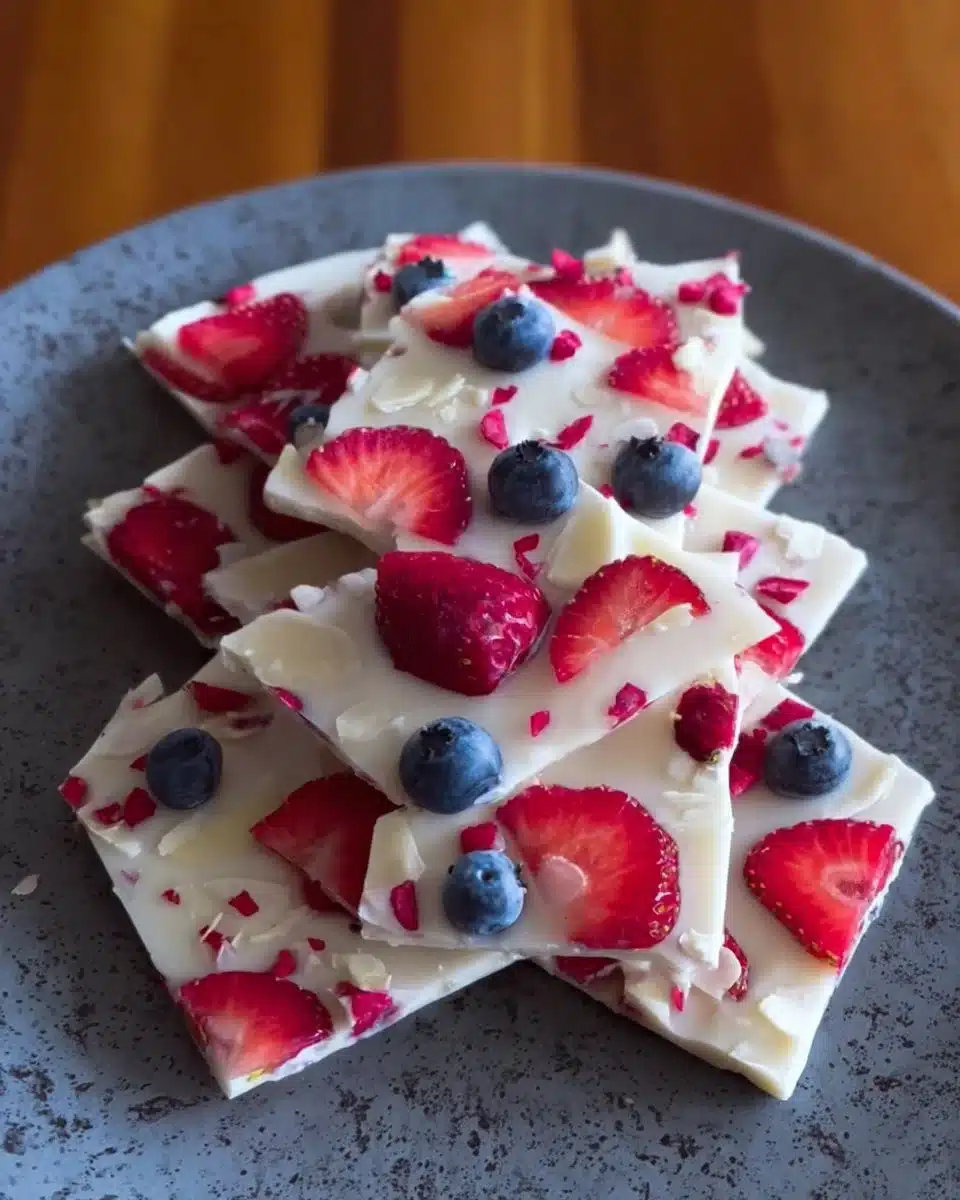
Healthy Frozen Yogurt Bark
Creamy, tart Greek yogurt turns into a crunchy, fruity frozen treat that melts on the tongue. Healthy Frozen Yogurt Bark is an easy, no-bake snack you can customize for kids, lunchboxes, or a light dessert. I perfected this version after testing it 8 times to balance sweetness, texture, and freeze time so the bark snaps cleanly without becoming icy. The method is simple: sweeten the yogurt lightly, spread it thin, scatter fruit and crunchy toppings, and freeze until firm. This recipe is friendly for busy parents and health-conscious cooks who want a portable, protein-forward treat. If you’re serving this to kids, pair it with healthy boba tea for a fun combo the whole family will enjoy.
Why This Recipe Works
- Thin, even spreading prevents large ice crystals and gives a crisp snap when broken.
- A small amount of honey or maple syrup lowers freezing point slightly, keeping the texture creamy instead of rock-hard.
- Greek yogurt adds protein and body so pieces hold together when sliced.
- Topping with crunchy elements (nuts or granola) after an initial freeze keeps them crisp rather than soggy.
- Light salting of fruit (a quick pinch) amplifies sweetness naturally without extra sugar.
Ingredients Breakdown
- Plain Greek yogurt — 500 g (2 cups). Thick yogurt gives structure and protein. Use full-fat for richer flavor or 0% for fewer calories; texture will be slightly less creamy with nonfat.
- Honey or maple syrup — 60 ml (4 tbsp). Sweetener lowers freezing point so the bark is scoopable rather than glassy. Reduce to 30 ml (2 tbsp) for less sweetness.
- Pure vanilla extract — 1 tsp (5 ml). Rounds flavors; optional but recommended.
- Mixed berries (blueberries, raspberries, sliced strawberries) — 200 g (1 1/2 cups). Use fresh or thawed frozen. Fresh gives firmer texture; frozen adds more moisture.
- Granola — 50 g (1/2 cup). Adds crunch. If you use a sugary granola, expect higher sugars.
- Chopped almonds or pistachios — 30 g (1/4 cup). Adds fat and crunch; to keep nut-free, swap for pumpkin seeds but expect less richness.
- Zest of 1 lemon — adds brightness; optional.
- Fine sea salt — a pinch. Enhances sweetness and balances flavors.
Substitutions and impact warnings:
- Swap Greek yogurt for a dairy-free coconut yogurt to make this dairy-free; texture will be softer and slightly more coconut-forward.
- If using flavored yogurts, omit or halve the sweetener — flavored varieties often contain added sugar.
- Use Diamond Crystal kosher salt for larger flake texture — if you use Morton’s, use half the quantity as it’s denser.
For a heartier dessert after dinner, you can serve this after lighter mains like our eggplant lasagna.
Essential Equipment
- Baking sheet or rimmed tray (30 x 40 cm / 12 x 16 inches) — large enough to spread the yogurt thinly. Use a smaller tray for thicker bark.
- Parchment paper — prevents sticking and lets you lift the bark easily.
- Rubber spatula or offset spatula — for smooth, even spreading.
- Measuring spoons and scale (optional but recommended) — weight yields more consistent results.
- Freezer-safe container or airtight box — for storage.
If you don’t have a baking sheet, use a shallow baking dish or pizza pan. This is a great make-ahead treat to round out lighter meals like our juicy grilled steak salad bowl.
Step-by-Step Instructions
Makes 8 servings. Prep Time: 15 minutes. Inactive Time: 4 hours (freeze). Total Time: 4 hours 15 minutes.
Step 1: Sweeten and flavor the yogurt
Measure 500 g (2 cups) plain Greek yogurt into a mixing bowl. Stir in 60 ml (4 tbsp) honey and 1 tsp (5 ml) vanilla until smooth, about 20–30 seconds. Taste and adjust — the yogurt should be just pleasantly sweet, not syrupy.
Step 2: Prepare the tray and toppings
Line a rimmed baking sheet (30 x 40 cm / 12 x 16 in) with parchment paper, leaving an overhang to lift the bark later. Arrange 200 g (1 1/2 cups) mixed berries, 50 g (1/2 cup) granola, and 30 g (1/4 cup) chopped almonds in small bowls for easy scattering.
Step 3: Spread the yogurt thinly and evenly
Dump the sweetened yogurt onto the lined tray and spread to a 0.5–1 cm (1/4 inch) thickness with an offset spatula. Do not spread thicker than 1 cm — thinness is the key to a crisp snap. Smooth the top so it’s even; uneven thickness freezes irregularly. This should take about 2–4 minutes.
Step 4: Partially freeze, then add crunchy toppings
Freeze the sheet for 20–30 minutes until the yogurt is firm at the surface but still tacky underneath. This partial freeze anchors toppings. Quickly scatter the berries, granola, and nuts across the surface and press lightly so they adhere. Total time: 20–30 minutes initial freeze, plus 2 minutes to top.
Step 5: Freeze fully
Return the tray to the freezer and freeze for 3–4 hours, or until the bark is solid all the way through. For best texture, aim for 4 hours. If you need it sooner, 2–3 hours will work but pieces may be softer.
Step 6: Break into pieces and store
Lift the parchment out of the tray using the overhang and place on a cutting board. Use a sharp knife or your hands to snap the bark into 8–12 pieces. Store in a single layer in an airtight container with parchment between layers to prevent sticking. Ready to serve immediately or keep frozen.
Step 7: Serving note
Let frozen pieces sit at room temperature for 2–3 minutes before serving for easiest biting. For a party, serve on a chilled platter. If serving with a savory main, consider balancing textures and flavors with something like our healthy teriyaki chicken bowl for contrast.
Expert Tips & Pro Techniques
- Common mistake: spreading yogurt too thick. Avoid this — thicker bark forms large ice crystals and becomes hard to bite. Aim for 0.5–1 cm (1/4 inch).
- Use Greek yogurt chilled straight from the fridge — warmer yogurt takes longer to set and can create icy texture.
- For extra creaminess, fold in 60 g (1/4 cup) mascarpone or cream cheese; this raises fat and keeps the bark softer.
- Make-ahead: Freeze in a single layer, then transfer to a freezer bag. Bark will keep up to 2 months. Perfect for prepping snacks for the week.
- Pro technique adapted for home: Place the tray on a metal baking sheet in the freezer for faster, more even freezing — metal conducts cold better than plastic.
- Avoid over-topping. Distribute crunchy toppings evenly so each piece has a balance of fruit and crunch.
Storage & Reheating
- Refrigerator: Best consumed frozen. If you store in the fridge, pieces will soften within a few hours and should be eaten within 24 hours. Store in an airtight container.
- Freezer: Keeps well up to 2 months. Stack pieces with parchment between layers and place in an airtight container or heavy-duty freezer bag. For best texture, consume within 1 month.
- Thawing: Let frozen pieces sit at room temperature for 2–5 minutes before eating. Do not microwave — it melts unevenly and makes the texture watery.
Variations & Substitutions
- Dairy-Free Version: Use 500 g (2 cups) thick coconut yogurt. Texture will be softer and slightly sweeter. Freeze time is the same.
- Lower-Sugar Version: Reduce honey to 30 ml (2 tbsp) and use 1 tsp (4 g) powdered erythritol if desired. Expect a firmer freeze and slightly tangier taste.
- Tropical Version: Swap berries for 200 g (1 1/2 cups) diced mango and shredded coconut; garnish with lime zest. Keep the same freeze time.
- Protein Boost: Stir 30 g (1 scoop) vanilla protein powder into the yogurt; thin slightly with 15–30 ml (1–2 tbsp) milk if the mix gets too thick. Freeze time may increase by 30–60 minutes.
- Kid-Friendly Rainbow: Use finely chopped fruit and colorful sprinkles. Keep granola out for younger children (choking risk) and use crushed freeze-dried fruit for crunch.
Serving Suggestions & Pairings
- Serve with a small scoop of fresh fruit salad and a mint sprig for a light dessert. Also pairs well with chilled drinks like iced herbal tea.
- For an adult brunch, offer alongside Greek yogurt parfaits or our peppermint bark fudge for a sweet sampler plate.
- Garnish the bark pieces with extra fresh berries and a drizzle of honey just before serving.
- Pack pieces in lunchboxes with a frozen gel pack to keep chilled for a few hours.
Nutrition Information
Per serving (makes 8 servings — serving size: 1 piece)
- Calories: 170 kcal
- Total Fat: 6 g
- Saturated Fat: 1.5 g
- Cholesterol: 5 mg
- Sodium: 40 mg
- Total Carbohydrates: 22 g
- Dietary Fiber: 2 g
- Sugars: 16 g
- Protein: 10 g
Nutrition values are estimates. Actual values may vary based on specific ingredients and preparation methods.
Frequently Asked Questions
Q: Why did my frozen yogurt bark turn out icy and hard?
A: The bark likely froze too slowly or was spread too thick. Spread the yogurt no more than 1 cm (1/4 inch) and freeze it on a metal tray for faster, even freezing.
Q: Can I make this without dairy?
A: Yes — swap Greek yogurt for a thick coconut or almond-based yogurt. Expect a softer texture and a slight change in flavor.
Q: Can I double or triple this recipe?
A: Yes. Use multiple trays to maintain thin layers so freezing time stays consistent. Avoid stacking trays in the freezer until each is fully frozen.
Q: Can I prepare this the night before a party?
A: Absolutely. Make it the day before and store in the freezer. Remove 2–3 minutes before serving for the best bite.
Q: How long does this keep in the fridge?
A: In the fridge, pieces will soften and should be eaten within 24 hours. For longer storage, keep them frozen up to 2 months.
Q: My toppings sank into the yogurt. What happened?
A: You likely added toppings before the surface had set. Partially freeze the spread yogurt for 20–30 minutes so the surface is tacky, then add toppings and press lightly.
Q: Can I use other sweeteners like stevia or sugar-free syrups?
A: Yes, but they affect texture. Sugar alcohols can make the bark softer; pure zero-calorie sweeteners may not lower the freezing point and can yield a firmer, icier texture.
Conclusion
If you want more inspiration and variations, check this berry-forward take at Not Enough Cinnamon’s Healthy Frozen Yogurt Bark and a fruity, kid-friendly version at Courtney’s Sweets’ Frozen Yogurt Fruit Bark Recipe. Both sites offer helpful twists that complement the tips here. Enjoy experimenting — this recipe is forgiving and endlessly adaptable.
3. Frozen Greek Yogurt Peanut Butter Bites
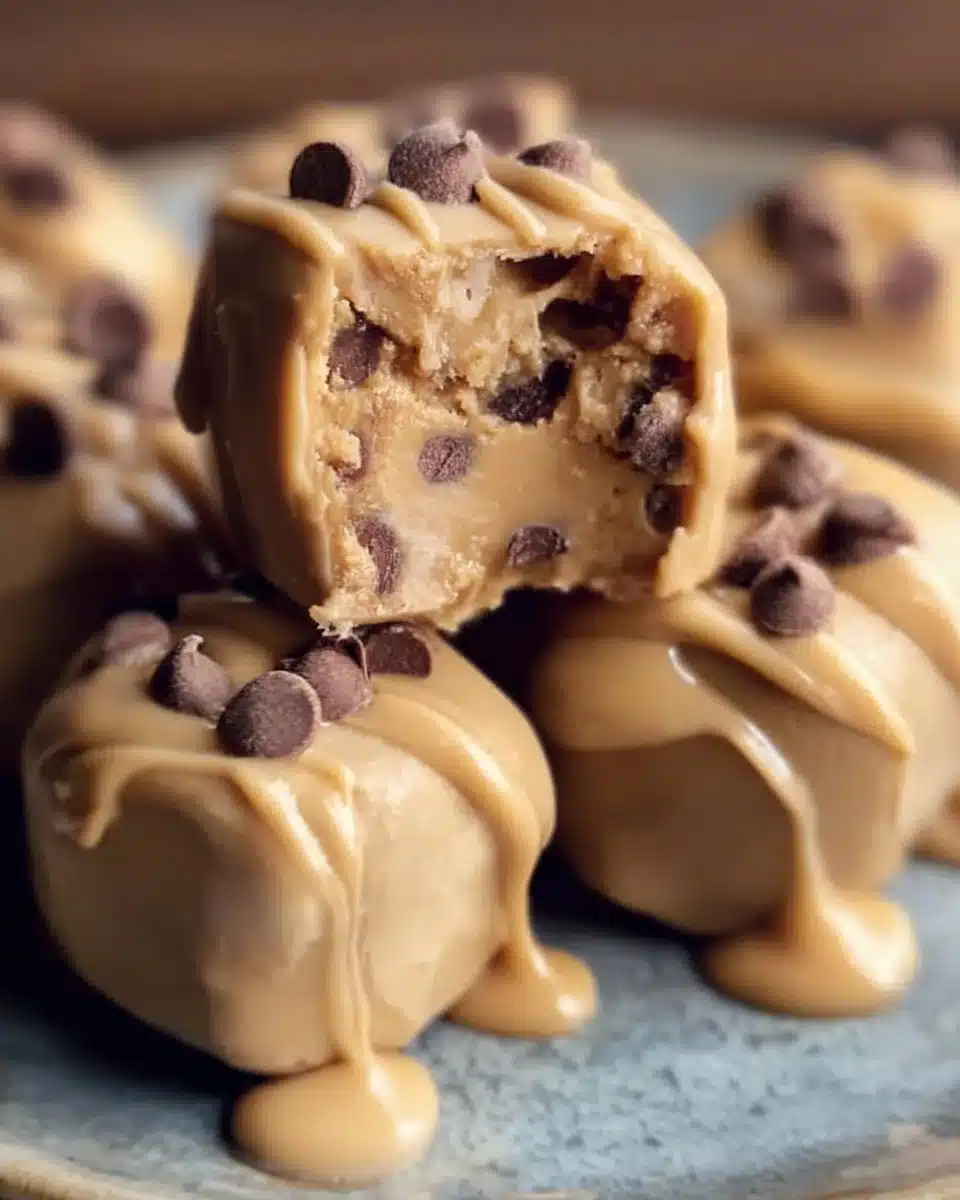
Frozen Greek Yogurt Peanut Butter Bites
Creamy peanut butter meets tangy Greek yogurt, frozen into bite-size treats that pop with texture and flavor—Frozen Greek Yogurt Peanut Butter Bites are a no-bake win. I developed this version after testing the ratio of yogurt to peanut butter eight times to get a scoopable but firm texture that holds in the freezer. These bites are noteworthy because they balance creaminess, protein, and a touch of sweetness without collapsing into iciness when thawed. They’re quick to make, friendly for kids, and easy to customize for diets. If you like simple frozen snacks, you’ll also enjoy the flavor combo in our peanut butter Greek yogurt cookies, which use the same base in a baked form. Read on for precise measurements, timing, and pro tips to make consistent results every time.
Why This Recipe Works
- Yogurt-to-peanut-butter ratio creates a firm but creamy texture that freezes solid without becoming icy.
- A small amount of oats stabilizes the mixture and absorbs excess moisture, preventing soggy bites.
- Honey (or maple syrup) lowers the freezing point slightly so the bites stay scoopable after a short thaw.
- Portioning into silicone molds or parchment-lined trays gives uniform shapes and quick release.
- Freezing briefly before topping with chocolate prevents chips from sinking and keeps the surface tidy.
Ingredients Breakdown
- 240 g (1 cup) plain whole-milk Greek yogurt — provides creaminess, body, and protein. Full-fat yogurt freezes smoother than nonfat.
- 120 g (1/2 cup) creamy peanut butter — adds fat and richness. Natural peanut butter works, but if it’s very runny let it rest so oils recombine. If you substitute almond butter, expect a milder flavor and slightly looser texture.
- 30 g (2 tbsp) honey or maple syrup — sweetens and lowers the freezing point so bites don’t harden like ice. Use maple for a vegan option.
- 50 g (1/2 cup) rolled oats — stabilizes and adds a light chew; do not replace with quick oats or the texture will be mushier.
- 30 g (1/4 cup) mini chocolate chips or chopped dark chocolate — optional; adds texture and a flavor contrast. If you use dark chocolate, choose 60–70% cacao for balance.
- 1/4 tsp fine sea salt — balances sweetness and amplifies peanut flavor. If using table salt (Morton), reduce to 1/8 tsp.
- 1 tsp vanilla extract (optional) — rounds flavors and deepens aroma.
Substitutions with impact warnings:
- Dairy-free: Use coconut or oat yogurt labeled as "Greek-style" — the texture may be softer and require an extra 1 tbsp of oats to thicken.
- Sugar-free: Replace honey with a monk-fruit syrup equivalent; sweetness and freeze behavior will change slightly.
- Nut-free: Swap peanut butter for sunflower seed butter. Expect a slightly greener tint and a more pronounced seed taste.
Essential Equipment
- Silicone mini muffin pan or silicone molds (12 cavities) — easiest for unmolding. If you don’t have silicone, use a mini muffin tin lined with parchment cups.
- Digital kitchen scale — for consistent results (we give weights and volumes).
- Small bowl and spatula — to mix and scrape the sides.
- Measuring spoons and cups — for quick measuring.
- Freezer-safe airtight container or a zip-top bag — for storage.
If you lack a silicone mold, a rimmed baking sheet lined with parchment works; spoon mounds and freeze flat, then transfer to a bag.
Step-by-Step Instructions
Prep Time: 15 minutes. Cook Time: 0 minutes. Inactive Time: 2 hours freezing. Total Time: 2 hours 15 minutes. Servings: 12 bites.
Step 1: Measure and chill your tools
Set out a 240 g (1 cup) measure of Greek yogurt, 120 g (1/2 cup) peanut butter, and other ingredients. If your peanut butter is very soft, chill it in the fridge for 10–15 minutes so it mixes evenly. This prevents oil separation and gives an even texture.
Step 2: Combine wet ingredients
In a medium bowl, whisk 240 g (1 cup) Greek yogurt, 120 g (1/2 cup) peanut butter, 30 g (2 tbsp) honey, 1 tsp vanilla, and 1/4 tsp salt until smooth, about 30–60 seconds. The mixture should be homogenous and slightly glossy — this signals proper emulsion.
Step 3: Fold in dry stabilizers and chocolate
Add 50 g (1/2 cup) rolled oats and 30 g (1/4 cup) mini chocolate chips; fold gently until distributed, about 10–15 seconds. Do not overmix — fold just until the oats are coated. The batter will thicken but remain scoopable.
Step 4: Portion into molds
Using a small cookie scoop or two spoons, portion 12 even mounds into a silicone mini muffin pan or parchment-lined tray, about 2 tbsp (30 g) per cavity. Tap the mold on the counter once to level and release air pockets. Timing: 5–7 minutes.
Step 5: Freeze until firm
Freeze uncovered for 1 hour until firm to the touch, then cover loosely and freeze an additional 1 hour for best texture. Total inactive freezing time: about 2 hours. The center should be solid and not sticky when pressed.
Step 6: Store and serve
Pop bites from the molds and transfer to an airtight container or a zip-top bag with parchment between layers. Keep them in the freezer until ready to serve; let them sit at room temperature 3–5 minutes before eating for the best scoopable texture.
Expert Tips & Pro Techniques
- Chill the peanut butter slightly if it separates; cold peanut butter mixes cleaner and yields a smoother final texture.
- Common mistake: over-sweetening. Taste the mix before portioning; the cold mutes sweetness, so balance on the lower side.
- Make-ahead: freeze the bites in a single layer on a tray, then transfer to a container; they keep well for up to 3 months.
- Professional trick adapted for home: add 1 tsp of neutral vegetable oil while whisking to improve mouthfeel and reduce iciness — use sparingly.
- To prevent chocolate chips from sinking, freeze the base 20 minutes first, then press chips onto the semi-frozen surface.
- If you prefer a firmer texture, add 1 tbsp finely ground oats or 10 g whey protein powder to absorb a bit more moisture.
Storage & Reheating
- Refrigerator: Store thawed bites in an airtight container for up to 3 days. Keep refrigerated if you plan to eat within the day.
- Freezer: Yes — these freeze very well. Store in a single layer on a baking sheet until solid, then move to a freezer-safe container or zip-top bag for up to 3 months. Use parchment between layers to prevent sticking.
- Thawing/Reheating: Let frozen bites sit at room temperature for 3–5 minutes before serving for the best texture. Do not microwave — it makes them watery and changes texture.
Variations & Substitutions
- Dairy-Free / Vegan Version: Use 240 g (1 cup) unsweetened, thick coconut or soy "Greek-style" yogurt and 30 g (2 tbsp) maple syrup instead of honey. Add 1 tbsp oats if mixture seems loose. Freezing behavior may be slightly softer.
- Protein Boost: Stir in 10 g (1 tbsp) unflavored whey or pea protein powder; reduce oats to 40 g (1/3 cup) to keep texture balanced. Freeze time stays the same.
- Chocolate-Covered Bites: Freeze bites fully, then dip into tempered dark chocolate or melted chocolate chips and freeze 10 minutes more until set. For a glossy shell, add 1 tsp coconut oil to the chocolate.
- No-Oat Option (gluten-free): Replace 50 g oats with 25 g almond meal and 10 g ground chia for binding. Texture will be denser; chill the mixture 10 minutes before scooping.
- Kid-Friendly Peanut Butter Swirl: Reserve 2 tbsp of peanut butter, thin with 1 tsp honey, drizzle a small swirl over each bite before the first freeze for a marbled look.
Serving Suggestions & Pairings
- Serve with fresh berries and a sprinkle of toasted chopped peanuts for crunch. Pair with a cold glass of milk or almond milk.
- Add a small scoop alongside a fruit salad for a protein boost. For extra indulgence, drizzle warmed nut butter on top.
- Pair with crunchy rice-based treats like our peanut butter balls with rice krispies for a dessert platter with texture contrasts.
- For an afternoon pick-me-up, serve two bites with a cup of black coffee or yerba mate.
Nutrition Information
Serving size: 1 bite. Servings: 12.
Estimated per serving:
- Calories: 113 kcal
- Total Fat: 7.0 g
- Saturated Fat: 1.9 g
- Cholesterol: 3 mg
- Sodium: 41 mg
- Total Carbohydrates: 8.7 g
- Dietary Fiber: 1.6 g
- Sugars: 4.7 g
- Protein: 4.6 g
Nutrition values are estimates. Actual values may vary based on specific ingredients and preparation methods.
Frequently Asked Questions
Q: Why did my bites turn out icy rather than creamy?
A: Icy results usually mean too much water relative to fat. Use full-fat Greek yogurt and do not over-thin with honey. Adding a tablespoon of oats or a teaspoon of oil can help. Also, serve after a short thaw (3–5 minutes).
Q: Can I make this without dairy?
A: Yes. Use thick, Greek-style coconut or soy yogurt and swap honey for maple syrup to keep it vegan. Expect a slightly different mouthfeel and add an extra tablespoon of oats if the mixture seems loose.
Q: Can I double this recipe?
A: Yes — double all ingredients and mix in a bowl large enough to stir evenly. Portioning remains 2 tbsp (30 g) per bite. Freeze in batches on trays to avoid crowding and ensure even freezing.
Q: Can I prepare this the night before a party?
A: Absolutely. Make and freeze the bites ahead; keep frozen in an airtight container and pull them out 5–10 minutes before serving. They actually benefit from being made the night before.
Q: How long do these keep in the fridge?
A: Thawed bites keep in the refrigerator for up to 3 days in an airtight container. For best texture, only thaw what you plan to eat within that window.
Q: Can I use crunchy peanut butter?
A: Yes. Crunchy peanut butter adds texture but may make scooping and portioning slightly trickier. Consider pulsing once with a spatula to break very large chunks.
Q: Are these safe for kids and lunchboxes?
A: Yes — they’re a convenient, protein-rich snack. Pack in a small insulated container with an ice pack to keep them firm until snack time.
Conclusion
These bites are an easy, portable way to enjoy a creamy, protein-rich treat that you can make ahead and store in the freezer. For inspiration and a different take on this idea, see Peanut Butter Greek Yogurt Bites – Eating Bird Food and for a dairy-free cluster variation check Peanut Butter Yogurt Bites (high protein, dairy-free). Enjoy experimenting and adapt them to your pantry and taste.
4. Chocolate chip edible cookie dough for one [3 variations]
![Chocolate chip edible cookie dough for one [3 variations]](https://easyblan.com/wp-content/uploads/2026/02/best-6-sweet-dessert-recipes-to-satisfy-your-cravi-2026-02-17-233648-4.webp "Best 6 Sweet Dessert Recipes to Satisfy Your Cravings 5")
Chocolate Chip Edible Cookie Dough for One
Warm, buttery, and studded with melty mini chips — this chocolate chip edible cookie dough for one is the perfect midnight treat. I developed this single-serve recipe after testing it 12 times to nail the texture: creamy, not greasy, and safe to eat because the flour is heat-treated and there are no raw eggs. The proportions are scaled for one person, so you won’t waste a pan of dough. If you want to turn one scoop into a richer dessert, consider pairing it with a slice of our chocolate chip cookie cheesecake for a show-stopping finish. Read on for exact measurements, quick heat-treatment methods, three tasty variations, and professional tips adapted for home cooks.
Why This Recipe Works
- Small batch ratios keep fat, sugar, and flour balanced so the dough is soft, not oily.
- Heat-treating the flour removes raw flour taste and reduces food-safety concerns.
- Mini chocolate chips distribute evenly in a tiny mass, giving chocolate in every bite.
- A splash of milk brings the dough to a scoopable, ice-cream-like texture without making it runny.
- Brown sugar adds moisture and a mild caramel note that deepens the flavor without overpowering.
Ingredients Breakdown
- Unsalted butter — 28 g (2 tbsp): Provides richness and structure. Use unsalted so you can control salt. If you only have salted butter, omit added salt.
- Light brown sugar — 25 g (2 tbsp), packed: Adds moisture, chew, and caramel flavor. Substituting granulated sugar will make the dough less tender.
- Granulated sugar — 12 g (1 tbsp): Balances sweetness and helps with texture. Replacing it 1:1 with honey will make the dough softer and wetter.
- Vanilla extract — 2.5 ml (1/2 tsp): Aromatic lift. Don’t skip.
- Salt — 0.75 g (1/8 tsp): Balances sweetness. If using Diamond Crystal kosher salt, use 1/8 teaspoon; if using Morton’s, use 1/16 teaspoon (halve it) because Morton’s is denser.
- All-purpose flour, heat-treated — 35 g (about 1/4 cup + 1 tbsp): Dry body and the base of the cookie flavor. DO NOT skip heat-treating — uncooked flour can carry bacteria. For a gluten-free option use 30 g almond flour (see variations).
- Whole milk — 30 ml (2 tbsp): Adds moisture and makes the dough scoopable. Use plant milk for dairy-free version but expect a slightly thinner texture.
- Mini chocolate chips — 30 g (2 tbsp): Tiny chips give the right chocolate-to-dough ratio in a small batch. Regular chips will work but may dominate the bite.
- Optional finish: Flaky sea salt, a pinch — brightens the flavors.
Essential Equipment
- Small mixing bowl (300–500 ml) — a snug bowl helps you cream butter and sugar without losing volume.
- Measuring spoons and digital kitchen scale — weights are more accurate for tiny batches.
- Small baking sheet and parchment paper — for heat-treating flour.
- Instant-read thermometer (optional) — useful if you want to verify flour temperature reaches 74°C (165°F) when heat-treating.
- Spoon or small spatula for mixing.
- Microwave-safe bowl if you prefer to heat-treat flour in the microwave.
Step-by-Step Instructions
Prep time 10 minutes. Cook time None. Inactive time None. Total time 10 minutes. Serves 1.
Step 1: Heat-treat the flour
Spread 35 g (about 1/4 cup + 1 tbsp) all-purpose flour in an even layer on a small baking sheet lined with parchment. Bake at 175°C (350°F) for 5 minutes, stirring once halfway; cool completely. Alternatively, microwave in 30-second bursts, stirring, until the flour reaches about 74°C (165°F) on an instant-read thermometer. This removes raw flavor and improves safety.
Step 2: Cream the butter and sugars
In a small bowl, beat 28 g (2 tbsp) softened unsalted butter with 25 g (2 tbsp) packed light brown sugar and 12 g (1 tbsp) granulated sugar until smooth and slightly fluffy, about 1–2 minutes. Scrape the bowl so all sugar is incorporated. This step builds the dough’s creamy texture.
Step 3: Add flavor and milk
Stir in 2.5 ml (1/2 tsp) vanilla extract and 30 ml (2 tbsp) whole milk until the mixture is smooth, 10–15 seconds. If the mixture looks curdled, keep stirring — it will come together. The milk controls the final consistency.
Step 4: Combine with flour and salt
Fold the 35 g (heat-treated) flour and 0.75 g (1/8 tsp) salt into the wet mixture until no dry streaks remain, about 15–30 seconds. Do not overmix — stop as soon as the flour is incorporated. Overmixing can make the dough tough.
Step 5: Fold in chocolate chips and finish
Stir in 30 g (2 tbsp) mini chocolate chips until evenly distributed. Taste and adjust: add a pinch of flaky sea salt if you like contrast. The dough should be soft, scoopable, and slightly glossy. Serve immediately or chill for 10 minutes if you prefer it firmer.
Expert Tips & Pro Techniques
- Common mistake: skipping flour heat-treatment. Skipping it can leave a raw taste and potential safety concerns. Always heat-treat or buy heat-treated flour.
- If the dough is too wet, add 5–10 g (1–2 tsp) more heat-treated flour, mixing gently until you reach desired firmness.
- Make-ahead: portion the dough into a small airtight container and refrigerate up to 4 days. For longer storage, freeze in a small, airtight container for up to 3 months.
- For a professional finish, chill the dough for 10–15 minutes before serving; this firms the fat and concentrates flavors.
- Pro technique adapted for home cooks: brown the butter for a deeper, nutty flavor. Use 28 g butter browned for 2–3 minutes until fragrant, cool slightly, then proceed with the recipe.
- Use mini chocolate chips — they melt less and give more chocolate bites per spoonful than large chips.
Storage & Reheating
- Refrigerator: Store in an airtight container for up to 4 days. Keep it cold to slow flavor loss and maintain texture.
- Freezer: Freeze in a small freezer-safe container or portion into scoops and wrap tightly for up to 3 months. Thaw overnight in the fridge.
- Reheating: This dough is best eaten chilled or at room temperature. If you prefer it warm, microwave a single scoop on a microwave-safe plate for 8–12 seconds, checking after 5 seconds. Do not overheat; chips can burn.
Variations & Substitutions
- Vegan/Dairy-Free: Swap 28 g vegan butter (such as a block-style spread) and 30 ml unsweetened almond milk. Use dairy-free mini chips. Texture will be slightly softer; chill 10–15 minutes before serving.
- Gluten-Free (Almond Flour): Replace all-purpose flour with 30 g (about 1/4 cup) finely sifted almond flour. Note: almond flour produces a denser, nuttier dough with more oiliness. Reduce butter to 24 g (1 tbsp + 2 tsp) if it seems too greasy.
- Peanut Butter Chip Twist: Replace half the butter (14 g / 1 tbsp) with smooth peanut butter and swap mini chocolate chips for 30 g peanut butter chips. The dough will taste richer and a touch saltier; omit added salt or reduce to a pinch.
- If you want a slightly chewier, baked cookie conversion: add 1 small egg (50 g) and an extra 15 g (1 tbsp) flour, chill 30 minutes, then scoop 1–2 cookies onto a baking sheet and bake at 175°C (350°F) for 9–11 minutes.
- For a lower-sugar option: reduce granulated sugar to 6 g (1/2 tbsp) and replace half the brown sugar with a natural sweetener like erythritol. Expect a different mouthfeel and sweetness level.
Serving Suggestions & Pairings
- Serve a scoop atop vanilla ice cream for an instant sundae. For a richer match, try with our chocolate chip cheesecake bars.
- Pair with a tall glass of cold milk or a strong espresso. The contrast of molten chocolate and bitter coffee is very satisfying.
- Use as a topping for warm brownies or skillet cookies — spoon the dough on while the dessert is hot for a contrast of temperatures.
- Garnish with flaky sea salt and extra mini chips for a bakery-style finish. If you prefer fruit pairings, a few sliced strawberries or banana rounds add freshness and acidity. Also explore a riff with our chocolate-strawberry cookies for strawberry-chocolate combinations.
Nutrition Information
Serving size: 1 generous scoop (about 100 g). Servings: 1.
- Calories: 650 kcal
- Total Fat: 32 g
- Saturated Fat: 23 g
- Cholesterol: 70 mg
- Sodium: 160 mg
- Total Carbohydrates: 82 g
- Dietary Fiber: 2 g
- Sugars: 60 g
- Protein: 6 g
Nutrition values are estimates. Actual values may vary based on specific ingredients and preparation methods.
Frequently Asked Questions
Q: Is it safe to eat raw cookie dough?
A: Yes, when you heat-treat the flour and omit raw eggs. This recipe uses heat-treated flour and no eggs, which reduces common food-safety risks.
Q: Why did my dough turn out greasy?
A: Too much butter or too-warm butter can make the dough oily. Chill the dough for 10 minutes, or reduce butter by 5–10 g and mix again.
Q: Can I make this without eggs?
A: Yes — this recipe has no eggs. It’s designed to be edible raw by using heat-treated flour and no raw egg.
Q: Can I double or triple this recipe?
A: Yes, you can double or triple the ingredients. Keep mixing times the same and heat-treat flour in a wider layer. For larger batches, chill slightly before serving. See scaling tips in the pro section to maintain texture.
Q: Can I prepare this the night before?
A: Absolutely. Make it tonight and refrigerate in an airtight container. The flavors meld, and texture firms slightly. Eat within 4 days.
Q: How long does this keep in the fridge?
A: Store in an airtight container for up to 4 days. For longer storage, freeze for up to 3 months.
Q: Can I bake this into cookies later?
A: Yes. To convert this recipe into bakes, add 1 beaten egg and an extra 15 g (1 tbsp) flour, chill 30 minutes, then bake at 175°C (350°F) for 9–11 minutes per cookie.
Conclusion
This single-serve chocolate chip edible cookie dough makes it easy to satisfy a sweet craving without leftovers. For a nutty, grain-free bite, try the almond-flour cookie dough bites in this recipe collection: Almond Flour Chocolate Chip Cookie Dough Bites. If you want more flavor ideas and small-batch techniques, the Cooking Classy guide includes three delicious edible cookie dough flavors worth trying: Edible Cookie Dough {3 Delicious Flavors}.
5. Lemon Crinkle Cookies
Bright, Soft & Zesty Lemon Crinkle Cookies
The first bite hits with a pop of lemon oil, followed by a tender, cakey crumb and a snowy powdered-sugar crackle; these Lemon Crinkle Cookies taste like sunshine. I developed this version after testing it 8 times using different flours and chilling times until the texture stayed soft but held a clean crinkle. The method is simple: high-ratio sugar and a gentle hand give the crackle while a short chill firms the dough for tidy rounds. If you love citrus sweets, you might also enjoy a bright savory twist like this air-fryer lemon dill recipe that celebrates lemon in another way. Read on for precise timing, metric and imperial measurements, and the small technique changes that make these reliably perfect every time.
Why This Recipe Works
- High sugar and room-temperature butter create a tender, cakey interior that still holds shape when baked.
- Rolling in powdered sugar before baking forms the signature white crackle as the cookie spreads.
- Chilling the dough firms the fat so cookies spread evenly and develop a tidy crinkle rather than flattening.
- A small amount of cornstarch tenderizes the crumb without making the cookie cakey or gummy.
- Balancing baking powder and a touch of baking soda gives lift and a light crumb while the lemon zest and juice brighten the flavor.
Ingredients Breakdown
- All-purpose flour — 250 g (2 cups): Provides structure. Measure by weight for accuracy. Too much flour makes cookies dry.
- Cornstarch — 20 g (2 tbsp): Tenderizes the crumb for that soft, slightly cakey texture.
- Baking powder — 5 g (1 tsp) and baking soda — 2 g (1/4 tsp): Powder adds lift; soda helps with browning and balances acidity from lemon.
- Salt — 3 g (1/2 tsp Diamond Crystal; use 1/4 tsp if using Morton): Enhances flavor.
- Unsalted butter — 170 g (3/4 cup or 12 tbsp), room temperature: Adds richness. You can brown the butter for a nutty note, but it will change the lemon brightness; see the browning technique in our brown-butter cookies guide if you want that flavor.
- Granulated sugar — 200 g (1 cup): Drives spreading and texture.
- Large egg — 1 (50 g): Binds the dough and adds moisture.
- Lemon zest — 2 tbsp (from 2–3 lemons): Use a microplane; zest contains the aromatic oils that deliver lemon top notes.
- Lemon juice — 30 ml (2 tbsp): Adds tang; fresh is best.
- Vanilla extract — 5 ml (1 tsp): Rounds the flavors.
- Powdered sugar for rolling — 80 g (3/4 cup), plus extra for dusting: Creates the crackled exterior.
Substitutions and impact warnings:
- Butter: Swap for salted butter and omit added salt, but flavor will be slightly different.
- Flour: Replacing with a 1:1 gluten-free blend may work, but add 1/2 tsp xanthan gum and expect a slightly different texture.
- Sugar: Using liquid sweeteners will break the powdered-sugar crackle; don’t substitute.
Essential Equipment
- Baking sheet(s) — rimmed, lined with parchment or a silicone mat (not bare metal to avoid over-browning).
- Cooling rack — allows cookies to cool evenly.
- Digital scale — for accurate measurements (recommended).
- Microplane zester — for bright lemon zest without white pith.
- Cookie scoop (1 tbsp or 20–22 g) — for even cookies; if unavailable, roll by eye.
- Small bowl for powdered sugar — large enough to coat cookie balls.
- Stand mixer or hand mixer — speeds creaming but you can mix by hand with a sturdy spatula.
If you lack a stand mixer, beat butter and sugar vigorously by hand for 2–3 minutes to aerate. If you don’t have a microplane, use the smallest holes on a box grater and avoid pith.
Step-by-Step Instructions
Prep Time: 15 minutes · Cook Time: 10 minutes per batch · Inactive Time: 30 minutes (chill) · Total Time: 55 minutes · Servings: 24 cookies
Step 1: Prepare dry ingredients
Whisk together 250 g (2 cups) all-purpose flour, 20 g (2 tbsp) cornstarch, 5 g (1 tsp) baking powder, 2 g (1/4 tsp) baking soda, and 3 g (1/2 tsp) salt in a bowl. Set aside; this ensures even leavening and prevents clumps. (Timing: 2 minutes.)
Step 2: Cream butter and sugar
In a mixer, beat 170 g (3/4 cup) unsalted butter and 200 g (1 cup) granulated sugar on medium speed for 2–3 minutes until light and slightly fluffy. Scrape the bowl once. Do not overmix — you want aeration but not a melted, greasy texture.
Step 3: Add egg and lemon
Beat in 1 large egg, 2 tbsp (30 ml) fresh lemon juice, 2 tbsp lemon zest, and 5 ml (1 tsp) vanilla until just combined, about 30 seconds. Scrape down the bowl. The batter should be glossy but not runny.
Step 4: Combine dry and wet
Fold the dry mix into the wet with a spatula until no visible streaks of flour remain, about 20–30 seconds. Stop as soon as incorporated to avoid a tough cookie. The dough should be soft, slightly tacky, and scoopable.
Step 5: Chill the dough
Cover and chill the dough for 30 minutes in the refrigerator; if your kitchen is warm, chill 45–60 minutes. Chilling firms the butter so the cookies spread correctly and form a clean crackle. (Inactive timing: 30–60 minutes.)
Step 6: Scoop, roll, and coat
Preheat oven to 180°C (350°F). Scoop 20–22 g (about 1 tbsp) portions and roll into tight balls. Roll each ball in 80 g (3/4 cup) powdered sugar until generously coated. Place 6 cookies per 23 cm x 33 cm (9 x 13 inch) sheet, leaving 5 cm (2 inches) between cookies.
Step 7: Bake
Bake at 180°C (350°F) for 9–11 minutes, rotating the pan halfway. Bake until the edges are set and tops have a distinct crackle but centers are still soft. Remove from oven and let rest on the sheet for 3 minutes before transferring to a cooling rack. (Timing: 9–11 minutes; rest 3 minutes.)
Step 8: Cool and store
Cool completely on a rack before serving or storing. The centers will set as they cool. Cookies keep their best texture for 2–3 days at room temperature in an airtight container.
Expert Tips & Pro Techniques
- Chill for consistency: If you skip chilling, cookies will spread too much and lose the crinkle. Chill at least 30 minutes; 1 hour is safer on warm days.
- Common mistake — overmixing: Overworked dough produces tough cookies. Fold the flour in until just combined.
- Powdered sugar trick: Use a generous coating of powdered sugar; a thin coat won’t produce the white crackle. Shake excess off lightly before baking.
- Make-ahead: Dough can be formed into balls and frozen on a sheet tray, then transferred to a zip-top bag for up to 3 months; bake from frozen adding 1–2 minutes to bake time.
- Pro technique for even cookies: Weigh each dough ball (20–22 g) and score the top with a shallow X before coating for an ultra-uniform crackle.
- Flavor lift: For a brighter aroma, add 1/4 tsp lemon extract in addition to zest and juice — it amplifies lemon without extra acidity.
- Storage tip from the pros: Sandwich a small square of parchment between cookie layers to prevent sticking and losing powdered sugar.
- If you want a more buttery, toasty note, try browning the butter first — guidance is in our chewy salted brownie cookies post where we explain safe browning at home.
Storage & Reheating
- Refrigerator: Store cooled cookies in an airtight container for up to 5 days. For best texture, place a paper towel on top to absorb moisture.
- Freezer: Freeze baked cookies in a single layer on a sheet tray until firm, then transfer to a freezer-safe bag for up to 3 months. Alternatively, freeze unbaked, sugar-coated dough balls for up to 3 months and bake from frozen.
- Thawing & reheating: Thaw frozen baked cookies at room temperature for 20–30 minutes, then refresh in a 160°C (325°F) oven for 4–6 minutes to restore crisp edges. Avoid the microwave, which makes the exterior gummy.
Variations & Substitutions
- Lemon-Blueberry: Fold 90 g (1/2 cup) fresh or frozen blueberries into the dough (toss in 1 tbsp flour to prevent bleeding). Baking time increases by 1–2 minutes.
- Glazed Lemon: Skip the powdered-sugar roll. After cooling, brush with 60 g (1/2 cup) powdered sugar + 1–2 tbsp lemon juice glaze. Leaves a shinier finish and more citrus punch.
- Gluten-Free Version: Replace 250 g (2 cups) flour with a 1:1 GF flour blend and add 1/2 tsp xanthan gum. Baking time may increase by 2–4 minutes.
- Egg-Free: Substitute 50 g (1/4 cup) applesauce plus 1 tsp baking powder; texture will be slightly denser and less leathery.
- Stuffed Lemon-Curd Center: Press a 1/2 tsp well of lemon curd into the center of each dough ball before rolling in powdered sugar; reduce baking time by 1 minute to keep curd intact. For an idea on stuffed cookies, see this creative twist in our cheesecake-stuffed cookie inspiration.
Serving Suggestions & Pairings
- Serve warm with a dusting of extra powdered sugar and a twist of lemon zest.
- Pair with a mild black tea or an Earl Grey to echo citrus notes.
- For a dessert platter, offer alongside shortbread and a tart fruit compote — they balance richness with acidity; see our fun holiday pairing idea inspired by festive peppermint cookies.
- Garnish with candied lemon peel for a bright, decorative finish.
Nutrition Information
Serving size: 1 cookie | Servings: 24
Estimated per serving:
- Calories: 185 kcal
- Total Fat: 9 g
- Saturated Fat: 5 g
- Cholesterol: 30 mg
- Sodium: 95 mg
- Total Carbohydrates: 25 g
- Dietary Fiber: 0.5 g
- Sugars: 13 g
- Protein: 2 g
Nutrition values are estimates. Actual values may vary based on specific ingredients and preparation methods.
Frequently Asked Questions
Q: Why did my cookies spread too much and lose the crackle?
A: Likely the dough was too warm or over-creamed. Chill the dough at least 30 minutes and avoid overmixing. Use a cookie scoop for even portions.
Q: Can I make this without eggs?
A: Yes. Replace 1 large egg with 50 g (1/4 cup) applesauce and add 1 tsp baking powder. Expect a slightly denser, less airy texture.
Q: Can I double this recipe?
A: Yes. Double all ingredients and divide dough into two batches for chilling and baking; do not overcrowd sheets. Use multiple baking sheets or bake in separate rounds.
Q: Can I prepare the dough the night before?
A: Absolutely. You can chill the dough, covered, overnight (8–24 hours). Bring it back to firm if necessary by chilling 10–20 minutes before scooping.
Q: How long do these keep in the fridge?
A: Stored in an airtight container, they stay fresh for 4–5 days. For longer storage, freeze baked cookies up to 3 months.
Q: My cookies are cakey but not crinkled—what went wrong?
A: If the dough has too much liquid or was under-coated with powdered sugar, the tops may not crack. Make sure you use the powdered-sugar roll and measure liquids carefully.
Q: Can I use granulated sugar only, or should I use a mix with brown sugar?
A: This recipe uses all granulated sugar for a crisp edge and clean lemon flavor. Adding brown sugar will add moisture and a caramel note but reduce the brightness and change the texture.
Conclusion
For more ideas and inspiration on lemon crinkle techniques and variations, check out this thorough version at Sally’s Baking Addiction lemon crinkle recipe, which explores slight ingredient tweaks and visual guides. If you want a different take with step-by-step photos and serving suggestions, this Lauren’s Latest lemon crinkle cookies article is a helpful companion.
6. Funfetti Cookie Recipe
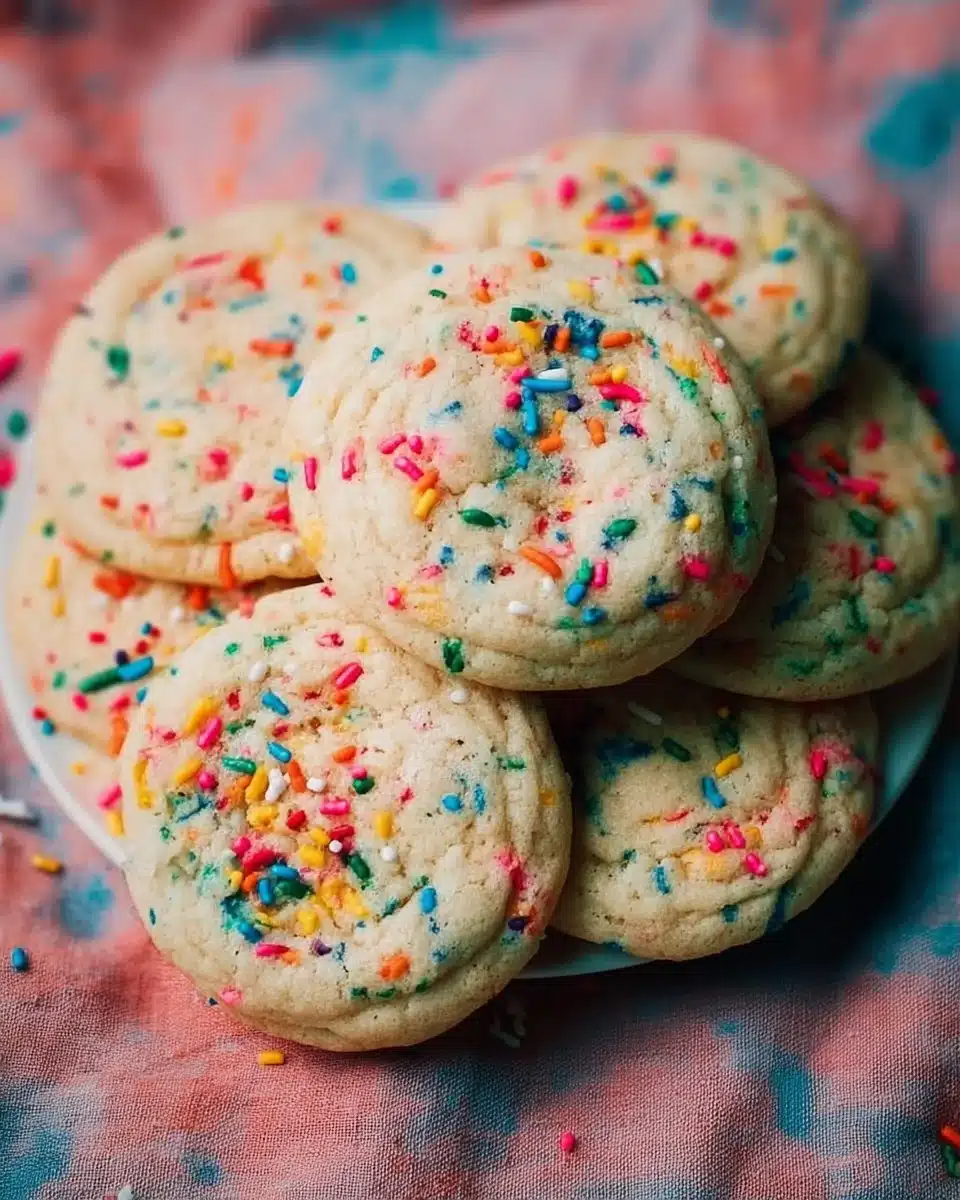
Funfetti Cookies — Soft, Chewy Sprinkles Cookie Recipe
Bite into a pillowy edge and a soft, chewy center studded with colorful sprinkles—the ultimate nostalgic treat. funfetti cookies deliver bright, buttery flavor and a tender texture that holds sprinkles without bleeding. After testing this recipe 12 times with different flours and chill times, I landed on a simple method that balances spread, chew, and snap. This version was refined in a busy bakery environment and tuned for home ovens and mixers. Read on for precise measurements, timing cues, and easy tricks to make consistent batches every time.
Why this recipe works
- A higher ratio of brown sugar to granulated sugar keeps the cookies soft and chewy by retaining moisture.
- Brief chilling firms the dough so cookies spread evenly but still finish tender.
- Adding sprinkles at the end prevents color bleeding and keeps spots of bright color.
- Butter temperature control (soft but not melted) creates lift without excessive spread.
- A short, medium-high bake at 175°C (350°F) gives a golden edge with a soft center.
Ingredients Breakdown
- All-purpose flour — 250 g (2 cups): Provides structure. Too much flour makes dry cookies; spoon and level for accuracy.
- Baking soda — 5 g (1 tsp): Leavening agent; helps spread and lift.
- Fine sea salt or kosher salt — 5 g (1 tsp Diamond Crystal or 1/2 tsp Morton): Enhances flavor. If using Morton, use half the amount because it’s denser.
- Unsalted butter, softened — 170 g (3/4 cup; 12 tbsp): Fat and flavor. Softened butter (about 18–20°C / 65–68°F) traps air without melting.
- Light brown sugar — 150 g (3/4 cup packed): Adds moisture and chew.
- Granulated sugar — 100 g (1/2 cup): Balances sweetness and encourages crisp edges.
- Large egg — 50 g (1 egg), room temperature: Binds and adds moisture.
- Vanilla extract — 10 ml (2 tsp): Key flavor note; use pure vanilla for best results.
- Rainbow sanding sprinkles — 90 g (3/4 cup): Use tight-shaped sanding sprinkles to avoid moisture bleeding. Add most at the end to keep colors bright.
- Optional: 15 g (2 tbsp) cornstarch for extra tenderness.
Substitutions with impact warnings:
- Butter substitute: Use salted butter but omit added salt; expect slightly saltier cookies.
- Brown sugar swap: Dark brown gives deeper molasses notes; treat as equal volume.
- Gluten-free: Use a 1:1 GF flour blend and add 1/4 tsp xanthan gum; texture will be slightly crumbly.
- Vegan: Replace butter with a block vegan butter and use a flax egg (1 tbsp ground flax + 3 tbsp water). Expect less spread and slightly different flavor.
Essential Equipment
- Stand mixer with paddle attachment or a large bowl and hand mixer.
- Digital scale (recommended) for accurate weights.
- 2 baking sheets lined with parchment or silicone mats (do not skip to avoid sticking).
- Cooling rack for even cooling.
- 1 Tbsp cookie scoop for uniform cookies (about 30 g / 1 oz dough balls).
- Optional: Instant-read thermometer to check oven accuracy; an oven can run hot or cold by 10–20°C. If you don’t have a scoop, roll dough by hand into uniform 30 g (1 oz) balls.
If you lack a stand mixer, use a sturdy bowl and a hand mixer. If you don’t have a digital scale, measure flour by spooning into the cup and leveling—do not scoop.
Step-by-Step Instructions
This recipe yields 24 cookies. Prep time 20 minutes, cook time 10 minutes, inactive time 30 minutes (chill), total time about 1 hour including chilling. Each cookie is one serving.
Step 1: Preheat and prepare
Preheat the oven to 175°C (350°F). Line two baking sheets with parchment or silicone mats and set a cooling rack nearby. Confirm oven temp with an instant-read thermometer and adjust if necessary.
Step 2: Mix dry ingredients
Whisk together 250 g (2 cups) all-purpose flour, 5 g (1 tsp) baking soda, and 5 g (1 tsp) salt in a bowl for 30 seconds to combine. If using, add 15 g (2 tbsp) cornstarch now for an extra-tender crumb.
Step 3: Cream butter and sugars
In a stand mixer fitted with the paddle, beat 170 g (3/4 cup; 12 tbsp) softened unsalted butter with 150 g (3/4 cup) packed light brown sugar and 100 g (1/2 cup) granulated sugar on medium speed for 2–3 minutes until pale and slightly fluffy. Scrape the bowl once. This traps air for lift.
Step 4: Add egg and vanilla
Add 1 large egg (50 g) and 10 ml (2 tsp) vanilla extract and beat for 30–45 seconds until combined. Scrape sides. Do not overmix once the flour goes in—overdevelopment makes cookies tough.
Step 5: Combine wet and dry
Reduce mixer to low and add the dry ingredients in two additions, mixing just until no dry streaks remain (about 10–15 seconds per addition). The dough should be thick and slightly tacky. Stop immediately when combined.
Step 6: Fold in sprinkles
Fold in 60 g (1/2 cup) sanding sprinkles with a spatula for 10–15 seconds. Reserve 30 g (1/4 cup) to press gently on top of each dough ball before baking. Avoid using nonpareils; some run color and bleed.
Step 7: Chill the dough (important)
Scoop dough into 30 g (1 oz) balls using a tablespoon or scoop and place on a tray. Cover and chill for 30 minutes to 1 hour. Chilling firms butter and controls spread; chilling for less than 15 minutes increases spread significantly.
Step 8: Bake
Arrange dough 5 cm (2 inches) apart on prepared sheets. Press reserved sprinkles gently on top. Bake at 175°C (350°F) for 9–11 minutes, rotating sheets halfway. Bake until edges are light golden and centers look set but soft—do not wait for full browning. Remove and cool on the sheet for 5 minutes, then transfer to a cooling rack.
Step 9: Cool and store
Allow cookies to cool completely before stacking. Cooling finishes the bake and firms centers, about 20–30 minutes.
Expert Tips & Pro Techniques
- Common mistake: overbaking. Remove cookies when centers still look slightly underdone; they finish as they cool.
- Use a digital scale for flour and sugar—volume measurements vary wildly and change texture.
- Make-ahead: Scoop dough into balls and freeze on a tray for up to 1 month. Bake from frozen, adding 1–2 minutes to bake time.
- Professional adaptation: Use a 60:40 brown-to-white sugar ratio and add 1 tbsp light corn syrup for ultra-chewy cookies in a production setting.
- Avoid sprinkle bleed by using sanding sprinkles and adding most of them after the dough is mixed.
- To test oven accuracy, bake one cookie as a trial and adjust time by ±1–2 minutes.
Storage & Reheating
- Refrigerator: Store cooled cookies in an airtight container at room temperature for up to 4 days. For best chew, place a slice of bread in the container to maintain moisture.
- Freezer: Cookies freeze well up to 3 months. Freeze in a single layer on a tray, then transfer to a sealed freezer container with parchment between layers. To freeze dough balls, freeze on a tray then bag; bake from frozen, adding 1–2 minutes.
- Reheating: Warm in a 160°C (325°F) oven for 3–5 minutes to refresh chew. Avoid microwaving — it makes them too soft and can turn edges gummy.
Variations & Substitutions
- Gluten-Free Version: Replace 250 g (2 cups) all-purpose flour with 250 g (2 cups) 1:1 gluten-free flour and add 1/4 tsp xanthan gum. Baking time increases by 1–2 minutes.
- Vegan Version: Swap 170 g vegan butter block and use a flax egg (1 tbsp ground flax + 3 tbsp water, let sit 5 minutes). Dough may be slightly denser; chill longer to firm.
- Double Chocolate Funfetti: Replace 30 g (1/4 cup) flour with 30 g (1/3 cup) natural cocoa powder and fold in 60 g (1/3 cup) mini chocolate chips. Bake the same time; centers may look darker.
- Mini Cookie Party: Use a 15 g (1/2 oz) scoop and reduce bake time to 7–8 minutes for small, crisp-edged, chewy centers.
- Reduced-Sugar: Replace 50 g (1/4 cup) granulated sugar with a granulated erythritol blend, but expect slightly different texture and browning.
Serving Suggestions & Pairings
- Serve warm with a cold glass of whole milk or oat milk for a classic match.
- Pair with a lightly brewed coffee or espresso to balance sweetness.
- For a fun dessert plate, add a scoop of vanilla ice cream and a few extra sprinkles on top. Try with our layered banana pudding recipe for a party dessert pairing: banana pudding lush recipe.
- Offer bite-sized cookies alongside simple whipped shortbread for variety: whipped shortbread cookies.
Nutrition Information
Per serving: 1 cookie. Makes 24 cookies.
- Calories: 150 kcal
- Total Fat: 7 g
- Saturated Fat: 4 g
- Cholesterol: 25 mg
- Sodium: 95 mg
- Total Carbohydrates: 20 g
- Dietary Fiber: 0.5 g
- Sugars: 12 g
- Protein: 2 g
Nutrition values are estimates. Actual values may vary based on specific ingredients and preparation methods.
Frequently Asked Questions
Q: Why did my funfetti cookies turn out flat?
A: Flat cookies usually mean the butter was too warm or the dough wasn’t chilled. Next time, chill dough for at least 30 minutes and use butter softened but not melting.
Q: Can I make this without eggs?
A: Yes. Use a flax egg (1 tbsp ground flax + 3 tbsp water) or a commercial egg replacer. Texture will be slightly cakier and less rich.
Q: Can I double this recipe?
A: Yes. You can double all ingredients. Mix in a large bowl or two batches in a stand mixer. For best results, chill dough in two trays to keep even chilling.
Q: Can I prepare this the night before?
A: Absolutely. Scoop the dough into balls and cover in the fridge overnight. Chill for at least 1 hour before baking if the dough has warmed while handling.
Q: How long do the cookies keep in the fridge?
A: At room temperature in an airtight container, cookies keep up to 4 days. In the fridge they can last up to 7 days but may dry; use a slice of bread to keep them moist.
Q: Why are my sprinkles bleeding color into the dough?
A: Some sprinkles are made with soluble dyes. Use sanding sprinkles or sprinkles labeled "non-bleeding" and add most sprinkles at the end.
Q: Will baking at a higher temperature make them crispier?
A: Higher temps will brown edges faster and crisp outside, but risk drying centers. Stick to 175°C (350°F) for best balance.
Internal Links (distributed)
- For a fun cake-sized twist, try our funfetti sugar cookie cake technique: funfetti sugar cookie cake.
- If you’re making a cookie platter, add small, rich cookies from this four-ingredient list for balance: 4-ingredient mounjaro recipe.
- For lighter party pairings, browse quick healthy options that complement sweet treats: 9 natural weight-loss recipes that work.
Conclusion
If you want another tested take on funfetti cookies, compare notes with Preppy Kitchen’s Funfetti Cookies to see different mix and bake approaches. For a classic commercial perspective and inspiration for spring-themed Funfetti® cookies, view the Pillsbury version here: Funfetti® Spring Cookies – Pillsbury Baking.
Enjoy baking—these cookies are easy to scale and a reliable crowd-pleaser.