
Title Tag: Classic Chicken Lo Mein Recipe — Quick Weeknight Stir-Fry
Meta Description: A fast, flavorful chicken lo mein recipe that tosses tender sliced chicken, chewy noodles, and crisp vegetables in a savory-sweet sauce — ready in 20 minutes.
Classic Chicken Lo Mein
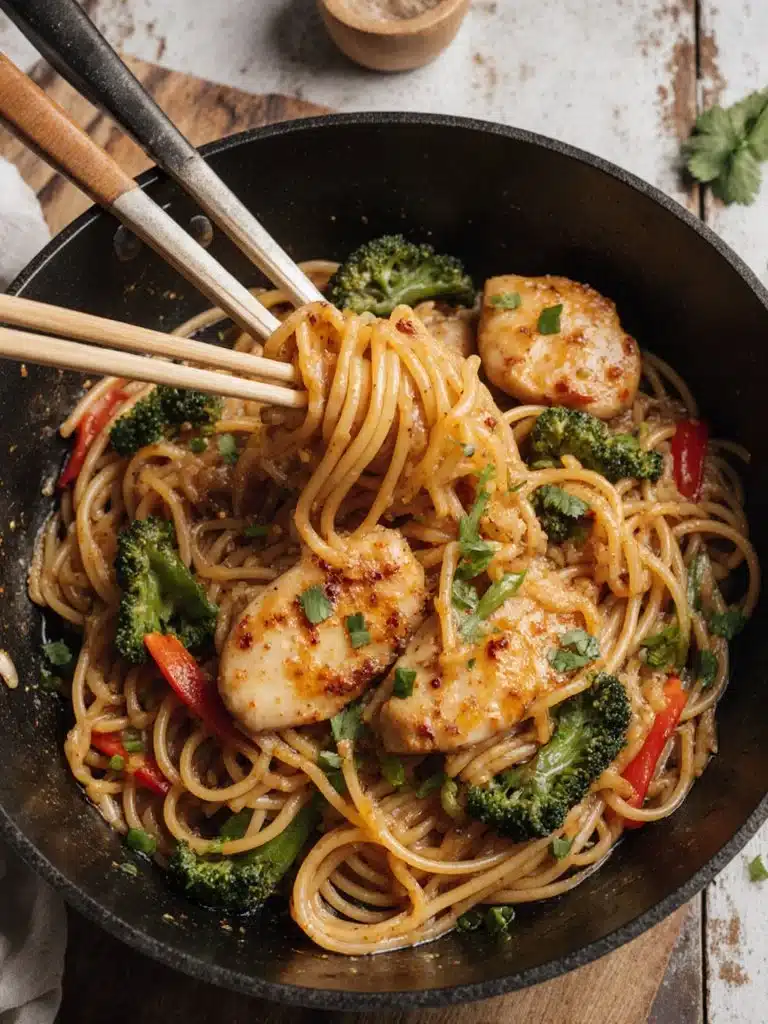
A glossy bowl of tender chicken, springy noodles, and bright vegetables tossed in a savory-sweet sauce—this chicken lo mein recipe delivers big restaurant flavors without fuss. After refining this version across a dozen weeknight tests and adapting techniques I used as a wok chef, I landed on a simple sauce ratio and a high-heat toss method that keeps noodles separated and vegetables crisp. This recipe is noteworthy because it uses a quick velveting shortcut for silky chicken, a no-drain noodle technique that preserves starch for sauce adhesion, and a one-pan finish that makes cleanup easy. Jump to Recipe
For a garlic-forward variant, try the garlic chicken lo mein with sautéed veggies for extra punch.
Why This Recipe Works
- High heat and quick cooking preserve texture: searing the chicken and then finishing with the vegetables keeps everything tender-crisp.
- Starch-savvy noodle method: reserving 60 ml (1/4 cup) pasta water lets the sauce cling to lo mein noodles without becoming gluey.
- Simple sauce ratio (2:1 soy to oyster) balances umami and sweetness for a classic take.
- Velveting the chicken with a little cornstarch and egg white creates a silky bite usually only found in restaurants.
Ingredients Breakdown
- Noodles: 340 g (12 oz) fresh or frozen lo mein noodles or egg noodles — their chew helps the sauce cling; if using dried, cook to al dente and rinse once. (Use lo mein noodles for the most authentic texture.)
- Chicken: 450 g (1 lb) boneless skinless chicken thighs, thinly sliced — thighs stay juicier than breasts; you can use tenderloins or breast if you prefer, but reduce cook time by 1–2 minutes.
- Velveting mix: 1 large egg white (about 30 g), 1 tbsp (8 g) cornstarch, 1 tsp (6 g) light soy sauce — creates a protective coating for tender chicken.
- Sauce: 60 ml (1/4 cup) light soy sauce, 30 ml (2 tbsp) oyster sauce, 15 ml (1 tbsp) shaoxing wine or dry sherry, 10 g (2 tsp) granulated sugar, 5 ml (1 tsp) toasted sesame oil, 60 ml (1/4 cup) low-sodium chicken stock or reserved noodle water — adjust salt after tossing.
- Aromatics & veg: 2 garlic cloves (6 g), grated; 20 g (1 tbsp) fresh ginger, julienned; 1 medium carrot (75 g), matchsticks; 100 g (3.5 oz) snow peas or snap peas; 3 scallions (30 g), white and green separated.
- Oil & finishing: neutral oil for high heat (grapeseed or canola), white pepper to taste, toasted sesame seeds and additional scallions for garnish.
Substitution notes: Replace oyster sauce with 2 tbsp mushroom soy for a vegetarian-friendly flavor (the dish will lose some shellfish umami). If using Diamond Crystal kosher salt guidance is not necessary here because we measure soy/oyster in volume.
Essential Equipment
- 12-inch (30 cm) wok or large sauté pan — a wide surface lets you sear evenly; if you don’t have a wok, use a large heavy-bottomed skillet and tilt it frequently to mimic toss space.
- Tongs or long spatula for tossing noodles.
- Fine-mesh strainer (for reserving noodle water).
- Instant-read thermometer (to confirm chicken reaches 74°C / 165°F) — optional but useful for food safety.
- Cutting board and sharp chef’s knife (thin slices are key for quick cooking).
Step-by-Step Instructions
Step 1: Prep the chicken and velvet the meat
Toss 450 g (1 lb) thinly sliced chicken thighs with 1 large egg white (approx. 30 g), 8 g (1 tbsp) cornstarch, and 6 g (1 tsp) light soy sauce; marinate for 10–15 minutes while you prep vegetables. Velveting creates a slippery coating that protects the chicken during high-heat searing. Do not skip the cornstarch — it’s critical for texture.
Step 2: Mix the sauce
Whisk together 60 ml (1/4 cup) light soy sauce, 30 ml (2 tbsp) oyster sauce, 15 ml (1 tbsp) shaoxing wine, 10 g (2 tsp) sugar, 5 ml (1 tsp) toasted sesame oil, and 60 ml (1/4 cup) chicken stock or reserved noodle water until smooth; set aside. This measured ratio balances sweet, salty, and savory notes.
Step 3: Cook the noodles
Bring a large pot of water to a boil (100°C / 212°F) and cook 340 g (12 oz) fresh lo mein noodles for 1–2 minutes until just pliable; if using dried, cook to al dente per package. Reserve 60 ml (1/4 cup) cooking water, drain, and toss with a tiny splash of oil to prevent sticking. Timing: 1–6 minutes depending on noodle type; stop when noodles are springy but not mushy.
Step 4: Sear the chicken
Heat the wok over high heat until smoking—about 230°C (450°F) surface—you should hear an immediate sizzle; add 1 tbsp (15 ml) oil, then in one layer sear the chicken in batches for 60–90 seconds per side until exterior is golden and internal temp reaches 74°C (165°F). Do not overcrowd the pan — cook in batches to maintain high heat and proper browning.
Step 5: Stir-fry aromatics and vegetables
Lower heat slightly to medium-high (190–200°C / 375–390°F equivalent); add a touch more oil, then sauté 2 garlic cloves (6 g) and 20 g (1 tbsp) ginger for 20–30 seconds until fragrant; add carrots and snow peas and stir-fry for 2–3 minutes until vegetables are bright and just tender. Sensory cue: veggies should snap when bitten.
Step 6: Combine and finish
Return chicken to the wok, add noodles and sauce, then toss vigorously for 1–2 minutes until sauce thickens and coats everything, adding reserved 60 ml (1/4 cup) noodle water only if needed to loosen. Taste and adjust with white pepper or extra soy. Active finish time: 1–2 minutes. Serve immediately with scallions and sesame seeds.
Expert Tips & Pro Techniques
- Common mistake: soggy, clumped noodles — fix by rinsing dried noodles only if they are overcooked, and always toss with a little oil after draining; cook fresh noodles very briefly.
- Make-ahead: slice chicken, julienne vegetables, and mix the sauce up to 24 hours ahead; store components separately in airtight containers for quick evening assembly.
- Pro technique adapted for home cooks: velvet the chicken (egg white + cornstarch + a splash of oil) for restaurant-style silkiness without deep-frying.
- Heat management: get the wok very hot before searing and work in 60–90-second bursts; this prevents stewing and gives you the desired Maillard flavor.
- Leftover rescue: spread chilled leftovers on a rimmed sheet and reheat under a hot broiler for 2–3 minutes to refresh texture, then toss quickly in a hot skillet.
- Avoid using too much sauce initially — you can always add more; excess will weigh down vegetables and make noodles soggy.
Storage & Reheating
- Refrigerator: Store in an airtight container for 3–4 days; cool to room temperature first, then refrigerate within 2 hours.
- Freezer: Not ideal — textures change. You can freeze for up to 1 month in a freezer-safe container; thaw overnight in the fridge before reheating. Expect softer vegetables after freezing.
- Reheating: For best texture, reheat in a hot skillet over medium-high heat with 1–2 tbsp (15–30 ml) water or oil, tossing until piping hot, about 3–5 minutes. Alternatively, reheat in a 175°C (350°F) oven for 8–10 minutes. Avoid microwaving when possible; it makes noodles gummy.
Variations & Substitutions
- Gluten-Free Version: Replace light soy and oyster sauce with tamari and gluten-free oyster sauce; use 340 g (12 oz) rice noodles or gluten-free lo mein. No other changes; cook times unchanged.
- Vegetarian Tofu Swap: Use 450 g (1 lb) extra-firm tofu, pressed and cut into 2 cm cubes; pan-fry until golden, then finish as directed. Keep the same sauce, omit oyster sauce and use mushroom soy for umami.
- Spicy Szechuan Twist: Add 1 tbsp (15 ml) chili crisp or 1 tsp (5 g) crushed red pepper to the sauce; everything else stays the same.
- Low-Sodium Option: Use low-sodium soy sauce and low-sodium chicken stock; reduce added salt and boost acidity with 1 tbsp (15 ml) rice vinegar for brightness. See our lighter side suggestions for complements at 9 natural weight-loss recipes that work.
Serving Suggestions & Pairings
- Simple sides: Crisp cucumber salad or quick pickled radishes cut the richness.
- Beverage pairing: Jasmine tea or a dry Riesling balances sweetness.
- Garnishes: Toasted sesame seeds, extra scallions, or a drizzle of chili oil. For a contrasting spicy-sour protein option, you might also enjoy our buffalo chicken blue cheese recipe.
- Meal pairing idea: Serve with steamed bok choy and a lemon wedge for freshness.
Nutrition Information
Per serving (serves 4; serving size ≈ 380 g):
- Calories: 520 kcal
- Total Fat: 16 g
- Saturated Fat: 3.5 g
- Cholesterol: 110 mg
- Sodium: 920 mg
- Total Carbohydrates: 58 g
- Dietary Fiber: 4 g
- Sugars: 9 g
- Protein: 34 g
Nutrition values are estimates calculated using the USDA FoodData Central and recipe analysis tools. Actual values may vary based on specific ingredients and preparation.
Frequently Asked Questions
Q: Why did my lo mein turn out dry?
A: Usually because there wasn’t enough sauce or the noodles absorbed it while sitting; reserve 60 ml (1/4 cup) noodle water and add as needed, and serve immediately.
Q: Can I make this without eggs?
A: Yes — omit the egg white in the velveting step and use 1 tbsp (8 g) additional cornstarch with 1 tsp (5 ml) water to coat the chicken; texture will be slightly less silky but still tender.
Q: Can I double this recipe?
A: You can double ingredients, but cook the chicken and vegetables in batches to avoid overcrowding the wok; do not double-cook everything at once or you’ll lose heat and texture.
Q: Can I prepare this the night before?
A: Yes — slice the chicken, prep vegetables, and mix the sauce up to 24 hours ahead. Store separately and toss everything together just before serving for best results.
Q: How long does this keep in the fridge?
A: Stored in an airtight container, it keeps 3–4 days in the refrigerator.
Q: What noodles work best if I can’t find lo mein?
A: Fresh egg noodles are ideal; if unavailable, use spaghetti as a substitute—cook slightly less than package directions to keep some chew.
Q: Is oyster sauce necessary?
A: Oyster sauce adds signature depth and sweetness; substitute with 2 tbsp mushroom soy or additional soy plus a pinch of sugar for a vegetarian-friendly swap.
Conclusion
This Classic Chicken Lo Mein is a dependable weeknight winner—fast, forgiving, and adaptable. For further inspiration and tested variations, compare this method with The Best Chicken Lo Mein and the simpler, pantry-friendly approach in Easy Chicken Lo Mein. Try it tonight.
Print
Classic Chicken Lo Mein
- Total Time: 20 minutes
- Yield: 4 servings 1x
- Diet: Non-Vegetarian
Description
A fast, flavorful chicken lo mein recipe that combines tender chicken, chewy noodles, and crisp vegetables in a savory-sweet sauce—ready in 20 minutes.
Ingredients
- 340 g (12 oz) fresh or frozen lo mein noodles or egg noodles
- 450 g (1 lb) boneless skinless chicken thighs, thinly sliced
- 1 large egg white (about 30 g)
- 1 tbsp (8 g) cornstarch
- 1 tsp (6 g) light soy sauce
- 60 ml (1/4 cup) light soy sauce
- 30 ml (2 tbsp) oyster sauce
- 15 ml (1 tbsp) shaoxing wine or dry sherry
- 10 g (2 tsp) granulated sugar
- 5 ml (1 tsp) toasted sesame oil
- 60 ml (1/4 cup) low-sodium chicken stock or reserved noodle water
- 2 garlic cloves (6 g), grated
- 20 g (1 tbsp) fresh ginger, julienned
- 1 medium carrot (75 g), matchsticks
- 100 g (3.5 oz) snow peas or snap peas
- 3 scallions (30 g), white and green separated
- Neutral oil for high heat (grapeseed or canola)
- White pepper to taste
- Toasted sesame seeds and additional scallions for garnish
Instructions
- Toss chicken with egg white, cornstarch, and soy sauce; marinate for 10–15 minutes.
- Whisk together the sauce ingredients and set aside.
- Cook noodles in boiling water for 1–2 minutes or until just pliable; reserve water, drain, and toss with oil.
- Heat wok until smoking, add oil, sear chicken in batches until golden and cooked through.
- Sauté garlic and ginger until fragrant, add carrots and snow peas; stir-fry until bright and tender.
- Return chicken, add noodles and sauce; toss to combine and heat through before serving.
Notes
Make-ahead by prepping components up to 24 hours in advance. For leftovers, reheat in a hot skillet with water or oil.
- Prep Time: 10 minutes
- Cook Time: 10 minutes
- Category: Main Course
- Method: Stir-Frying
- Cuisine: Chinese
Nutrition
- Serving Size: 1 serving
- Calories: 520
- Sugar: 9g
- Sodium: 920mg
- Fat: 16g
- Saturated Fat: 3.5g
- Unsaturated Fat: 12.5g
- Trans Fat: 0g
- Carbohydrates: 58g
- Fiber: 4g
- Protein: 34g
- Cholesterol: 110mg