

Easy Cider-Glazed Carrots with Carrot Juice
The aroma of apple cider and sweet carrot juice caramelizing at the pan’s edge—this is what cider glazed carrots taste like. This cider glazed carrots recipe turns ordinary carrots into a glossy, tang-sweet side in under 30 minutes. I developed and refined this version over multiple test runs in a restaurant kitchen and at home, adjusting the reduction time and butter finish until the balance of sweet, acid, and savory felt right. After testing the glaze with both whole and baby carrots, I settled on a quick blanch-and-pan-sear method that preserves color and texture while building flavor.
This recipe is approachable for home cooks and works as a weekday side or holiday accompaniment. It’s naturally vegetarian and gluten-free, and can be made dairy-free with a simple swap. Jump to Recipe For a complementary main, try pairing with roasted pot roast recipes that welcome sweet-sour flavors.
Why This Recipe Works
- A quick blanch sets the carrots’ interior to tender without overcooking, preserving a snappy texture and bright color.
- Reducing apple cider concentrates acidity and sweetness, which balances the carrots’ natural sugars and creates a glossy glaze.
- A small amount of butter (or olive oil for dairy-free) emulsifies with the reduced liquid for a silky finish that clings to the carrots.
- Finishing with a touch of carrot juice brightens the glaze and reinforces carrot flavor without added sugar.
- Salt staged at the end sharpens sweetness and prevents the carrots from tasting flat.
Ingredients Breakdown
- Carrots: Use young, uniform carrots (about 500 g) for even cooking; larger carrots should be halved lengthwise. Smaller carrots cook faster.
- Apple cider: Provides acidity, fruitiness, and a base for the glaze; reduce to intensify flavor. Avoid vinegars here—cider gives a rounder, apple note.
- Carrot juice: Adds concentrated carrot flavor and color; reduces the need for extra sugar. Cold-pressed or fresh is best.
- Butter: Unsalted butter adds silkiness; use 30 g (2 tbsp) for shine. For dairy-free, use extra-virgin olive oil 30 ml (2 tbsp).
- Salt: Use fine sea salt; taste at the end to avoid drying the carrots. If using Diamond Crystal kosher salt, increase quantity by ~15–20%.
- Black pepper: Freshly cracked for finish.
- Optional aromatics: A sprig of thyme or a pinch of ground ginger complements the apple-cider notes; add during reduction and remove before glazing.
Substitutions with impact warnings:
- You can substitute maple syrup for some reduced cider for a deeper caramel note, but the result will be sweeter and less tangy.
- Replacing butter with oil will remove some silkiness; use high-quality olive oil and finish off with a squeeze of lemon to mimic balance.
Essential Equipment
- 25 cm (10 in) heavy-bottomed skillet: The large surface area encourages even caramelization.
- Fine-mesh strainer: For skimming solids from reduced cider, if needed.
- Measuring spoons and digital scale: Weighing carrots and butter ensures consistency.
- Tongs or a fish spatula: For turning carrots without breaking them.
- Small saucepan (optional): To reduce extra cider or carrot juice separately if you prefer control.
- Alternative: If you don’t have a heavy skillet, use a 23 cm (9 in) nonstick sauté pan; reduce heat slightly to avoid hot spots.
Step-by-Step Instructions
Step 1: Prep the carrots
- Peel and trim 500 g (about 1 lb) carrots; cut into 2–3 cm (¾–1¼ in) batons for even cooking. Active time: 5–7 minutes. Carrots should feel firm and not woody.
- If using baby carrots, leave whole and reduce blanch time by 1–2 minutes.
Step 2: Blanch the carrots
- Bring a large pot of water to a boil, salt lightly with 5 g (1 tsp) fine sea salt. Add carrots and blanch 3–5 minutes until just tender when pierced with a knife. They should still have slight resistance.
- Shock in an ice bath for 1 minute, then drain and pat dry. Active time: 6–8 minutes including shock.
Step 3: Reduce the cider and carrot juice
- In a small saucepan, combine 240 ml (1 cup) apple cider and 60 ml (¼ cup) carrot juice. Bring to a simmer over medium heat and reduce to about 60 ml (¼ cup), about 12–15 minutes. A light syrup will coat the back of a spoon.
- Remove any foam with a spoon and discard. Active time: 12–15 minutes.
Step 4: Sear the carrots
- Heat 15 ml (1 tbsp) neutral oil in the 25 cm (10 in) skillet over medium-high until shimmering, about 2 minutes. Add carrots in a single layer and sear, turning occasionally, until edges begin to brown, about 4–6 minutes. You want golden edges, not a full char.
- Reduce heat to medium. Timing: 4–6 minutes.
Step 5: Glaze and finish
- Pour the reduced cider–carrot concentrate over the carrots, add 30 g (2 tbsp) unsalted butter (or 30 ml/2 tbsp olive oil for dairy-free), and toss to coat for 1–2 minutes until glossy. Do not overcook — stop as soon as the glaze clings and the carrots are heated through.
- Season with 2 g (½ tsp) fine sea salt and 1 g (¼ tsp) freshly ground black pepper. Finish with 5–10 ml (1–2 tsp) fresh lemon juice or 1 tsp chopped fresh thyme if desired. Active time: 3–4 minutes.
Step 6: Serve
- Transfer to a warm platter and garnish with chopped parsley or toasted nuts for texture. Serve immediately. Rest/inactive time: none.
Expert Tips & Pro Techniques
- Use uniform cuts: Cutting carrots the same size ensures even cooking and a consistent glaze.
- Avoid crowding the pan: Overcrowding traps steam and prevents browning—use a larger skillet or work in batches.
- Common mistake: Too much liquid added at once will steam the carrots. Remove excess liquid or reduce separately before adding to the pan.
- Make-ahead: Blanch carrots up to 24 hours ahead, cool, store in an airtight container, then reheat and finish with glaze just before serving.
- Professional trick: Finish the glaze off-heat with a knob of cold butter (or oil) and a quick swirl to emulsify and create shine.
- For deeper flavor, roast carrots at 200°C (400°F) for 15–20 minutes on the middle rack before glazing; reduce searing time accordingly.
In this section you might also find useful tips in our lemon butter bean skillet article for complementary techniques.
Storage & Reheating
- Refrigerator: Store cooled glazed carrots in an airtight container for up to 4 days. Reheat gently to avoid softening.
- Freezer: Not recommended — glazing and thawing cause texture loss; if necessary, freeze blanched carrots (no glaze) for up to 3 months in a freezer-safe bag, then thaw and glaze when ready.
- Reheating: Reheat on the stovetop over low heat with a splash of water or extra cider for 3–5 minutes, tossing occasionally. To crisp edges again, finish in a 175°C (350°F) oven for 6–8 minutes on the middle rack.
Variations & Substitutions
- Honey-Cider Glaze: Add 15 ml (1 tbsp) honey to the reduced cider if you want a richer sweetness; keep butter the same.
- Maple-Dijon Carrots (seasonal): Replace 30 ml (2 tbsp) of cider reduction with 30 ml (2 tbsp) pure maple syrup and 5 g (1 tsp) Dijon mustard; cook and glaze as directed.
- Dairy-Free Version: Swap 30 g (2 tbsp) unsalted butter for 30 ml (2 tbsp) extra-virgin olive oil; finish with 5 ml (1 tsp) lemon juice for balance.
- Roasted Carrots: Roast at 200°C (400°F) for 15–20 minutes until tender and caramelized, then toss with the reduced glaze for a deeper roast flavor. You can find a roasted carrot technique in this Italian sausage and peppers guide where roasting principles are discussed.
Serving Suggestions & Pairings
- Pair with roasted chicken or pork chops; the glaze complements richer proteins. Try it with apple-cider pot roast for harmonious flavors.
- Serve alongside a grain pilaf or herbed rice; sprinkle with toasted almonds or hazelnuts for crunch.
- For a light meal, plate over bitter greens like arugula with a dollop of ricotta or yogurt. Internal pairing idea: fresh pear salad with candied pecans works well for contrasts.
- Garnish options: chopped parsley, chives, or a grating of lemon zest to brighten.
Nutrition Information
Serving size: 1/6 of recipe (approximately 125 g)
Per serving (estimate):
- Calories: 110 kcal
- Total Fat: 5 g
- Saturated Fat: 2.5 g
- Cholesterol: 7 mg
- Sodium: 210 mg
- Total Carbohydrates: 15 g
- Dietary Fiber: 3 g
- Sugars: 9 g
- Protein: 1.5 g
Nutrition values are estimates calculated using a standard nutrition database. Actual values may vary based on specific ingredients and preparation.
Frequently Asked Questions
Q: Why did my carrots turn out soggy?
A: Sogginess usually means they were over-blanched or crowded while searing. Blanch only until just tender (3–5 minutes) and give them space in the pan to encourage browning.
Q: Can I make this without butter?
A: Yes — substitute 30 g (2 tbsp) unsalted butter with 30 ml (2 tbsp) extra-virgin olive oil. Finish with 5 ml (1 tsp) lemon juice to add brightness.
Q: Can I double this recipe?
A: You can double carrots and glaze, but cook in batches so the pan remains uncrowded. Alternatively, use a larger skillet and increase reduction time slightly for the glaze.
Q: Can I prepare this the night before?
A: You can blanch and store the carrots overnight in an airtight container. Reheat and apply the glaze just before serving for best texture.
Q: How long do leftovers keep in the fridge?
A: Store glazed carrots in an airtight container for up to 4 days. Reheat gently on the stovetop to preserve texture.
Q: Can I use bottled apple cider or should it be fresh?
A: Both work. Fresh apple cider often has brighter flavor, but bottled cider is fine; reduce to the same volume and taste before glazing.
Q: Why did my glaze separate?
A: Separation occurs when too much cold liquid hits hot butter or when glaze is overheated. Remove from heat before whisking in butter, and emulsify off-heat with a quick swirl.
Internal link opportunities
- Carrot cake babka for a carrot-forward dessert pairing.
- Creamy lemon-butter bean skillet as a vegetarian main that complements sweet glazes.
- Italian sausage with peppers and onions when you want heartier pairings.
Conclusion
This cider glazed carrots recipe is an easy, elegant way to bring bright color and balanced sweetness to any plate. For another take on apple-cider flavors with a similar glossy finish, compare techniques at Sweet & Tangy, Apple Cider Glazed Carrots | Kitchen Frau. If you prefer a maple-forward approach, see the roasting and glaze notes at Roasted Maple-Glazed Carrots – Inspired Edibles.
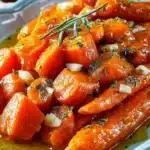
Easy Cider-Glazed Carrots with Carrot Juice
- Total Time: 30 minutes
- Yield: 6 servings 1x
- Diet: Vegetarian, Gluten-Free (can be Dairy-Free)
Description
A quick side of cider glazed carrots finished with reduced carrot juice for extra carrot flavor — cider glazed carrots that are tender, glossy, and bright.
Ingredients
- 500 g (1 lb) carrots, peeled and cut into 2–3 cm (¾–1¼ in) batons
- 240 ml (1 cup) apple cider
- 60 ml (¼ cup) carrot juice, fresh if possible
- 30 g (2 tbsp) unsalted butter, cold (or 30 ml (2 tbsp) extra-virgin olive oil for dairy-free)
- 15 ml (1 tbsp) neutral oil (such as grapeseed), for searing
- 5 g (1 tsp) fine sea salt (adjust to taste)
- 2 g (½ tsp) fine sea salt, for finishing
- 1 g (¼ tsp) freshly ground black pepper
- 5–10 ml (1–2 tsp) fresh lemon juice (optional)
- 2 g (1 tsp) fresh thyme leaves or 1 g (¼ tsp) ground ginger (optional)
- Fresh parsley or toasted nuts for garnish
Instructions
- Peel and trim carrots; cut into uniform 2–3 cm batons.
- Bring a pot of water to a boil; add 5 g fine sea salt; blanch carrots 3–5 minutes; shock in ice water for 1 minute; drain and pat dry.
- Combine 240 ml apple cider and 60 ml carrot juice; simmer and reduce to about 60 ml (¼ cup), 12–15 minutes; skim foam and remove.
- Heat 15 ml neutral oil in a 25 cm (10 in) heavy skillet over medium-high; add carrots in a single layer and sear 4–6 minutes until golden.
- Pour reduced cider concentrate over carrots; add 30 g unsalted butter; toss 1–2 minutes until glossy. Do not overcook.
- Season with 2 g fine sea salt and 1 g black pepper; finish with 5–10 ml fresh lemon juice or thyme if using.
- Transfer to a platter, garnish with parsley or toasted nuts, and serve immediately.
Notes
For uniform cooking, cut carrots to consistent sizes. To make dairy-free, substitute butter with extra-virgin olive oil and add lemon juice for brightness. If glaze is too thin, reduce extra cider in a small saucepan until syrupy.
- Prep Time: 10 minutes
- Cook Time: 20 minutes
- Category: Side Dish
- Method: Searing
- Cuisine: American
Nutrition
- Serving Size: 125 g
- Calories: 110
- Sugar: 9 g
- Sodium: 210 mg
- Fat: 5 g
- Saturated Fat: 2.5 g
- Unsaturated Fat: 2.5 g
- Trans Fat: 0 g
- Carbohydrates: 15 g
- Fiber: 3 g
- Protein: 1.5 g
- Cholesterol: 7 mg