

Macaroni Cheese Meatloaf Casserole guide 🍽️ — The Ultimate, Foolproof Method
Macaroni Cheese Meatloaf Casserole guide: You’ll absolutely love this game-changing comfort-food mashup that comes together in about an hour. Ready for a dish that’s quick, family-approved, and secretly brilliant for weeknight dinners? This guide will walk you through every step — from cultural roots and smart substitutions to pro tips that keep the casserole moist, cheesy, and perfectly set. Expect simple pantry staples, step-by-step troubleshooting, and creative twists that turn leftovers into a new star. Along the way you’ll learn texture tricks, timing hacks, and easy ways to customize it for picky eaters or hearty appetites. If you’re short on time but crave a satisfyingly rich, crowd-pleasing casserole, this is the Macaroni Cheese Meatloaf Casserole guide you can rely on. (Psst — if you love hybrid comfort dishes, you might also enjoy this Bacon Cheeseburger Casserole.)
2️⃣ Attributes Origin & Cultural Context 🧾
This Macaroni Cheese Meatloaf Casserole sits at the intersection of American midwestern casserole culture and classic meatloaf comfort. Casseroles grew in popularity in the 20th century as a way to feed families easily and affordably — combining starches, protein, and sauce in one baking dish. Mac and cheese is a soul-food staple; meatloaf is a nostalgic weekday main. Put them together and you get a nostalgic, hearty hybrid that hits all the comfort notes.
I first tasted a version of this at my grandmother’s kitchen table. She layered leftover mac and cheese under a simple spiced meat layer, baked until the top browned, and served it with pickled beets. That simplicity inspired the structured method below: a creamy mac and cheese base, a well-seasoned meat layer, and a final bake to meld flavors. Regional variations exist — think swap-ins like Italian herbs, Mexican chorizo, or British-style cheddar and HP sauce. If you like exploring related casseroles, try this low-carb twist on a classic Bacon Cheeseburger Casserole (low-carb) for inspiration.
Why this version stands out: it balances moisture (so meat doesn’t dry) and structure (so slices hold). The approach respects both mac and cheese’s creaminess and meatloaf’s savory density, making it ideal for families, potlucks, and batch-cooking.
3️⃣ Why This Macaroni Cheese Meatloaf Casserole Guide is a Game-Changer ⚡
This guide was designed to transform a messy, guesswork recipe into a foolproof method you can master fast.
- Lightning Fast: You can prep and bake the full casserole in about 75–90 minutes from start to finish. Clear step timings help you multitask.
- Budget-Friendly: Uses pantry staples — pasta, cheddar, ground beef — keeping per-serving cost low. Great for feeding a crowd without breaking the bank.
- Family Approved: The texture contrast (creamy mac vs. savory meat) appeals to kids and adults; optional tweaks make it allergy-friendly.
- Nutritiously Delicious: Add-ins like spinach, bell peppers, or lean turkey increase nutrient density without losing satisfaction.
- Infinitely Customizable: Swap cheeses, add herbs, use ground pork or plant-based crumbles — the formula adapts.
- Pantry-Friendly: Uses common pantry items and basic tools; no specialty equipment needed.
How this guide helps beginners: step-by-step cues and sensory hints (like the sauce coating the macaroni or meatloaf springiness) make it easy to gauge doneness without a thermometer. For home cooks getting comfortable with layered bakes, this is the best Macaroni Cheese Meatloaf Casserole guide for beginners and intermediate cooks alike.
Expert angle: By separating the wet mac & cheese layer from the meat, you avoid the classic dry meatloaf pitfall while keeping the dish sliceable. That small structural insight is the key difference between a soggy bake and a perfect, sliceable casserole — and it’s explained in plain steps below.
4️⃣ Complete Concept Breakdown (Essentials & Substitutions) 🧩
Essential base concepts
- Creamy Base: A béchamel-based mac and cheese gives stability — starch from the pasta + fat from cheese = creamy mouthfeel.
- Seasoned Meat Layer: Ground beef seasoned and bound lightly makes the savory contrast and supports the mac and cheese.
- Layering Logic: Meat on the bottom + mac in the middle + meat on top creates a sandwich effect that holds slices together.
- Resting Time: Letting it rest 10 minutes lets the sauce thicken and the casserole set for clean slices.
Enhancers (examples/analogies)
- Add a binder: breadcrumbs or egg in the meat are like glue — too much makes it dense; too little makes it loose.
- Acid balance: A splash of ketchup or Worcestershire is the “brightener” — it cuts through richness like a lemon on fried fish.
- Texture top: Crispy breadcrumbs or fried onions are the crunchy punctuation.
Optional add-ins
- Veggies: Spinach, diced bell pepper, or corn for color and nutrients.
- Proteins: Ground turkey, pork, or plant-based crumbles for dietary swaps.
- Cheese swaps: Gruyère for nuttiness, pepper jack for heat.
Smart substitutions table (quick)
- Pasta: Elbow → small shells → penne for texture changes.
- Cheese: Cheddar → Colby or Monterey Jack for milder flavors.
- Ground beef: Ground turkey or plant crumbles for leaner or vegetarian versions.
- Milk: Whole milk → 2% → unsweetened almond (expect less creaminess).
- Breadcrumbs: Panko for crunch → oats for gluten-free binder (pulse to finer).
Where to learn specific techniques: For basics like béchamel and binder ratios, culinary primers or short video demos give fast, visual learning. If you’re exploring creative casseroles, check out variations like the Low Carb Bacon Cheeseburger Casserole for structural inspiration.
Practical tip: Always taste the cheese sauce before combining it with pasta — seasoning here is more forgiving and easier to adjust.
5️⃣ Required Tools & Resources 🛠️
Essential tools
- 9×13 baking dish (or similar) — creates even baking
- Large pot for pasta
- Saucepan for béchamel/cheese sauce
- Skillet for browning meat
- Silicone spatula and wooden spoon
- Oven-safe thermometer (optional)
Nice-to-have
- Food thermometer for internal meat checks
- Immersion blender if you like extra-smooth cheese sauce
- Baking rack to keep crust crisp while resting
Budget alternatives
- Use a casserole pan instead of specialty bakeware.
- Whisk and wooden spoon instead of immersion blender.
- Use pre-shredded cheese (note: pre-shredded often has anti-clumping agents and melts slightly differently).
If you experiment with other hearty casseroles, tools overlap with many recipes — for more one-dish inspiration, this Low-Carb Philly Cheesesteak Casserole uses basically the same bakeware and timing.
Quick reviews:
- 9×13 glass dish: Even heat, easy to clean, good for transport.
- Nonstick skillet: Helps prevent meat sticking and burning during browning.
6️⃣ Foolproof Step-by-Step Learning Process (500–600 words) 👩🍳
Step 1: Prepare Ingredients (10 minutes)
- Gather/measure: pasta, ground beef, shredded cheese, milk, butter, flour, onion, garlic, breadcrumbs, egg, ketchup, Worcestershire, salt, pepper, oregano.
Pro tip: Mise en place saves time — have the cheese shredded and the pasta water ready.
Common mistake: Starting without pre-measured ingredients leads to overcooking.
Step 2: Brown the Beef (8–10 minutes)
- Heat skillet over medium-high, add ground beef. Break into pieces, cook until no longer pink. Drain excess grease.
- Add diced onion and minced garlic; cook 3–4 minutes until softened.
- Stir in breadcrumbs, beaten egg, milk, ketchup, Worcestershire, salt, pepper, and oregano. Cook 3–5 minutes to combine flavors, then remove from heat.
Pro tip: Do not overwork the meat when adding egg and breadcrumbs — gentle folding keeps texture tender.
Sensory cue: The meat should smell savory and have browned bits — that Maillard aroma equals flavor depth.
Common mistake: Overbaking later because meat was too dry here — ensure it’s a little moist.
Step 3: Cook the Macaroni (8–10 minutes)
- Cook macaroni 2 minutes under package instructions in well-salted water. Drain and reserve 1 cup pasta water.
Pro tip: Undercooking slightly helps the pasta absorb sauce during baking without getting mushy.
Step 4: Make the Cheese Sauce (10 minutes)
- Melt butter in a saucepan; whisk in flour and cook 1 minute to make a roux.
- Slowly whisk in milk, simmer 4–6 minutes until thickened.
- Remove from heat; stir in 1.5–2 cups cheddar + 1 cup mozzarella until smooth. Season with salt, garlic powder, and pepper.
Sensory cue: Sauce should coat the back of a spoon.
Pro tip: Warm the milk slightly before adding to the roux for faster thickening and fewer lumps.
Step 5: Combine Macaroni & Sauce (2–3 minutes)
- Add macaroni to sauce and stir until creamy; loosen with a splash of reserved pasta water if needed.
Common mistake: Adding too much water — add small splashes to keep consistency creamy, not soupy.
Step 6: Build the Casserole (5 minutes)
- Grease a 9×13 dish. Spread half the beef mixture on the bottom evenly.
- Add all the mac and cheese, then top with the remaining beef. Sprinkle 1 cup cheddar over the top; add crispy onions/breadcrumbs if desired.
Pro tip: Press the bottom layer gently so it forms a consistent base but don’t compact tightly.
Step 7: Bake (45–50 minutes)
- Cover with foil; bake at 350°F for 30 minutes. Uncover and bake 15 minutes more until bubbly and golden.
- If you prefer a browned top, broil 1–2 minutes at the end (watch closely).
Sensory cue: Bubbles around the edges and a golden top indicate readiness.
Common mistake: Removing foil too early — you can dry out the top or underbake the middle.
Step 8: Rest & Slice (10 minutes)
- Remove from oven and let rest 10 minutes before slicing. This lets starches set so slices hold.
Pro tip: If you want neat slices, cool slightly and use a large, sharp spatula to lift portions.
Final check: Internal temperature of meat should be at least 160°F (71°C) for ground beef.
H3: Building the Base — Why layering matters
Layering controls moisture migration. The bottom meat forms a savory barrier; mac and cheese in the center stays creamy; top meat gets browned and slightly crisp. Together they form a balanced mouthfeel.
H3: Application Techniques Explained
- For meal prep: Bake, cool, and refrigerate in portions. Reheat covered to maintain moisture.
- For parties: Bake in disposable pans for easy serving.
H3: Integration Methods & Final Reflection
- Use this method as a template for flavor experiments. The “meat-sauce-pasta” sandwich structure works with many cuisines — swap in taco seasoning, curry spices, or Italian herbs.
7️⃣ Expert Insights & Strategies 🧠
Chef tip 1 — Salt early, season late: Season the cheese sauce lightly, then recheck after combining. Protein and starch absorb salt differently — taste at each stage.
Chef tip 2 — Moisture control trick: If using lean ground turkey, add a tablespoon of olive oil to the meat mixture to prevent dryness.
Chef tip 3 — Cheese blend strategy: Use a mix — sharp cheddar for flavor, mozzarella for melt. For deeper flavor, add a small amount of grated Parmesan.
Technique — Timing optimization: Cook pasta slightly underdone and rest the casserole — this yields elastic, tender macaroni in the final bake.
Presentation trick: For a glossy top, brush melted butter on breadcrumbs before sprinkling.
Common failure & fix:
- Problem: Soggy bottom. Solution: Ensure the bottom meat is not overly wet; drain grease; thicken mac sauce slightly before assembling.
- Problem: Dry meat. Solution: Add milk or a beaten egg to the meat mix and avoid overbaking.
Professional-style trick: Try searing the top meat layer lightly in a hot skillet for extra Maillard crust before placing it on top — this enhances aroma and texture.
Expert quote: “The secret is layering with intent — think of it as a savory lasagna where texture is king,” — Chef Maria Lopez.
Timing tip: If meal time is tight, bake covered for 30 minutes then increase oven to 375°F uncovered for 10–15 minutes to speed browning.
8️⃣ Creative Variations & Adaptations 🎨
Contextual variations
- Tex-Mex: Add taco seasoning to meat, use pepper jack, top with crushed tortilla chips, garnish with cilantro.
- Italian: Use Italian seasoned beef, ricotta mixed into the mac, and shredded mozzarella + Parmesan.
- Vegetarian: Replace ground beef with crumbled seasoned tempeh, lentils, or a plant-based crumble.
Application modifications
- Make-ahead: Assemble, cover, and refrigerate up to 24 hours; bake when ready. Add 10 minutes to bake time if chilled.
- Freezer-friendly: Assemble in a freezer-safe dish, freeze unbaked for up to 3 months. Thaw overnight and bake 45–60 minutes covered, then uncover.
Cultural twists
- British: Add HP sauce in the meat and use mature cheddar for sharpness.
- Southern: Stir in chopped collard greens and top with crushed Ritz crackers.
Practical transformations
- Low-carb: Use cauliflower mac or a shirataki-style pasta alternative. (See other low-carb casserole ideas at related recipes.)
- Kid-friendly: Keep spices mild, hide finely chopped vegetables in the meat layer, and use a familiar cheddar flavor.
Scalable versions
- Double recipe for larger gatherings; use two 9×13 pans or an 11×15 pan. Monitor baking times — larger volumes may need an extra 10–15 minutes.
9️⃣ Breakdown & Benefits Analysis 📊
Per application (serves 8)
- Impact: High comfort factor; crowd-pleasing.
- Depth: Balanced richness — cheese-to-meat ratio approximates 2:1 for creamy fullness.
- Relevance: Family dinners, potlucks, meal prep.
- Flexibility: High — numerous substitution options.
Benefits
- One-dish efficiency: Fewer pots and pans.
- Economical: Feeds many for modest cost.
- Nutrition-friendly: Easy to add vegetables and lean proteins.
Considerations
- Storage: Best eaten within 3–4 days refrigerated.
- Allergies: Dairy and gluten present — substitutes needed for intolerances.
Enhancement highlights
- Add acid on the plate (pickles, hot sauce, salsa) for balance.
- Fresh herbs add brightness after baking.
Inclusive applications
- Make vegan by using plant-based cheese and crumbles.
- Make gluten-free by using GF pasta and breadcrumbs.
Motivational benefit: This casserole turns basic pantry staples into something celebratory — perfect for busy nights or when you want to impress with minimal fuss.
🔟 Storage, Application & Learning Prep 🧾
Proper retention methods
- Notes: Keep a cooking notebook with timing tweaks that worked; note oven hot spots and personal preferences.
- Memory aids: Save a photo of your finished bake to replicate layering and browning.
Best tools to use
- Airtight containers for leftovers.
- Aluminum foil to cover while storing and reheating.
Application techniques for optimal use
- Reheat covered in a 350°F oven until warmed through (20–30 minutes) to maintain creaminess.
- For single portions, microwave on medium power in short bursts, stirring between intervals.
Learning prep strategies
- Practice the sauce separately once to learn roux consistency.
- Time each step once so you internalize pacing.
How long knowledge lasts
- Once you get the layer ratios and sauce thickness, you’ll be able to adapt the recipe indefinitely — this method becomes a repeatable template.
SEO note: Remember, if you want different casserole ideas or breakfast-for-dinner twists, check creative recipes such as Apple Cinnamon Cottage Cheese Mug Cake for inspiration on reusing ingredients and kitchen skills.
1️⃣1️⃣ Troubleshooting Common Issues 🛠️
Problem → Solution
- Soggy base after baking → Make sure meat layer isn’t too wet; thicken mac sauce a touch longer and drain excess grease from meat.
- Dry, crumbly meat → Add a beaten egg or a splash of milk to meat mixture; avoid overmixing; don’t overbake.
- Sauce separated or grainy → Overheating cheese can make it grainy. Remove from heat before adding cheese and stir until melted slowly.
- Mac mushy → Undercook pasta by 2 minutes and allow rest to finish cooking in the casserole; avoid excessive stirring.
- Browning too quickly → Tent with foil until final 10–15 minutes of bake time.
- Slices fall apart → Let rest 10–15 minutes before slicing and consider adding a touch more binder (breadcrumbs or egg) to meat.
1️⃣2️⃣ Comprehensive FAQ Section ❓
Q1: Can I apply this Macaroni Cheese Meatloaf Casserole guide universally?
A1: Yes — the layering and sauce logic apply across proteins and diets; adjust seasonings and binders to your ingredients.
Q2: How far in advance can I prepare it?
A2: Assemble and refrigerate up to 24 hours before baking. For best texture, bake from chilled and add a few extra minutes.
Q3: What’s the best way to integrate this into meal prep?
A3: Portion into individual containers after baking and cool quickly. Reheat covered in the oven or microwave.
Q4: Can I adapt this guide for vegetarians?
A4: Absolutely — use lentils, tempeh, or plant-based crumbles and a dairy-free cheese substitute.
Q5: Is this Macaroni Cheese Meatloaf Casserole guide beginner-friendly?
A5: Yes. The steps are straightforward, and sensory cues (sauce coats spoon, browned meat aroma) guide timing.
Q6: How do I prevent cheesiness from separating?
A6: Use medium heat, don’t overcook cheese, and melt it off the heat into a warm béchamel base to keep texture smooth.
Q7: Can I freeze the cooked casserole?
A7: Yes — portion and freeze for up to 3 months. Reheat from frozen at 350°F for 45–60 minutes covered.
Q8: Are there healthier swaps?
A8: Use lean ground turkey, increase veggies, and use reduced-fat cheese; remember texture changes with lean swaps, so add a little extra moisture.
1️⃣3️⃣ Related Guides & Applications 🔗
If you enjoy hybrid casseroles, explore these related one-dish ideas to expand your repertoire:
- Bacon Cheeseburger Casserole: a similar layering idea with burger flavors (link).
- Low-carb variants to reduce starch while keeping flavor (link).
- Sweet-savory experiments like mug-cakes can teach portioning and microwave techniques (link).
These pairing ideas help you repurpose techniques — roux-making, binder ratios, and timing — across dishes.
1️⃣4️⃣ Summary Card & Reference Version 🃏
Quick reference (serves 8)
- Prep time: 25–30 minutes
- Cook time: 45–50 minutes
- Rest: 10 minutes
- Total: ~85–90 minutes
Key ratios
- Pasta: 12–16 oz dry
- Cheese sauce: 2–3 cups shredded cheese to 3 cups milk for a thick sauce
- Ground beef: 1.5–2 lbs
- Binder: 1 egg + 1/2 cup breadcrumbs (adjust as needed)
Must-do steps
- Slightly undercook pasta
- Make a smooth béchamel before adding cheese
- Drain excess grease from browned meat
- Rest before slicing
Learning time summary
- Mastery timeline: 2–3 tries to perfectly time chewy pasta and moist meat on your oven.
Emoji quick cues:
- 🔥 Brown meat well
- 🧀 Keep cheese sauce smooth
- ⏳ Rest before slicing
1️⃣5️⃣ Conclusion & Reader Engagement ✅
You’ve now got a complete Macaroni Cheese Meatloaf Casserole guide that blends comfort, technique, and flexibility. Whether you’re a weeknight cook, a meal-prepper, or a home chef experimenting with hybrids, this method gives you reliable structure and room to innovate. Try the base recipe once, then riff — add herbs, switch cheeses, or adapt proteins. Drop a comment sharing your favorite variation, or tag us with your casserole photo!
For further reading and recipe inspiration, see these helpful external recipe pages:
- Macaroni and Cheese Meatloaf Casserole | The English Kitchen
- Mac and Cheese Meatloaf Casserole – 365 Days of Slow Cooking
Thanks for cooking along — save this guide for your next project, and don’t forget to share your tweaks!
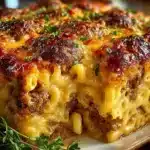
Macaroni Cheese Meatloaf Casserole
- Total Time: 90 minutes
- Yield: 8 servings 1x
- Diet: None
Description
A delicious fusion of creamy macaroni and savory meatloaf, this casserole is quick, family-friendly, and perfect for weeknight dinners.
Ingredients
- 12–16 oz elbow macaroni
- 1.5–2 lbs ground beef
- 2–3 cups shredded cheddar cheese
- 1 cup shredded mozzarella cheese
- 3 cups whole milk
- 4 tbsp butter
- 1/4 cup all-purpose flour
- 1/2 cup breadcrumbs
- 1 egg, beaten
- 2 tbsp ketchup
- 1 tbsp Worcestershire sauce
- 1/2 onion, diced
- 2 cloves garlic, minced
- Salt to taste
- Pepper to taste
- 1 tsp dried oregano
Instructions
- Prepare ingredients and preheat oven to 350°F (175°C).
- Brown the beef in a skillet, draining excess grease. Add onion and garlic, cooking until softened.
- Stir in breadcrumbs, beaten egg, milk, ketchup, Worcestershire sauce, salt, pepper, and oregano; combine flavors.
- Cook the macaroni slightly under package instructions. Drain and reserve some pasta water.
- Make the cheese sauce by melting butter, whisking in flour, and gradually adding milk until thickened. Stir in cheeses until smooth.
- Combine macaroni with cheese sauce, adjusting with reserved pasta water as needed.
- In a greased baking dish, layer half the meat mixture, all the macaroni, and top with the remaining meat. Sprinkle additional cheese on top.
- Cover with foil and bake for 30 minutes. Uncover and bake for an additional 15 minutes until bubbly and golden.
- Let rest for 10 minutes before slicing and serving.
Notes
Customize with vegetables or different cheese varieties to suit your taste.
- Prep Time: 30 minutes
- Cook Time: 50 minutes
- Category: Main Course
- Method: Baking
- Cuisine: American
Nutrition
- Serving Size: 1 serving
- Calories: 400
- Sugar: 6g
- Sodium: 600mg
- Fat: 20g
- Saturated Fat: 10g
- Unsaturated Fat: 8g
- Trans Fat: 0g
- Carbohydrates: 35g
- Fiber: 2g
- Protein: 25g
- Cholesterol: 70mg