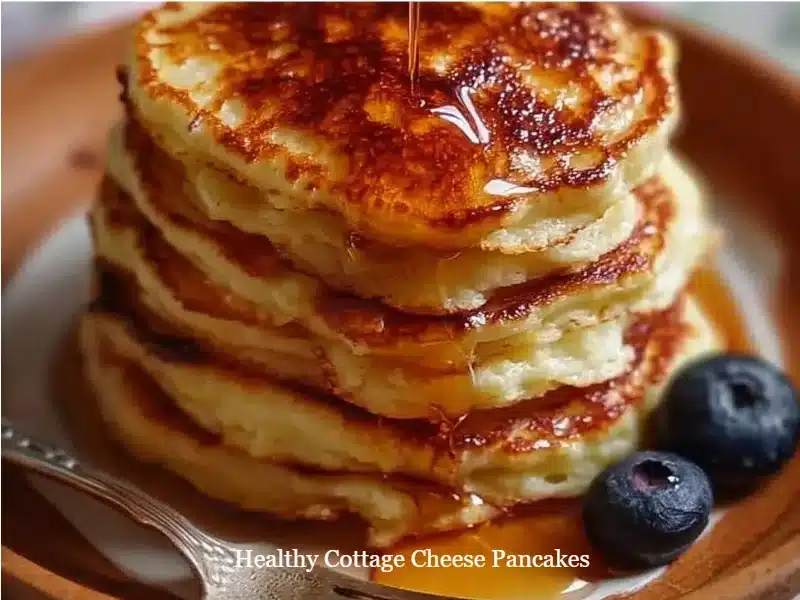
Healthy Cottage Cheese Pancakes
Warm, tender pancakes that feel like comfort food but act like breakfast fuel. Healthy cottage cheese pancakes are surprisingly fluffy thanks to the curds and eggs, and they stay moist without extra oil. I developed this version after testing it 8 times, swapping oat and flour ratios until the texture was just right. This is the recipe I taught to students in my weekend brunch class and the one my family prefers when we need a quick, protein-rich meal on busy mornings. Read on to learn why these work, what each ingredient does, and how to get perfect results every time — plus a few easy swaps to match your diet and pantry.
Why This Recipe Works
- Cottage cheese adds moisture and curd structure so pancakes are tender but not dense. The curds trap air as they cook.
- Blended oats or a small amount of flour give body without heavy gluten, keeping them light and gluten-friendly in texture.
- Eggs act as binders and leaveners; beaten just enough, they add lift while keeping the crumb moist.
- A short rest lets oats hydrate and baking powder activate, improving rise and even browning.
- Low-fat dairy keeps calories down while preserving protein — ideal for a high-protein breakfast.
Ingredients Breakdown
- Cottage cheese — 240 g (1 cup) low-fat cottage cheese. The star ingredient: it gives moisture, protein, and a tender crumb. Avoid full-fat cottage cheese if you want a lighter result.
- Eggs — 2 large (about 100 g). Eggs provide structure and lift. For a vegan version, see Variations.
- Rolled oats — 75 g (3/4 cup). Pulse to a coarse flour in the blender for body and a mild, nutty flavor. Do not use instant oats for best texture.
- Baking powder — 1 tsp (4 g). Adds gentle lift. Make sure it’s fresh.
- Vanilla extract — 1 tsp (5 ml). Flavor enhancer; optional for savory versions.
- Salt — 1/4 tsp (1.5 g). Balances flavor. Use Diamond Crystal kosher salt for scale; if using Morton’s, use about half the amount.
- Honey or maple syrup — 1 tbsp (21 g) optional. Keeps these slightly sweet; skip for savory toppings.
- Neutral oil or butter — 1 tbsp (15 ml) for cooking. Use a high-smoke-point oil or clarified butter for even browning.
- Optional add-ins: lemon zest, cinnamon, blueberries, or a tablespoon of Greek yogurt (adds tang and extra creaminess).
Tip: If you want a smoother batter, swap rolled oats for 125 g (1 cup) all-purpose flour, but expect slightly more gluten and a chewier bite. For guidance using baked cottage cheese dishes for other meals, try this baked cottage cheese eggs recipe for inspiration.
Essential Equipment
- Blender or food processor — to pulse rolled oats into oat flour and to blend cottage cheese smooth.
- Nonstick skillet or cast-iron pan, 9–10 inches (23–25 cm) — holds 3–4 pancakes at once without crowding.
- Spatula — thin, flexible turner for gentle flips.
- Measuring scale (grams) and liquid measure (ml) — for precise results.
- Optional: griddle thermometer or infrared thermometer — helps maintain an even surface temp. If you don’t have a thermometer, test with a small pancake first.
If you’re curious how cottage cheese performs in other baked egg dishes, this baked cottage cheese egg recipe offers a useful comparison.
Step-by-Step Instructions
Prep Time: 10 minutes | Cook Time: 15 minutes | Inactive Time: None | Total Time: 25 minutes | Servings: 4 (about 8 small pancakes; serving size: 2 pancakes)
Step 1: Make the oat flour
Measure 75 g (3/4 cup) rolled oats and pulse in a blender or food processor until the texture is a coarse flour, about 15–20 seconds. Pulse in 2–3 short bursts to avoid overheating. Sift if you want an ultra-fine crumb, but coarse is fine.
Step 2: Blend cottage cheese and eggs
Add 240 g (1 cup) cottage cheese and 2 large eggs (about 100 g) to the blender with the oats. Blend until mostly smooth, about 20–30 seconds, stopping to scrape down the sides once. The batter should be thick but pourable; if it seems too stiff, add 15 ml (1 tbsp) milk.
Step 3: Add dry leaveners and flavor
Transfer the blended batter to a bowl and stir in 1 tsp (4 g) baking powder, 1/4 tsp (1.5 g) salt, and 1 tsp (5 ml) vanilla if using. Mix until combined — do not overmix; stop as soon as the powder is evenly distributed. Let the mixture rest 3–5 minutes so the oats hydrate and the baking powder starts to work.
Step 4: Heat the pan
Place a nonstick skillet or cast-iron pan over medium-low heat and preheat for 3–4 minutes. Add 1 tbsp (15 ml) oil and swirl to coat. The correct pan temperature gives a gentle sizzle when batter hits the surface; if it smokes immediately, reduce heat.
Step 5: Cook the pancakes
Spoon 2 tbsp (30 ml) batter per pancake onto the pan or use a 2-inch (5 cm) ring for uniform size. Cook until the edges look set and small bubbles form on top, about 1½–2 minutes. Flip with a thin spatula and cook the second side until golden brown, 1–1½ minutes more. Total cook time per batch: 3–4 minutes. Cook in batches, wiping the pan if residue builds up.
Step 6: Serve immediately
Transfer pancakes to a wire rack or plate and serve warm with your choice of toppings. These are best fresh but reheat well (see Storage & Reheating).
Expert Tips & Pro Techniques
- Common mistake: over-blending. Blend enough to combine, but keep a bit of curd texture for air pockets. Over-blending yields a gummy pancake.
- Pan temp: medium-low gives even browning. If pancakes brown too fast, lower heat; if they never brown, raise it slightly.
- Make-ahead: you can blend the batter and store it in an airtight container in the fridge for up to 24 hours. Stir gently before cooking.
- Professional trick: fold in 1 tbsp (15 g) whipped egg white for extra lift. Whip one egg white to soft peaks and fold into the batter just before cooking.
- For consistent size, use a 2 tbsp (30 ml) cookie scoop or a ring mold. This avoids undercooked centers.
- Avoid flipping too soon; wait for the surface to set and bubbles to form. If you press the pancake and it springs back slightly, it’s ready to flip.
Storage & Reheating
- Refrigerator: Cool pancakes completely on a rack, then store in an airtight container for up to 3 days. Layer with parchment to prevent sticking.
- Freezer: Freeze in a single layer on a baking sheet for 1 hour, then transfer to a freezer bag. Keep for up to 2 months. Reheat from frozen or thaw in the fridge overnight.
- Reheating: Best method — reheat in a 175°C (350°F) oven for 6–8 minutes (from refrigerated) or 10–12 minutes (from frozen). Alternatively, toast on medium heat for 2–3 minutes per side. Avoid microwaving if you want to keep edges slightly crisp.
Variations & Substitutions
- Gluten-Free Version: Replace oats with 125 g (1 cup) certified gluten-free oat flour or 125 g (1 cup) 1:1 gluten-free blend. Add ½ tsp xanthan gum if your blend lacks it. Cook time is the same.
- Lower-Carb / Keto-Friendly: Replace oats with 60 g (1/2 cup) almond flour and add 1 tbsp (9 g) coconut flour to absorb moisture. Reduce cook time slightly and watch for faster browning.
- Egg-Free (Vegan-ish): Use a chia egg (1 tbsp chia + 3 tbsp water, soaked 10 minutes) in place of each egg and swap cottage cheese for 250 g (1 cup) mashed silken tofu plus 1 tbsp lemon juice for tang. Texture will be denser and cook time may increase by 1–2 minutes per side.
- Extra-Protein Boost: Fold in 15 g (1 scoop) unflavored protein powder and reduce oats by 15 g (2 tbsp). You may need an extra splash of milk to adjust consistency.
- Savory Version: Omit honey, add 1 tbsp chopped chives and 30 g (1/4 cup) grated cheddar. Serve with smoked salmon or a side of eggs. If you want a hearty brunch, pair it with this 30-minute healthy orange chicken for a protein-forward spread.
Serving Suggestions & Pairings
- Sweet brunch: Top with Greek yogurt, fresh berries, and a drizzle of warm maple syrup.
- Savory plate: Serve with avocado slices, chopped herbs, and a lemony yogurt sauce.
- Weekend spread: Pair with crisp bacon or a simple egg dish; for a full brunch idea, consider serving alongside this bacon cheeseburger casserole for guests.
- Beverage pairings: Hot coffee, herbal tea, or a green smoothie complements the protein-rich profile.
Nutrition Information
Serving size: 2 pancakes | Servings per recipe: 4
Estimated per serving:
- Calories: 210 kcal
- Total Fat: 10 g
- Saturated Fat: 3.5 g
- Cholesterol: 93 mg
- Sodium: 220 mg
- Total Carbohydrates: 18 g
- Dietary Fiber: 2 g
- Sugars: 6 g
- Protein: 13 g
Nutrition values are estimates. Actual values may vary based on specific ingredients and preparation methods.
Frequently Asked Questions
Q: Why did my pancakes turn out dry?
A: Dry pancakes usually mean too much flour/oats or overcooking. Reduce oats by 10–15 g or cook at a slightly lower temperature. Also avoid over-blending the batter, which can tighten the texture.
Q: Can I make this without eggs?
A: Yes. Use a chia or flax egg (1 tbsp + 3 tbsp water per egg) or try silken tofu plus 1 tbsp lemon juice to mimic tang and moisture. Expect a denser, slightly different texture.
Q: Can I double this recipe?
A: Yes. Double all ingredients and cook in batches. Use a warm oven (90°C / 200°F) to keep cooked pancakes warm while you finish the rest.
Q: Can I prepare this the night before?
A: You can blend the batter and refrigerate it up to 24 hours. Stir gently before cooking. If frozen, thaw in the fridge overnight.
Q: How long does this keep in the fridge?
A: Store in an airtight container for up to 3 days. Reheat in the oven or on the stovetop for best texture.
Q: Are these suitable for kids and picky eaters?
A: Yes. The mild flavor and tender texture make them kid-friendly. You can skip the honey and add banana or apple purée for natural sweetness.
Q: Can I replace cottage cheese with yogurt or ricotta?
A: Greek yogurt can replace cottage cheese for a tangier result; expect slightly denser pancakes. Ricotta works but may need a small reduction in milk or added binding (one extra egg).
Conclusion
These pancakes are a simple, protein-forward way to start the day. For more inspiration and a pared-down 3-ingredient version, see Cottage Cheese Pancakes Recipe (Only 3 Ingredients!) | The Kitchn, and for another creative take on the classic, check out this Cottage Cheese Pancake Recipe – Jar Of Lemons.
Print
Healthy Cottage Cheese Pancakes
- Total Time: 25 minutes
- Yield: 4 servings 1x
- Diet: Gluten-Free, Vegetarian
Description
Warm, tender pancakes that feel like comfort food but act like breakfast fuel. These healthy cottage cheese pancakes are fluffy and protein-rich, perfect for busy mornings.
Ingredients
- 240 g (1 cup) low-fat cottage cheese
- 2 large eggs (about 100 g)
- 75 g (3/4 cup) rolled oats
- 1 tsp (4 g) baking powder
- 1 tsp (5 ml) vanilla extract (optional)
- 1/4 tsp (1.5 g) salt
- 1 tbsp (21 g) honey or maple syrup (optional)
- 1 tbsp (15 ml) neutral oil or butter for cooking
Instructions
- Make the oat flour by pulsing rolled oats in a blender until coarse flour.
- Blend cottage cheese and eggs in the blender until mostly smooth.
- Add baking powder, salt, and vanilla, then stir until combined and let rest.
- Heat a nonstick skillet over medium-low and coat with oil.
- Cook pancakes, spooning 2 tbsp of batter onto the pan until edges set and bubbles form, then flip.
- Serve immediately with desired toppings.
Notes
For smoother batter, use all-purpose flour instead of oats. Optional variations include adding lemon zest, cinnamon, or blueberries.
- Prep Time: 10 minutes
- Cook Time: 15 minutes
- Category: Breakfast
- Method: Cooking on a skillet
- Cuisine: American
Nutrition
- Serving Size: 2 pancakes
- Calories: 210
- Sugar: 6g
- Sodium: 220mg
- Fat: 10g
- Saturated Fat: 3.5g
- Unsaturated Fat: 6.5g
- Trans Fat: 0g
- Carbohydrates: 18g
- Fiber: 2g
- Protein: 13g
- Cholesterol: 93mg