
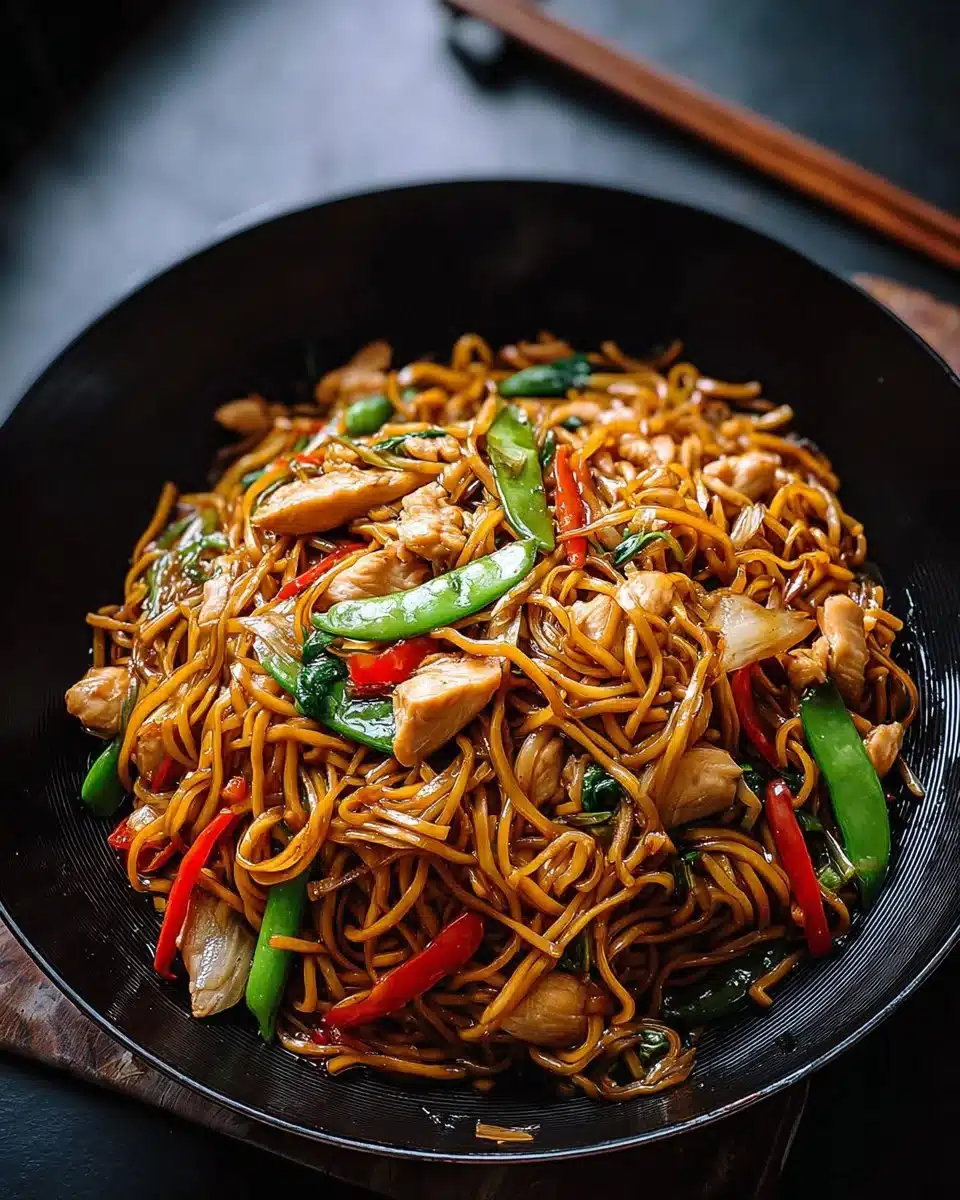
Chicken Lo Mein: Easy Stir-Fry Noodles
Steam of sesame and soy hits first—soft noodles slicked in a glossy, savory sauce, tender chicken, and crunchy vegetables make this dish impossible to ignore. I perfected this version after testing it 8 times in a busy home kitchen to get the sauce balance and noodle texture right. This recipe keeps weeknight timing in mind while borrowing professional stir-fry technique for even, fast cooking. If you like a version with extra garlic and vegetables, see my twist on the dish at garlic chicken lo mein with sautéed veggies. Read on for a clear ingredient breakdown, step-by-step instructions, and chef tips so you can make restaurant-style chicken lo mein at home tonight.
Why this recipe works
- Quick hot pan technique seals chicken for tender bites and keeps vegetables crisp.
- A two-part sauce (salty umami base + sweet-tang finishing splash) creates depth without long marination.
- Simple noodle timing prevents mush: undercook, then finish in the pan for perfect chew.
- Stir-frying over very high heat concentrates flavor and gives a light char on vegetables.
- Tested across stove types and pans to keep instructions reliable for home cooks.
Ingredients breakdown
- Noodles: 226 g (8 oz) dried lo mein or fresh egg noodles — the starch on dried noodles helps the sauce cling. If using fresh (recommended where available), reduce boiling time by 1–2 minutes.
- Chicken: 450 g (1 lb) boneless skinless chicken breast, thinly sliced — breasts cook quickly and stay lean. Thighs work and add fat and flavor; use the same weight.
- Soy sauce: 60 ml (4 tbsp) low-sodium soy sauce — use regular if you prefer saltier results; adjust final seasoning.
- Oyster sauce: 30 ml (2 tbsp) oyster sauce — adds savory umami and body. For a vegetarian swap, use 2 tbsp hoisin plus 1 tsp mushroom soy.
- Sesame oil: 15 ml (1 tbsp) toasted sesame oil — finish with this for aroma. Do not use for high-heat cooking.
- Shaoxing wine or dry sherry: 15 ml (1 tbsp) — brightens the sauce and helps tenderize the chicken; omit for alcohol-free cooking.
- Cornstarch slurry: 15 g (1 tbsp) cornstarch + 30 ml (2 tbsp) cold water — thickens sauce so it coats noodles.
- Aromatics: 15 g (1 tbsp) grated ginger, 2 cloves garlic minced — key flavor drivers.
- Vegetables: 1 medium carrot (100 g / 1 cup thin matchsticks), 120 g (1 cup) snow peas or snap peas, 1 small onion (100 g / 1 cup sliced), 2 green onions sliced for garnish.
- Oil: 30–45 ml (2–3 tbsp) neutral oil with a high smoke point (canola, peanut, or grapeseed). Avoid extra-virgin olive oil at high heat.
- Salt and pepper: Add sparingly; soy and oyster sauce supply most salt. Substitutions: You can replace oyster sauce with mushroom oyster sauce for vegetarian outcomes, but flavor will be slightly less briny. If using Diamond Crystal kosher salt versus Morton’s, remember to adjust amounts because crystal size differs.
Essential equipment
- Large pot for boiling noodles (at least 4 liters / 4 quarts).
- 30–35 cm (12–14 inch) wok or large heavy skillet — a wok gives the best high-heat sear; a large skillet is a fine substitute.
- Tongs or chopsticks for tossing noodles in the pan.
- Small bowl for sauce and cornstarch slurry.
- Wooden spoon or spatula for stirring. If you don’t have a wok, use the largest skillet you own and cook in batches to avoid crowding.
Step-by-step instructions
Prep Time: 15 minutes. Cook Time: 10 minutes. Inactive Time: None. Total Time: 25 minutes. Servings: 4.
Step 1: Make the sauce and cornstarch slurry
Whisk together 60 ml (4 tbsp) low-sodium soy sauce, 30 ml (2 tbsp) oyster sauce, 15 ml (1 tbsp) Shaoxing wine, 15 ml (1 tbsp) toasted sesame oil, and 5 ml (1 tsp) sugar in a bowl. Stir 15 g (1 tbsp) cornstarch into 30 ml (2 tbsp) cold water until smooth; set both bowls aside.
Step 2: Cook the noodles
Bring a large pot of salted water to a boil and cook 226 g (8 oz) dried lo mein noodles per package directions until just shy of tender (al dente), about 6–7 minutes. Drain and toss with 5 ml (1 tsp) neutral oil to keep them from sticking.
Step 3: Prep the chicken and vegetables
Slice 450 g (1 lb) chicken breast into thin strips about 6 mm (1/4 inch) thick so they cook fast and evenly. Slice vegetables: 100 g (1 cup) carrots into matchsticks, 120 g (1 cup) snow peas trimmed, and 1 small onion thinly sliced. Pat the chicken dry — moisture prevents searing.
Step 4: Sear the chicken
Heat 15–30 ml (1–2 tbsp) neutral oil in a wok or skillet over high heat until it shimmers. Add the chicken in a single layer and sear without moving for 45–60 seconds until the underside browns; toss and cook for another 1–2 minutes until no longer pink, reaching an internal temperature of 74°C (165°F). Transfer chicken to a plate.
Step 5: Stir-fry vegetables and aromatics
Add another 15 ml (1 tbsp) oil if needed. Sauté onion and carrots for 2–3 minutes until they begin to soften and brown at the edges, then add snow peas and cook 1 minute more. Stir in 15 g (1 tbsp) grated ginger and 2 minced garlic cloves and cook for 20–30 seconds until fragrant; avoid burning.
Step 6: Combine noodles, chicken, and sauce
Return the chicken to the wok and add drained noodles. Pour the sauce over and toss for 1–2 minutes so the liquid spreads evenly. Give the cornstarch slurry a quick swirl and pour it in; stir constantly for 30–60 seconds until the sauce thickens and coats the noodles.
Step 7: Finish and serve
Turn off the heat and drizzle 5–10 ml (1–2 tsp) toasted sesame oil for aroma. Taste and adjust with a pinch of salt or 5–10 ml (1 tsp) light soy if needed. Garnish with 2 sliced green onions and serve immediately.
Expert Tips & Pro Techniques
- Avoid crowding the pan: cook in batches if the wok feels crowded; overcrowding steams instead of sears.
- Common mistake: overcooking noodles in the pot. Undercook by 1 minute — they finish in the pan and absorb sauce better.
- Use high heat and a smoking-hot pan. This promotes quick sear and keeps vegetables crisp.
- Make-ahead: prep the sauce, slice the chicken and vegetables, and parboil noodles up to a day ahead; store separately in airtight containers.
- Professional trick for even bites: cut chicken across the grain into thin strips for tenderness.
- Salt control: use low-sodium soy so you can season at the end. If you prefer a richer finish, add 5–10 ml (1–2 tsp) dark soy for color.
Storage & reheating
- Refrigerator: Store cooled lo mein in an airtight container for up to 3 days. Keep sauce and noodles together for best flavor.
- Freezer: Not recommended — noodles become mushy after freezing and thawing. If needed, freeze only cooked chicken (no noodles) in a freezer-safe bag for up to 3 months.
- Reheating: Reheat in a hot skillet with 1–2 tbsp water or broth over medium-high heat for 3–5 minutes, tossing until heated through. Avoid microwaving when possible; it makes noodles limp.
Variations & substitutions
- Gluten-free: Use tamari or a gluten-free soy sauce substitute 1:1 and swap oyster sauce for a gluten-free mushroom sauce. Use rice noodles instead of lo mein and reduce soaking time.
- Spicy version: Add 5–10 ml (1–2 tsp) chili garlic sauce to the sauce mixture; keep other measurements the same.
- Vegetarian: Replace chicken with 300 g (10.5 oz) firm tofu, pressed and pan-fried, and use mushroom oyster or hoisin sauce instead of oyster sauce.
- Low-sodium: Use low-sodium soy and omit added salt; increase aromatics (garlic/ginger) to boost flavor without salt.
- Extra saucy: Double the sauce quantities and add 30–60 ml (2–4 tbsp) water; allow an extra 30–60 seconds for the slurry to thicken.
Serving suggestions & pairings
- Serve with steamed bok choy or a simple cucumber salad for freshness.
- Pair with light beers or jasmine tea to balance the savory sauce.
- For a spicy contrast, offer chili oil at the table.
- Complement with crispy wings or a blue cheese dip — try our take on buffalo chicken with blue cheese for a bold combo.
Nutrition information Per serving (Serving size: about 1 plate; recipe makes 4 servings)
- Calories: 540 kcal
- Total Fat: 16 g
- Saturated Fat: 3.5 g
- Cholesterol: 80 mg
- Sodium: 980 mg
- Total Carbohydrates: 62 g
- Dietary Fiber: 4 g
- Sugars: 8 g
- Protein: 32 g Nutrition values are estimates. Actual values may vary based on specific ingredients and preparation methods.
Frequently asked questions Q: Why did my lo mein turn out dry? A: Most often the sauce was too thin or there was too little of it. Add a small splash (15–30 ml / 1–2 tbsp) of water or broth when tossing, and make sure to add the cornstarch slurry to thicken and coat the noodles.
Q: Can I make this without eggs or egg noodles? A: Yes. Use rice noodles or wheat-based lo mein labeled egg-free. If using rice noodles, follow package soaking/cooking times and finish quickly in the pan.
Q: Can I double this recipe for a crowd? A: Yes, double everything but cook in two batches to avoid crowding the pan. Overcrowding lowers the pan temperature and leads to steaming instead of searing.
Q: Can I prepare this the night before? A: You can prep components the night before: slice chicken and veggies, mix the sauce, and parboil noodles. Store separately and finish the stir-fry fresh for best texture.
Q: How long does this keep in the fridge? A: Stored in an airtight container, it will keep for up to 3 days. Reheat in a hot skillet with a splash of water or broth.
Q: What can I use instead of Shaoxing wine? A: Use dry sherry or omit it altogether. A splash of low-sodium chicken broth and 5 ml (1 tsp) rice vinegar can add brightness in alcohol-free dishes.
Q: My noodles clump after cooking. How do I prevent that? A: Toss drained noodles with 5 ml (1 tsp) oil immediately after draining, and separate them with tongs before adding to the hot pan.
Conclusion
If you want another quick take on this classic, see this easy version at The Best Chicken Lo Mein – Easy Asian Recipes and Desserts, and for a video-driven technique, check Authentic Chicken Lo Mein (VIDEO) – CJ Eats Recipes for visual guidance. Enjoy your homemade lo mein and use the pro tips above to make it sing.
Print
Chicken Lo Mein
- Total Time: 25 minutes
- Yield: 4 servings 1x
- Diet: None
Description
A quick and easy stir-fried noodle dish featuring tender chicken, crunchy vegetables, and a savory sauce.
Ingredients
- 226 g (8 oz) dried lo mein or fresh egg noodles
- 450 g (1 lb) boneless skinless chicken breast, thinly sliced
- 60 ml (4 tbsp) low-sodium soy sauce
- 30 ml (2 tbsp) oyster sauce
- 15 ml (1 tbsp) toasted sesame oil
- 15 ml (1 tbsp) Shaoxing wine or dry sherry
- 15 g (1 tbsp) cornstarch
- 30 ml (2 tbsp) cold water
- 15 g (1 tbsp) grated ginger
- 2 cloves garlic, minced
- 1 medium carrot (100 g / 1 cup), thin matchsticks
- 120 g (1 cup) snow peas or snap peas
- 1 small onion (100 g / 1 cup), sliced
- 2 green onions, sliced for garnish
- 30–45 ml (2–3 tbsp) neutral oil
- Salt and pepper, to taste
Instructions
- Whisk together the soy sauce, oyster sauce, Shaoxing wine, sesame oil, and sugar in a bowl. Prepare the cornstarch slurry by mixing cornstarch with cold water until smooth.
- Bring a large pot of salted water to a boil. Cook the lo mein noodles according to package directions, until just shy of tender. Drain and toss with a little neutral oil.
- Slice the chicken and vegetables as directed. Pat the chicken dry to ensure proper searing.
- Heat oil in a wok over high heat. Sear the chicken until cooked through, then transfer to a plate.
- Add vegetable ingredients to the wok, cooking until they soften. Add ginger and garlic, cooking until fragrant.
- Combine the chicken, noodles, and sauce in the wok. Add the cornstarch slurry and stir until the sauce thickens and coats everything evenly.
- Finish with a drizzle of sesame oil, adjust seasoning as needed, and garnish with green onions before serving.
Notes
Prep the sauce, vegetables, and chicken ahead of time for an even quicker dinner prep. Cooking in batches may be necessary to avoid overcrowding the pan.
- Prep Time: 15 minutes
- Cook Time: 10 minutes
- Category: Main Course
- Method: Stir-Frying
- Cuisine: Asian
Nutrition
- Serving Size: 1 serving
- Calories: 540
- Sugar: 8g
- Sodium: 980mg
- Fat: 16g
- Saturated Fat: 3.5g
- Unsaturated Fat: 10g
- Trans Fat: 0g
- Carbohydrates: 62g
- Fiber: 4g
- Protein: 32g
- Cholesterol: 80mg