
Introduction
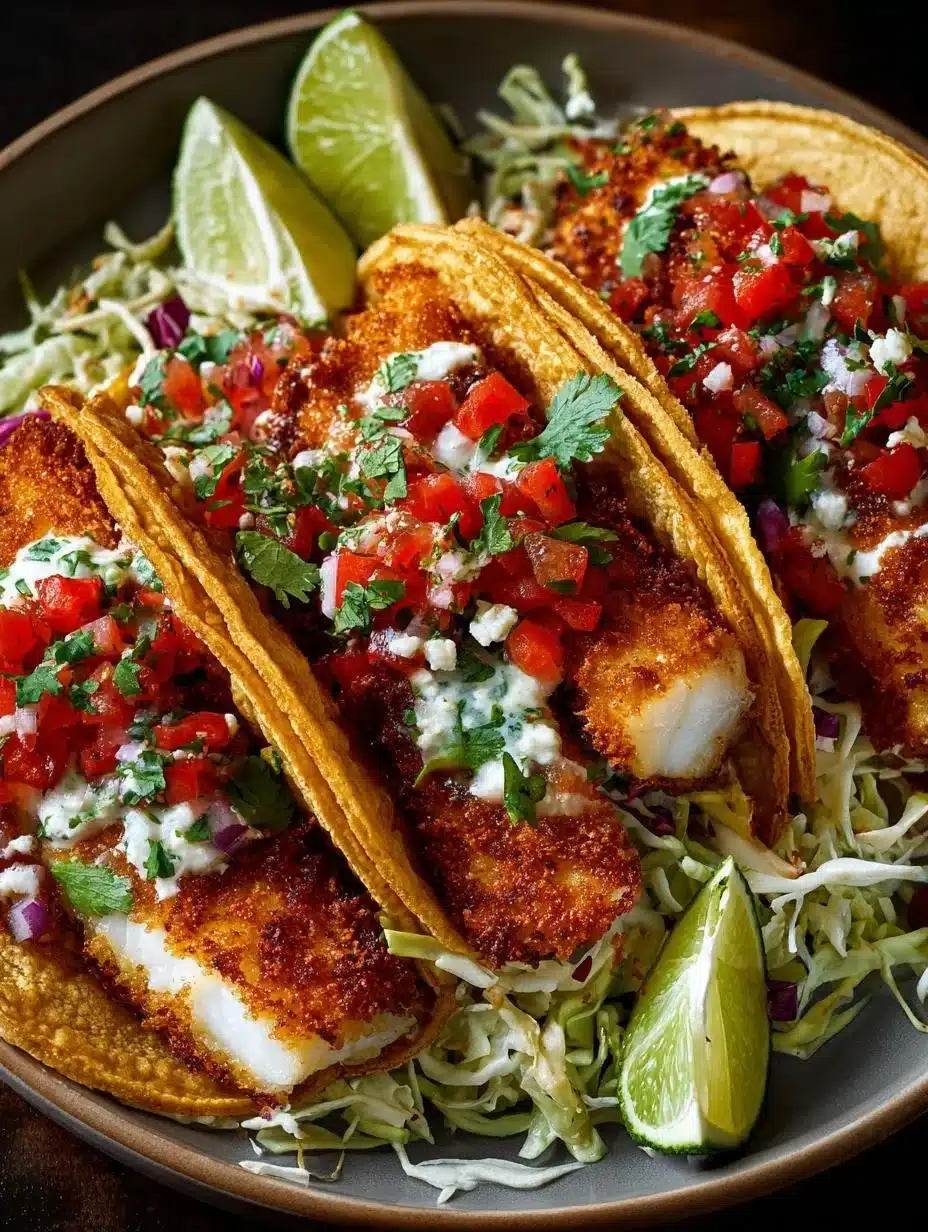
If you’ve ever bitten into a perfectly balanced taco where a golden, crackling strip of fish meets bright salsa and cool crema, you know why the tradition endures. This Traditional Crispy Fish Tacos guide takes you from pantry basics to confident execution, and it’s written so you can revisit it again and again.
By the end of this guide you’ll understand the origin and mechanics behind what makes a fish taco "classic," be able to execute crispy, flavorful results on your first try, and scale the recipe up or down for guests or weekly dinners. For inspiration on bold finishing sauces, try a complementary idea like the zesty fish tacos with sriracha-lime sauce that pairs well with the tactics in this guide.
This guide is structured for all skill levels: clear fundamentals for beginners, optimization and troubleshooting for intermediate cooks, and advanced techniques for the confident home chef.
Background & Context
Classic crispy fish tacos are a culinary meeting point of Mexican coastal traditions and modern street-food creativity. The phrase "Authentic Crispy Fish Tacos origin" points to Baja California as a key birthplace where battered and fried fish was placed into warm tortillas with simple toppings like cabbage and crema.
In the 20th century, Baja-style fish tacos migrated north with surfers and rowdy family-owned stands, evolving but retaining the soul of the dish: textural contrast, bright acid, and clean seasoning. Knowing this Classic Crispy Fish Tacos history helps you make choices that respect the spirit of the taco while adapting to available ingredients.
A practical note: what you consider “authentic” depends on context. Baja originals emphasize beer batter and minimal toppings. Sinaloan styles may use different fish and spice blends. The goal here is to teach the underlying principles so you can reproduce the signature contrasts that make crispy fish tacos memorable.
Why This Approach Works
This guide favors technique-first instruction: understand the "why" behind each step so you can improvise with confidence.
- Texture-first reasoning: Crispy coatings and cool toppings create contrast that keeps each bite exciting. We focus on techniques that reliably produce a shatteringly crisp surface while protecting delicate fish flesh.
- Accessibility: Methods include stovetop frying and oven/air-fryer options so you can execute great results regardless of equipment.
- Scalability and speed: The approach works for a weeknight dinner, a backyard party, or scaled-up service for a small crowd.
Common doubts? Some cooks worry frying equals greasy, heavy food. Proper batter composition, oil temperature control, and efficient draining keep tacos bright and clean rather than oily and soggy. We’ll address those specifics in the step-by-step section.
Core Concepts Explained
To make consistently excellent crispy fish tacos you must control four core elements: fish selection, coating and batter, heat management, and complementary toppings.
- Fish selection: Choose firm white fish with mild flavor — cod, haddock, tilapia, mahi-mahi, or halibut. Firmness keeps pieces from falling apart during frying and provides clean texture contrast.
- Coating and batter: There are two main families — light batter (beer batter, tempura-style) and dry-coated crusts (panko or seasoned flour). Batter gives a connected, airy shell; panko produces large, crunchy flakes.
- Heat management: Frying at the right temperature (around 350–375°F / 175–190°C) produces a crisp crust without overcooking the interior.
- Toppings: Acidic elements (lime, vinegar in slaw), a cooling element (crema, yogurt, mayo), and herb or onion accents complete the profile.
Alternatives and substitutions:
- Gluten-free: Use rice flour or a gluten-free flour blend in place of wheat.
- Low-oil: Air-fryer or oven-roasting with a panko crust can achieve pleasing crunch without deep frying.
- Flavor profiles: Add spices like smoked paprika, cumin, or ancho chili to the dry mix for a deeper character.
Tools, Resources, or Foundations
Essentials:
- Heavy skillet or Dutch oven (for deep frying) or a deep-fry thermometer for accurate temps.
- Metal tongs and a spider/skimmer for safe handling.
- Cooling rack (to rest fried fish) rather than paper towels to avoid steam sogginess.
- Quality tortillas (fresh corn or small flour) warmed before assembly.
Optional enhancements:
- Thermometer probe for precise oil temp.
- Deep-fryer or air fryer for convenience.
- Panko breadcrumbs for extra crunch, or tempura flour for ultra-light batter.
Budget-friendly alternatives:
- Use a heavy saucepan instead of a Dutch oven and monitor oil depth carefully.
- A cast-iron skillet holds heat well and is a good investment for frying and searing.
- If you want a roasted side, try an easy potato side like the air-fryer loaded potatoes for a crowd-friendly pairing.
Brief commentary: Invest in one good thermometer and a sturdy pan, and you’ll cut mistakes and improve results dramatically.
Step-by-Step Process
Below is a practical workflow that balances clarity and flexibility. Expect about 45–60 minutes total for a basic batch of 8–10 tacos, with prep and frying split roughly 30 minutes prep, 20–30 minutes frying and assembly.
Ingredients (baseline for 8 tacos)
- 1.5–2 lb firm white fish, cut into 8–10 portions
- 1 cup all-purpose flour (or gluten-free alternative)
- 1 cup panko (optional for hybrid crust)
- 1 tsp baking powder (if making a beer batter)
- Salt & black pepper
- 1 cup beer or sparkling water (for batter)
- Oil for frying (vegetable, canola, sunflower)
- Small head cabbage, thinly sliced
- 1 lime, plus wedges
- Crema or thin yogurt-based sauce
- Fresh cilantro, diced onion, salsa as desired
- 8–10 small tortillas
Preparation and timing:
- 15 minutes: prep fish and toppings
- 10 minutes: make batter and heat oil
- 15–30 minutes: fry fish in batches; assemble tacos and serve
Common mistakes and avoidance:
- Overcrowding the pan: fry in small batches to maintain oil temperature.
- Under-seasoning: season the fish at each stage—salt the fish, the batter, and the final dish.
- Letting fried fish steam: rest on a wire rack to keep crust crisp.
H3: Filleting and Portioning (Beginner-friendly)
Trim any dark meat and cut fish into uniform pieces, about 3–4 inches long and 1–1.5 inches thick. Uniformity ensures even cook time across portions.
H3: Batter Types and Execution (Intermediate)
Beer batter: whisk flour, baking powder, salt, and pepper. Add beer slowly until the batter is a thick, pourable consistency. Let rest briefly for bubbles to stabilize, which contributes to a light, airy crust.
Panko/dry coat: season flour with salt, pepper, and spices. Dredge fish in flour, then beaten egg or buttermilk, then panko. The triple-stage coating produces a sturdy, crunchy crust.
Pro tip: For hybrid technique, dip fish in beer batter and immediately press panko on the batter — this gives airy interior and exaggerated crunch.
H3: Frying Technique (Critical)
Heat oil to 350–375°F (175–190°C). Use a deep thermometer and maintain temperature within this range. Fry fish in small batches, about 2–3 minutes per side depending on thickness. Golden brown is your visual cue.
Drain on a cooling rack, not paper towels, to avoid retained steam that will soften the crust. Lightly salt immediately after removing from oil.
H3: Assembly and Finishing
Warm tortillas immediately before assembly to prevent breakage when loaded. Layer as follows: tortilla, a bed of shredded cabbage or slaw, a piece of crispy fish, a drizzle of crema or salsa, chopped onion and cilantro, and a squeeze of lime.
Serve hot and encourage guests to build their own for the best presentation and textural contrast.
Expert Techniques & Insights
Once you’ve mastered the basics, these techniques improve speed, texture, and flavor consistency.
- Temperature management by volume: As you fry, more oil and more pieces reduce temperature. Start with more oil than you think you need and give each batch time to return to temperature.
- Double dredge for ultra-crisp: For very flaky fish, do a light dusting of seasoned flour, dip in egg wash, press in panko, rest for 10 minutes on a rack, then fry. This reduces adhesion issues and yields a uniform crust.
- Resting and holding: If holding for service, keep fried fish on a wire rack in a single layer in a warm oven (200°F / 95°C) for up to 15–20 minutes. Longer holds reduce optimal texture.
- Cross-pollination of ideas: Use techniques from other cuisines — for crisp rice textural contrast, review inspiration like the crispy rice technique inspiration to think about crunchy bases or quick sides.
Lessons from experience: Salt after frying, not only before. Pre-salting can draw moisture out of very thin pieces, leading to less-than-optimal fry reaction and sogginess.
Variations & Adaptations
Culinary flexibility is one of the strengths of this dish. Below are variations that adapt the recipe to different contexts and skill levels.
- Health-conscious: Use an air fryer and a light panko crust brushed with oil. This reduces oil usage but maintains crunch.
- International fusion: Swap the crema for a spicy gochujang-yogurt sauce or use pickled daikon for a Korean-Mexican fusion.
- Vegetarian alternative: Use strips of king oyster mushroom or firm tofu treated with the same batter and fry for a pleasing vegan version.
- Slaw swaps: Replace cabbage slaw with a creamy baked cabbage side for a richer accompaniment; see the creamy baked cabbage side for inspiration.
- Complementary sides: For an elevated plate, serve with a mushroom side like the creamy garlic mushrooms accompaniment to add savory depth.
Skill-level adaptations:
- Beginner: Use pre-made batter mixes and limit toppings to a simple slaw and crema.
- Intermediate: Balance flavors with a homemade slaw and multiple garnishes.
- Advanced: Control temp with multiple fry stations and mise en place for a steady service line.
Analysis & Benefits Breakdown
Comparing the core approaches clarifies trade-offs and practical decision-making.
| Approach | Texture | Speed | Equipment | Best use case |
|—|—:|—:|—|—|
| Beer batter (traditional) | Light, airy | Moderate | Deep-fry pot, thermometer | Street-style tacos with airy crust |
| Panko crust (dry) | Chunky, crunchy | Fast | Pan or oven, panko | Crisp-texture preference, air-fryer friendly |
| Hybrid (batter + panko) | Best of both | Moderate | Frying setup | Celebration or when texture matters most |
| Oven/air-fryer | Moderate crisp | Fast/healthier | Air fryer or oven | Weeknight, low-oil preference |
Strengths, limitations, and considerations:
- Beer batter often gives the most authentic feel but requires accurate oil temp and yields more oil usage.
- Panko is forgiving and works well in air-fryers but won’t produce the same airy shell.
- Oven methods are accessible but will not exactly recreate deep-fry texture.
Preparation, Retention & Long-Term Use
How to prepare effectively:
- Mise en place is key: have your coatings, oil, toppings, and tortillas ready before the fryer heats.
- Portion fish ahead of time and refrigerate on a sheet tray to maintain shape.
Retention or reuse strategies:
- Leftover fried fish loses optimal crispness in the fridge; reheat under a broiler or in a hot oven on a rack to restore texture.
- Cooked components like slaw and crema keep well; make them ahead to accelerate service.
Longevity of knowledge or skills:
- Mastering batter ratios and oil control is a transferable skill for other frying tasks.
- Learning to balance heat, acid, and fat will improve overall home-cooking competence.
Troubleshooting & Common Problems
Problem → Cause → Solution
- Soggy crust → Oil too cool or fish crowded → Increase oil temp, fry in smaller batches.
- Crust falls off → Wet batter or too much handling → Dry fish thoroughly, follow proper dredging sequence, handle gently.
- Greasy tasting → Oil overheated or battered pieces overcooked → Maintain stable temp and remove once golden; drain on a rack not paper.
- Uneven doneness → Uneven fish thickness → Portion fish uniformly; thicker pieces require slightly longer frying at same temp.
- Burning exterior, raw interior → Oil too hot → Reduce heat; aim for 350–375°F and adjust as needed.
Focus on clarity: if something goes wrong, examine the process step-by-step rather than changing multiple variables at once.
FAQ Section
Q1: What fish is best for crispy fish tacos?
A1: Firm, mild white fish like cod, haddock, mahi-mahi, or tilapia work best because they hold together in the batter and have neutral flavor that pairs with bright toppings.
Q2: Can I make the tacos gluten-free?
A2: Yes. Use a gluten-free flour blend or rice flour for batter, and substitute gluten-free panko or crushed cornflakes for the outer crust.
Q3: How do I keep tortillas from tearing when assembling?
A3: Warm them briefly on a skillet or steam for 20–30 seconds wrapped in a clean towel. Warm tortillas are more flexible and less likely to split.
Q4: Is beer necessary in the batter?
A4: No. Sparkling water or club soda produces similar lightness; beer adds subtle malt flavor but is not essential.
Q5: How long can I hold fried fish before serving?
A5: Ideally 10–20 minutes on a wire rack in a warm oven (200°F / 95°C). Longer holds degrade crispness and flavor.
Q6: Can I bake the fish instead of frying?
A6: Yes. Use an oiled panko crust and bake at 425°F (220°C) on a wire rack for 12–18 minutes until golden and cooked through.
Q7: How do I prevent my oil from smoking?
A7: Use an oil with a high smoke point (canola, sunflower) and maintain proper frying temps. If oil smokes, discard and start with fresh oil to avoid off-flavors.
Q8: How can I make these tacos ahead for a party?
A8: Pre-make slaw and sauces, hold fried fish briefly and finish assembly just before serving. Alternatively, offer deconstructed tacos for guests to assemble.
Related Topics & Next Steps
After mastering crispy fish tacos, logical next skills include:
- Frying fundamentals like temp control and oil maintenance.
- Salsa and preserved-condiment work for balanced toppings.
- Tortilla-making for a fully homecrafted taco experience.
For side-dish mastery, explore loaded potato adaptations or other crunchy bases that pair well with seafood textures.
Quick Reference Summary
- Fish: firm white fish, uniformly portioned.
- Coating: choose beer batter for classic, panko for extra crunch.
- Oil temp: maintain 350–375°F (175–190°C).
- Assembly: warm tortillas, layer cabbage, fish, crema, herbs, lime.
- Troubleshoot: don’t crowd pan; rest on rack; salt after frying.
Bullet recap:
- Prep everything first.
- Control oil temp.
- Rest fried fish on a wire rack.
- Use acid and cool crema for balance.
- Scale method to equipment and guest count.
Conclusion & Engagement
You’ve now got a complete Traditional Crispy Fish Tacos guide that covers history, technique, troubleshooting, and creative adaptations. The next time you make tacos, try one controlled experiment—change only the crust or only the topping—and observe how that one change affects the final bite.
For recipe inspiration that leans into a beer-battered panko approach, consult Tori Avey’s Crispy Panko Fish Tacos recipe for a tested variation. If you want a simple, well-explained home-cook fish taco recipe to compare techniques, see the Fish Taco Recipe at The Kitchn.
If you’d like, I can convert this guide into a reusable system prompt, adapt it for a step-by-step tutorial page with printable recipe cards, or create a content-evaluation checklist based on this framework. Which would you prefer?
Traditional Crispy Fish Tacos
- Total Time: 45
- Yield: 8-10 tacos 1x
- Diet: Gluten-Free (if using appropriate substitutes)
Description
Learn to make classic crispy fish tacos with firm white fish, a light batter, and fresh toppings for a delicious meal.
Ingredients
- 1.5–2 lb firm white fish, cut into 8–10 portions
- 1 cup all-purpose flour (or gluten-free alternative)
- 1 cup panko (optional for hybrid crust)
- 1 tsp baking powder (for beer batter)
- Salt & black pepper
- 1 cup beer or sparkling water (for batter)
- Oil for frying (vegetable, canola, sunflower)
- Small head of cabbage, thinly sliced
- 1 lime, plus wedges
- Crema or thin yogurt-based sauce
- Fresh cilantro, diced onion, salsa as desired
- 8–10 small tortillas
Instructions
- Prep fish and toppings (15 minutes).
- Make batter and heat oil (10 minutes).
- Fry fish in batches for 15–30 minutes until golden brown, then assemble tacos and serve.
Notes
Ensure fish is cut into uniform pieces for even cooking. Rest fried fish on a wire rack to maintain crispness.
- Prep Time: 15
- Cook Time: 30
- Category: Main Course
- Method: Frying
- Cuisine: Mexican
Nutrition
- Serving Size: 1 taco
- Calories: 350
- Sugar: 4g
- Sodium: 300mg
- Fat: 15g
- Saturated Fat: 2g
- Unsaturated Fat: 10g
- Trans Fat: 0g
- Carbohydrates: 40g
- Fiber: 3g
- Protein: 20g
- Cholesterol: 40mg