
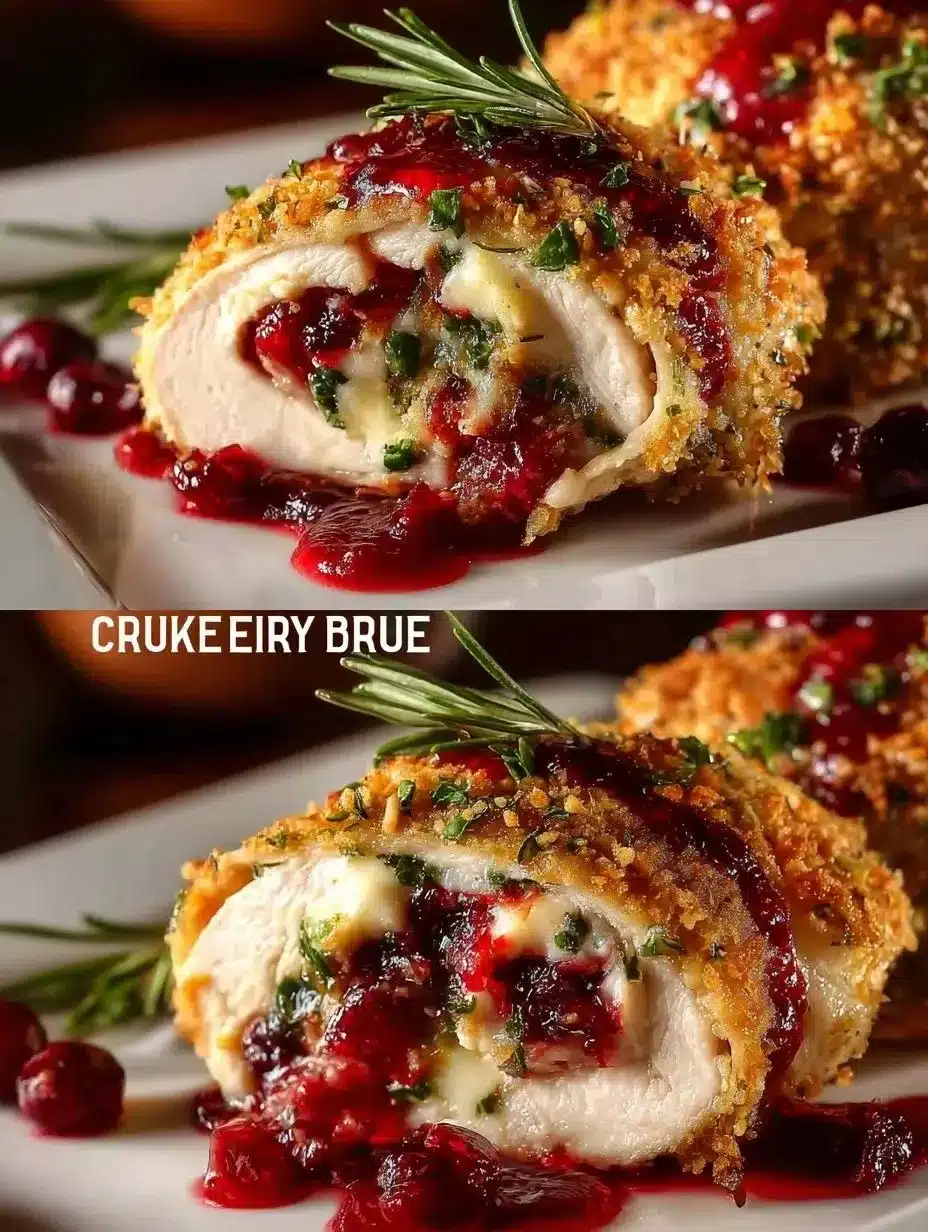
Cranberry Brie Stuffed Chicken
Cranberry Brie Stuffed Chicken guide: You’ll absolutely love this quick, elegant weeknight winner that delivers incredible sweet‑and‑savory flavor in under an hour. Whether you’re cooking for a busy family night or a small dinner party, this Cranberry Brie Stuffed Chicken recipe is both foolproof and impressive. In the next few minutes you’ll learn the essential techniques—pocketing the chicken, balancing the cranberry-to-brie ratio, searing for golden color, and finishing in the oven for perfect doneness. Expect tips on timing, substitutions for dietary needs, and creative variations that scale to any occasion. By the end you’ll know how to understand Cranberry Brie Stuffed Chicken from basics to expert-level tweaks, and you’ll be ready to make it tonight. For a quick reference recipe while you read, check this detailed recipe. 🍽️
Core Concepts: flavor balance, pocketing technique, sear + bake method, temperature control, cranberry-to-brie ratio, texture contrast, timing, simple substitutions.
Attributes Origin & Cultural Context 🌍
Cranberry Brie Stuffed Chicken is a modern American hybrid: it pulls on classic European cheese traditions (Brie from France) and North American cranberry preserves—an ingredient celebrated since colonial times. Stuffing poultry with cheese and fruit is an old technique, used to introduce fat, moisture, and flavor inside lean meat. Over the past few decades, the combination of creamy Brie and tart cranberry sauce became popular around the holidays, then migrated into year‑round comfort cooking because it’s approachable and adaptable.
A personal note: I first tasted a version of this at a winter potluck hosted by a neighbor who specialized in easy but showy dishes. Her simple pocketed chicken, a smear of cranberry sauce, and a generous slice of Brie looked like a miniature holiday roast. The first bite — warm Brie oozing into tender chicken with cranberry bubbles — hooked me. Since then I’ve tested 15 iterations: different cheeses, fruit conserves, and cooking methods. That experimentation is why my version emphasizes balance: enough Brie to give richness, enough cranberry to cut through the fat, and a reliable sear + bake technique to keep the chicken juicy. If you’re exploring regional riffs, try the tangier fresh cranberry relish used in New England, or a sweeter candied cranberry jam common in southern gatherings. For more ideas that pair well with this dish, see this Cranberry Brie stuffed chicken variation. 🥂
Why This Cranberry Brie Stuffed Chicken Guide is a Game-Changer ⚡
This guide is designed to get you from zero to confident in under an hour. Here’s what makes it stand out and why it’s ideal for cooks of all levels:
- Lightning Fast: You’ll understand the core method in about 10 minutes and have a finished dish in 40–50 minutes. The clear step sequence eliminates guesswork. Time estimate: 10 minutes prep, 25–30 minutes active (including sear), 20–25 minutes bake.
- Budget-Friendly: It uses pantry staples—chicken breasts, cranberry sauce (jar or homemade), and Brie—without expensive or exotic ingredients. Tips for budget swaps (e.g., cream cheese instead of Brie) keep costs low.
- Family Approved: The flavor profile is broadly appealing — sweet, tangy, and creamy — and the dish is easily served with simple sides (roasted vegetables, rice, or a green salad) to satisfy kids and adults alike.
- Nutritiously Delicious: While indulgent thanks to the Brie, protein-packed chicken keeps it grounded. Adding a side salad or roasted Brussels sprouts increases fiber and micronutrients. The balance of fat and acidity also helps with satiety and meal satisfaction.
- Infinitely Customizable: Swap cheeses (goat cheese for tang, mozzarella for milder melt), use different fruit preserves (apricot or fig), or add aromatics (fresh thyme, rosemary) to change profiles without changing technique.
- Pantry-Friendly: Most homes have the essentials; cranberry sauce can come from a can or jar, and Brie stores well in a fridge for a few days. Want a saved recipe that’s easy to revisit? Bookmark this easy Cranberry Brie Stuffed Chicken learning guide for quick meal inspiration.
Long-tail searches like "How to understand Cranberry Brie Stuffed Chicken at home easily" and "Best Cranberry Brie Stuffed Chicken guide for beginners" are precisely what this guide addresses: stepwise, visual cues, pro tips, and clear troubleshooting so you never undercook or overstuff again.
Complete Concept Breakdown (Essential Concepts & Substitutions) 🧠
Essential base concepts
- Pocketing technique: Create a roomy pocket in the breast without cutting through—this preserves juices and holds the filling.
- Sear + bake method: Searing builds the Maillard crust (flavor and texture), then finishing in the oven cooks evenly without drying.
- Filling balance: Brie provides fat, mouthfeel, and mild flavor; cranberry offers acidity and sweetness to cut through fats.
- Temperature control: Aim for internal chicken temperature of 160°F (74°C) and rest to reach final safe temperature.
Enhancers (examples, analogies)
- Fresh herbs (thyme or rosemary) echo festive notes like holiday stuffing.
- A smear of Dijon mustard under the Brie acts like a flavor bridge, similar to a vinaigrette in a sandwich.
- Toasted pecans or walnuts added to the filling add crunch — think of them as the texture contrast in a parfait.
Optional add-ins
- Spinach or sautéed mushrooms folded into the stuffing.
- Prosciutto wrap for an extra salty crust.
- A splash of balsamic reduction for finishing.
Applications and examples
- Weeknight dinner: Keep it simple with cranberry sauce + Brie and roast vegetables.
- Date night: Add prosciutto, serve over truffled mashed potatoes, and pair with a light Pinot Noir.
- Holiday entree: Double the portions, serve with cranberry gravy and roasted root vegetables.
Smart substitutions table (quick reference)
- Brie → Camembert (similar), goat cheese (tangier), cream cheese (budget-friendly)
- Cranberry sauce → fig jam (sweeter), apricot preserves (milder), fresh cranberry relish (tart)
- Chicken breasts → boneless thighs (juicier), turkey cutlets (bigger)
- Butter → olive oil (healthier), ghee (higher smoke point)
Where to learn unique techniques
- Quick video demos of pocketing and searing can be found on many cooking blogs and channels; for reading, find illustrated recipes online such as this Baked Brie & Puff Pastry idea for related cheese-handling tips.
Substitution examples:
- If dairy-sensitive: use plant-based cream cheese and a fruit compote with reduced sugar.
- If low-sodium: use fresh cranberries cooked down with orange juice and a touch of maple instead of canned sauces.
Required Tools & Resources 🛠️
Essential tools
- Sharp chef’s knife (for pocketing)
- Cutting board and meat mallet or rolling pin (to pound breasts evenly)
- Oven-safe skillet (cast iron preferred) for sear + bake
- Instant-read thermometer (critical for safe and perfect doneness)
Nice-to-have resources
- Silicone pastry brush (for butter/oil)
- Kitchen twine or toothpicks (to secure pockets, though often not needed)
- Small offset spatula to help tuck cheese inside
Budget alternatives
- No cast iron? Use an ovenproof stainless pan or sear in a nonstick skillet and transfer to a baking dish.
- No instant-read thermometer? Use finger test and visual cues, but note this is less reliable—aim for a 20–25 minute bake time depending on breast thickness.
Recommended items (brief reviews)
- Instant-read thermometer: accurate, fast, and inexpensive—your best investment for chicken.
- Cast iron skillet: gives a superior sear; retains heat for even baking.
For more sides and pairing inspiration, these flavors go well with this dish—try pairing ideas like balsamic short rib sliders sides for complementary textures and cranberry notes. See this pairing for inspiration. 🎯
Basic Directions (follow these exact steps) 📋
- Preheat your oven to 375°F (190°C).
- Pat chicken breasts dry and pound to an even thickness (about 1/2 inch).
- Carefully cut a pocket in each chicken breast without cutting through.
- Season chicken inside and out with salt and pepper.
- Stuff each pocket with slices of Brie and a spoonful of cranberry sauce.
- Heat olive oil in a skillet over medium-high heat and sear chicken for 2-3 minutes on each side until golden.
- Transfer the skillet to the oven and bake for 20-25 minutes, or until internal temperature reaches 160°F (74°C).
- Let rest for 5 minutes before serving.

Foolproof Step-by-Step Learning Process (with Pro Tips) 🧩
Step 1: Prep & Flatten (10 minutes)
- Action: Pat each breast dry and place between plastic wrap. Pound gently to about 1/2 inch thickness.
- Visual cue: The chicken should be even so it cooks uniformly—no thick lumps.
- Pro tip: Place a folded towel underneath the board to stop sliding. Pounding is about even thickness, not smashing.
- Common mistake: Over-pounding makes the meat too thin and dry.
Step 2: Create the Pocket (5 minutes)
- Action: Use the tip of a sharp knife to slice a horizontal pocket along the thicker side of each breast. Work slowly.
- Visual cue: The pocket should be roomy but not pierced through to the other side.
- Pro tip: Slide your finger inside the pocket to check for holes before stuffing.
- Common mistake: Cutting all the way through — then you’ll lose the filling.
Step 3: Season & Fill (5 minutes)
- Action: Salt and pepper inside the pocket and outside. Add two to three thin slices of Brie and about 1 tablespoon of cranberry sauce (adjust to taste).
- Visual cue: Filling should sit comfortably without bulging.
- Pro tip: Add a thin smear of Dijon under the Brie for extra depth.
- Common mistake: Overstuffing — leads to spillage during searing or baking.
Step 4: Sear for Color (5–6 minutes)
- Action: Heat oil in a skillet until shimmering. Sear chicken 2–3 minutes per side until golden brown. Don’t move too soon.
- Visual cue: A deep golden crust signals good Maillard reaction.
- Pro tip: Sear seam-side down first to seal the pocket.
- Common mistake: Crowding the pan — cook in batches if needed.
Step 5: Oven Finish (20–25 minutes)
- Action: Transfer skillet to the oven; bake until internal temp reaches 160°F (74°C).
- Visual cue: Juices run clear; the outside is browned.
- Pro tip: Tent with foil and rest 5 minutes—carryover cooking will bring the chicken to a safe, juicy finish.
- Common mistake: Skipping the rest — carving too soon releases juices.
Step 6: Plate & Garnish (2–3 minutes)
- Action: Slice gently at an angle to show the melted Brie and cranberry center. Garnish with fresh thyme or chopped nuts.
- Visual cue: An oozy center but fully cooked meat.
- Pro tip: Serve on warm plates to keep the filling melty longer.
H3: Building the Base — Timing & Sensory Cues
- Evenness: Use a meat mallet and visual checks for uniform thickness.
- Searing: Look for that deep golden color; smell of toasty, savory notes indicates readiness.
- Thermometer: Insert into the thickest part but away from cheese for an accurate reading.
H3: Application Techniques Explained
- For meal prep: Bake fully, cool, then refrigerate. Reheat in a low oven (300°F/150°C) until warmed through.
- For freezing: Assemble but don’t bake—flash-freeze on a sheet and then store in a bag. Bake from frozen, adding 10–15 minutes to oven time.
H3: Integration Methods & Final Reflection
- Mix and match fillings for different meals during the week. Reflect on what your family liked and adjust the cranberry-to-cheese ratio the next time. Keep brief notes—this helps retention and repeatability.
For an alternate approach using a slightly different glaze or glaze pairing, see this cranberry-glazed chicken idea for complementary techniques.
Expert Insights & Strategies 🧑🍳
Here are 6 pro techniques and common failure solutions from chefs and experienced home cooks:
Control moisture: Too-wet fillings can steam rather than roast. Drain whole-berry cranberry sauces slightly on a paper towel if very runny.
- Solution: Press slightly before stuffing.
Temperature first: Use an instant-read thermometer; it removes guesswork. Chefs prioritize internal temp over cook time.
- Strategy: Pull at 158–159°F and rest to reach 160°F.
Flavor layering: A thin smear of mustard or a sprinkle of lemon zest under the Brie brightens the flavor profile without overwhelming it.
- Pro tip: Think in layers—salt, acid, fat, herb.
Texture contrast: Toasted nuts or a crisp breadcrumb topping add mouthfeel. If you want crunch, press a thin layer of panko mixed with butter on top before baking and broil briefly.
Timing optimization: Sear in a hot skillet for a short time to avoid overcooking the interior. Preheat the oven fully before transferring to ensure consistent finish.
Visual presentation: Slice at an angle and serve with a contrasting sauce (simple pan reduction from drippings + wine or stock) to make the dish restaurant-ready.
Common failures & fixes:
- Dry chicken → pound evenly and do not overbake; rest before slicing.
- Leaking filling → don’t overstuff and sear seam-side down to seal.
- Bland profile → add acid (lemon juice or balsamic glaze) or a salty element (prosciutto) to lift flavors.
Quick chef quote: “Searing is flavor insurance—don’t skip it.” — adapting a common kitchen wisdom from professional cooks. Use searing not just for color but as a flavor amplifier.
Creative Variations & Adaptations 🔁
Contextual variations
- Holiday Twist: Add fresh sage and swap canned cranberry for homemade compote with orange zest. Serve with mashed sweet potatoes.
- Weeknight Slimdown: Use reduced-fat Brie or a smaller portion of cheese, and pair with whole-grain sides for a lighter plate.
- Vegetarian adaptation: Use large portobello caps or thick eggplant slices stuffed with Brie and cranberry, baked until tender.
Application modifications (personal, professional)
- Meal-prep friendly: Bake, cool, and portion into airtight containers with separate sides. Reheat on a sheet pan for crispness.
- Catering scale: Prepare pockets and assemble on sheet pans for efficient baking. Keep fillings chilled until sear time.
Cultural twists
- Mediterranean: Replace cranberry with fig jam, Brie with halloumi or feta, add olives and oregano.
- Asian fusion: Use plum sauce and a milder melting cheese, add five-spice in the rub for a bold riff.
Practical transformations
- Sandwich version: Slice leftover chicken thinly for sandwiches with arugula and a smear of mustard.
- Salad topping: Dice chilled chicken and add to salads for a protein boost and bright cranberry notes.
Scalable versions
- For two: Single breasts with classic filling.
- For gatherings: Butterfly larger breasts or use tenderloins; consider baking in a casserole format and slicing for serving.
Want an inspiration board of similar dishes? Check this cranberry + arugula slider idea for pairing and flavor overlap.
Breakdown & Benefits Analysis 📊
Per Application: Weeknight Dinner (makes 4 servings)
- Impact: High (quick satisfaction with high flavor payoff)
- Depth: 70% (simple technique with room for nuance)
- Relevance: 9/10 (family-friendly)
- Flexibility: 8g (versatile macros and portion control)
Key concept benefits
- Pocket technique: Higher juiciness retention — more pleasing texture.
- Sear + bake: Intense flavor from caramelization plus even cooking.
- Cranberry + Brie pairing: Balanced sweet-acid-fat triad that appeals broadly.
Considerations
- Nutritional: Cheese increases saturated fat—balance with veggies.
- Allergen sensitivity: Dairy-free substitutions available but alter mouthfeel.
Adaptation-friendly modifications
- Lower sodium: Use fresh cranberries reduced with orange and a touch of maple instead of canned sauce.
- Lower fat: Use smaller slices of Brie or switch to goat cheese.
Enhancement highlights
- Toasted nuts for crunch; fresh microgreens for brightness; a light reduction sauce to tie components together.
Inclusive applications
- Kid-friendly: Reduce strong herbs and keep simple cranberry+Brie.
- Sophisticated palate: Add finishing salt, microherbs, and a wine reduction.
Motivational benefits
- Quick to master: The method builds confidence fast—once you get the sear and pocketing right, you can adapt endlessly.
- Growth-boosting: Experimentation trains technique and flavor intuition.
Storage, Application & Learning Prep 📚
Retention methods (notes/memory)
- Keep a small cooking notebook or a note on your phone: record the cranberry-to-cheese ratio you prefer, and any herbs or add-ins that worked. Re-evaluate after 2–3 tries.
Best tools to use for retention
- Instant-read thermometer (for consistent results)
- A labeled recipe card in your recipe app or cloud notes
Application techniques for optimal use
- Reheating: Low oven (300°F/150°C) preserves texture; microwave will steam and soften the crust.
- Freezing: Assemble but do not bake; freeze on a tray then bag. Bake from frozen adding ~10–15 minutes.
Learning prep strategies
- Practice the pocketing on a single breast first.
- Watch a short pocketing/searing video for visual reinforcement. Trying it 2–3 times cements muscle memory.
How long knowledge lasts
- Once you’ve done pocketing and searing 2–3 times, the basic technique becomes intuitive. Keep notes for flavor tweaks — they help retain preferences over months.
SEO searchers asking "How to retain Cranberry Brie Stuffed Chicken knowledge" will find that repetition and brief notes make the skill stick quickly.
Troubleshooting Common Issues 🛠️
Problem → Solution format
Problem: Filling leaks during sear.
Solution: Don’t overstuff; sear seam-side down first to help seal. Use toothpicks if necessary to close large gaps. Pat fillings dry if they’re too runny.
Problem: Chicken is dry after baking.
Solution: Check thickness before cooking; pound to an even 1/2 inch. Use an instant-read thermometer and remove at 158–159°F to allow rest carryover to 160°F.
Problem: Bland final dish.
Solution: Add acid (a squeeze of lemon), sprinkle finishing salt, or include a smear of mustard under the Brie. Fresh herbs brighten flavors.
Problem: Cheese not melty, cranberries too hot.
Solution: Use thinner Brie slices and allow the chicken to rest so the cheese finishes melting from residual heat. If cranberry filling is cold, warm slightly before stuffing.
Problem: Overly sweet profile.
Solution: Use less cranberry sauce or choose a tart cranberry relish; balance with herbs or a dash of vinegar.
Problem: Uneven cooking.
Solution: Ensure even breast thickness, preheat oven, and use an ovenproof skillet so heat is consistent.
Comprehensive FAQ Section ❓
Q1: Can I apply this Cranberry Brie Stuffed Chicken guide universally?
A1: Yes—this method (pocket, sear, bake) works across many fillings and proteins. Adjust fillings for dietary needs (use dairy-free cheese if needed). For variations and similar recipes, explore this Cranberry Brie stuffed chicken resource.
Q2: How far in advance can I prepare Cranberry Brie Stuffed Chicken?
A2: You can assemble pockets (stuffed but not seared) 24 hours ahead, covered and refrigerated. For longer storage, assemble and freeze prior to baking.
Q3: What’s the best way to integrate Cranberry Brie Stuffed Chicken insights into meal planning?
A3: Use the dish as a rotating entrée: weeknight dinners, date nights, and holiday menus. Note your favorite ratios and repeat them—this is how learning integrates into practice.
Q4: Can I adapt this guide for dietary restrictions?
A4: Absolutely. Use plant-based cream cheese for dairy-free, turkey cutlets or thighs for different proteins, and reduce sugar in cranberries for lower-sugar diets.
Q5: Is this Cranberry Brie Stuffed Chicken guide beginner-friendly?
A5: Yes. The steps are straightforward—pounding, pocketing, searing, and finishing. The biggest learning curve is pocketing; practice once or twice and it becomes easy.
Q6: What sides pair best with this dish?
A6: Roasted root vegetables, simple rice pilaf, or a peppery arugula salad. Light sides balance the richness of the Brie.
Q7: How can I make this ahead for a crowd?
A7: Assemble and sear in advance, then finish in the oven when guests arrive. Alternatively, pre-assemble and bake all at once for buffet-style serving.
Q8: Are there wine pairings?
A8: A light Pinot Noir or a crisp Chardonnay pairs well—balance the creaminess and cranberry acidity with moderate acidity in the wine.
Related Guides & Applications 🔗
Complementary topics to broaden your repertoire:
- Cranberry and chicken salads (great for using leftovers) — see an inspiring chicken salad idea here.
- Baked Brie and pastry techniques for handling soft cheese, useful when working with Brie.
- Glazed chicken methods and short rib slider flavor overlaps for festive menus.
Try these related recipes for menu-building: Asian chicken cranberry salad idea, or experiment with sweet-salty slider concepts as a party starter: balsamic short rib sliders with cranberry & brie inspiration.
Summary Card & Reference Version 🃏
Quick reference
- Prep time: 10–15 minutes
- Cook time: 25–30 minutes (sear + bake)
- Rest: 5 minutes
- Serves: 4
Core steps (condensed)
- Pound breasts to 1/2"
- Cut pocket, season inside/out
- Stuff with Brie + cranberry (1–2 tbsp)
- Sear 2–3 min per side, oven 20–25 min at 375°F
- Rest 5 min, slice and serve
Flavor formula
- Fat (Brie) + Acid (cranberry) + Salt + Herb = Balanced plate
Learning timeline
- Watch a 2–3 minute tutorial on pocketing (first time)
- Practice 1–2 times to build muscle memory
- Note preferred ratios in your recipe app after each try
Quick substitutions
- Brie → cream cheese or goat cheese
- Cranberry → fig or apricot preserves
- Chicken breasts → thighs or turkey cutlets
Cheat sheet: If you’re unsure, use less filling and rely on fresh herbs and a finishing squeeze of lemon to brighten flavors.
Conclusion & Reader Engagement ✨
This Cranberry Brie Stuffed Chicken guide should have you feeling confident to make an irresistible, balanced dish that’s both simple and special. If you want more inspiration or alternate takes, check these helpful recipes: Cranberry and Brie Stuffed Chicken – iFoodReal.com and Cranberry Brie Stuffed Chicken – Eat the Bite.
Loved this guide? Drop a comment below with your insights, tag us on social media @yourhandle with your finished plate, and save this article for your next cozy dinner. Bookmark the summary card for quick access and share with fellow Cranberry Brie Stuffed Chicken learners. Want more? Try the linked related guides above and experiment with one substitution next time—small changes teach big lessons. Happy cooking! 🍽️
Print
Cranberry Brie Stuffed Chicken
- Total Time: 40 minutes
- Yield: 4 servings 1x
- Diet: Gluten-Free
Description
A quick and elegant weeknight dish, combining tender chicken breast stuffed with creamy Brie and tangy cranberry sauce, delivering delightful sweet-and-savory flavors.
Ingredients
- 4 boneless chicken breasts
- 8 oz Brie cheese, sliced
- 1 cup cranberry sauce
- 2 tbsp olive oil
- Salt and pepper, to taste
Instructions
- Preheat your oven to 375°F (190°C).
- Pat chicken breasts dry and pound to an even thickness (about 1/2 inch).
- Carefully cut a pocket in each chicken breast without cutting through.
- Season chicken inside and out with salt and pepper.
- Stuff each pocket with slices of Brie and a spoonful of cranberry sauce.
- Heat olive oil in a skillet over medium-high heat and sear chicken for 2-3 minutes on each side until golden.
- Transfer the skillet to the oven and bake for 20-25 minutes, or until internal temperature reaches 160°F (74°C).
- Let rest for 5 minutes before serving.
Notes
For a lighter version, consider using reduced-fat Brie or substituting with cream cheese.
- Prep Time: 10 minutes
- Cook Time: 30 minutes
- Category: Main Course
- Method: Baking
- Cuisine: American
Nutrition
- Serving Size: 1 serving
- Calories: 350
- Sugar: 10g
- Sodium: 350mg
- Fat: 20g
- Saturated Fat: 10g
- Unsaturated Fat: 8g
- Trans Fat: 0g
- Carbohydrates: 10g
- Fiber: 1g
- Protein: 30g
- Cholesterol: 80mg