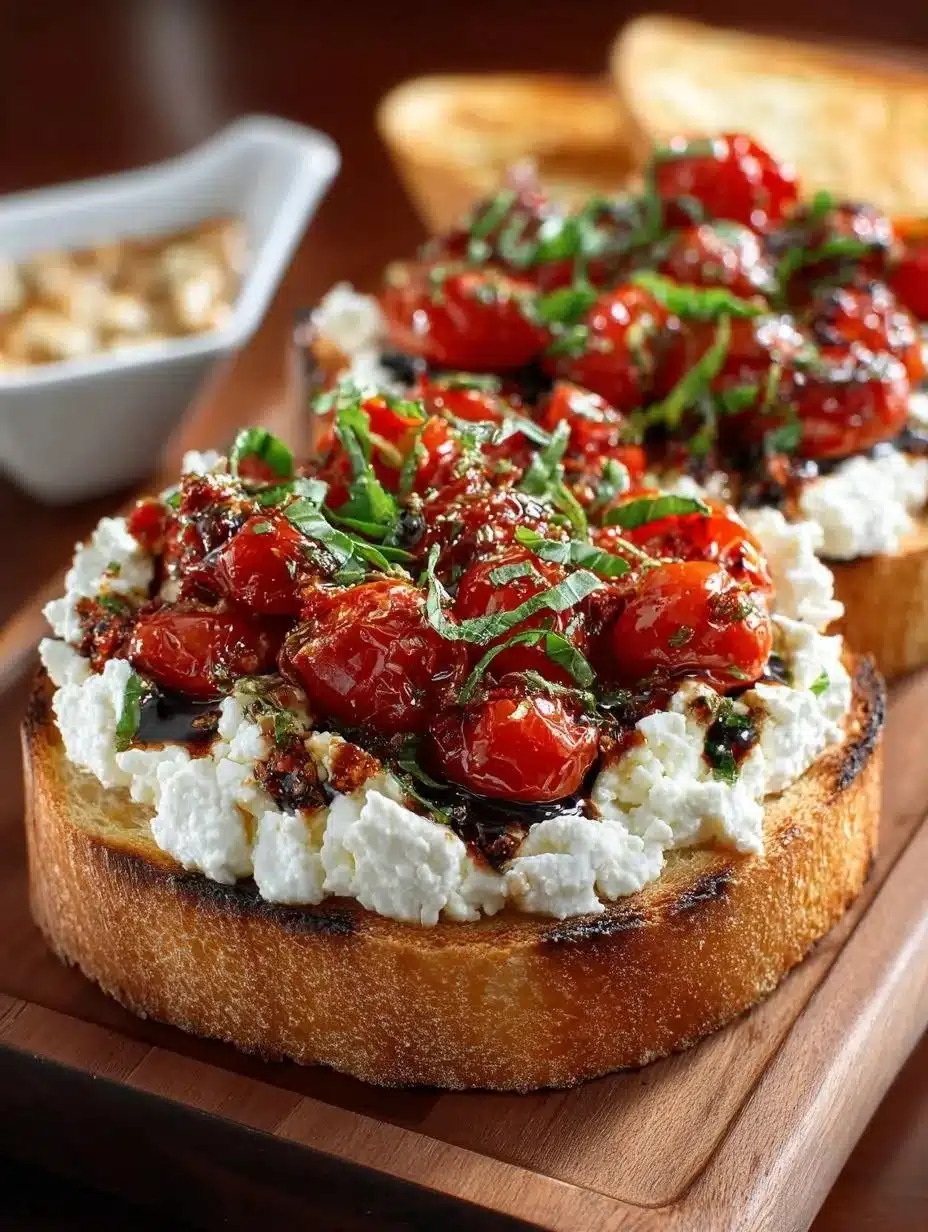
Savory Goat Cheese Bruschetta guide: Your foolproof, flavor-packed recipe and mastery plan 🍅🧀
Ready for the most irresistible Savory Goat Cheese Bruschetta guide that takes just minutes to master? You’ll absolutely love this quick, easy, and budget-friendly approach — it turns a simple loaf and a handful of pantry staples into a game-changing appetizer. In this guide you’ll learn the technique, cultural background, smart substitutions, pro tips, and creative variations that make this recipe both foolproof and endlessly customizable. Expect step-by-step instructions, sensory cues, troubleshooting tips, and ways to scale or adapt for weeknight snacks, dinner parties, or meal-prep.
Whether you’re a beginner curious about how to understand Savory Goat Cheese Bruschetta or an experienced cook refining presentation, this guide lays out clear, friendly lessons that stick. I’ll share personal anecdotes from family gatherings, expert insights, and a concise reference card so you can reproduce this again and again. Ready to get started? Let’s make perfect Savory Goat Cheese Bruschetta explained in the simplest, most delicious way possible.
(If you love pairing textures, check out this crispy idea for a side treat: Crispy Bacon Cheese Curds & Fries with Savory Gravy.)
Attributes Origin & Cultural Context 🌍
Savory Goat Cheese Bruschetta has roots in Italian antipasto tradition, where toasted bread (bruschetta) is used as a canvas for vibrant toppings. Historically, slices of bread were rubbed with garlic and drizzled with olive oil to make humble but flavorful snacks for farmworkers. Over time, toppings evolved: ripe tomatoes, fresh herbs, and regional cheeses — like soft goat cheese — became favorites because they balance acidity, creaminess, and texture.
My first memory of this version comes from a summer picnic when my aunt mixed tangy goat cheese with juicy cherry tomatoes and basil from her garden. We scooped it onto warm baguette slices and ate standing around the picnic table — the kind of moment that cements a recipe into family lore. That personal connection is one reason this Savory Goat Cheese Bruschetta guide emphasizes fresh ingredients and simple technique.
Regional variations range from adding balsamic reduction (popular in the U.S.) to incorporating Mediterranean olives or sun-dried tomatoes. This guide highlights what makes the classic version special — bright tomato acidity, creamy goat cheese tang, aromatic basil — and offers swaps for local preferences and pantry constraints. If you want to explore a flatbread-style take, try this Roasted Cranberry Goat Cheese Flatbread for a seasonal twist.
Why This Savory Goat Cheese Bruschetta Guide is a Game-Changer ⚡
This Savory Goat Cheese Bruschetta guide is designed to demystify a deceptively simple dish and make it accessible to cooks of every level. Here’s why it stands out:
Lightning Fast: You can assemble a cold version in 10 minutes. The warm-baked route takes about 20–25 minutes total. That speed makes it perfect for last-minute guests.
Budget-Friendly: Most ingredients are pantry staples or inexpensive produce. A small log of goat cheese goes a long way and elevates the dish beyond its cost.
Family Approved: The mild tang of goat cheese and the familiar crunch of toasted bread are crowd-pleasers for kids and adults alike. You can dial flavors up or down to suit tastes.
Nutritiously Delicious: Tomatoes provide vitamin C and antioxidants, basil supplies anti-inflammatory compounds, and goat cheese offers calcium and protein in a digestible form.
Infinitely Customizable: Swap herbs, incorporate fruit, or create dietary versions (gluten-free bread, dairy-free cheese) without losing the core appeal.
Pantry-Friendly: Olive oil, garlic, and vinegar are frequently on hand; cherry tomatoes and basil are widely available in season or as affordable winter greenhouse varieties.
Why this method works: it balances four sensory pillars — crunch (toasted bread), creamy (cheese), bright (tomatoes/vinegar), and aromatic (herbs/garlic). Combining those pillars reliably produces a satisfying bite. For beginners asking how to understand Savory Goat Cheese Bruschetta, the method breaks down into small, repeatable actions so you learn the “why” as you cook. If you want an easy reference for whipped goat cheese applications, see this Tangy Whipped Goat Cheese Crostini with Blueberry Balsamic.
Complete Concept Breakdown 🧭
Essential base concepts:
- Bread choice: Crisp crumb vs. chewy interior. Baguette or rustic sourdough slices toast well.
- Cheese texture: Soft goat cheese mixes well with cream cheese for spreadability or used alone for a tangier profile.
- Acid balance: Balsamic or red wine vinegar brightens tomatoes; lemon juice is a fresh alternative.
- Herb aroma: Basil is classic; thyme, oregano, or chives shift flavor profiles.
Enhancers (examples/analogies):
- Fat: A drizzle of olive oil adds silkiness — think of it as the “glue” that brings components together.
- Sweet-sour contrast: A touch of honey or balsamic reduction plays the counterpoint to acidic tomatoes.
- Crunch: Toasted seeds, nuts, or a quick pan-fry of bread add textural contrast.
Optional add-ins:
- Caramelized onions, roasted peppers, or olives for depth.
- Prosciutto or smoked salmon for protein-forward versions.
- Fruit (peach, fig) for seasonal, sweet-savory contrasts.
Applications and examples:
- Appetizer: Small crostini served at cocktail hour.
- Light lunch: Heaped on larger toasted slices with a side salad.
- Party platter: Multiple variations arrayed for guests to sample.
Smart substitutions (quick table) 🧾
| Element | Classic | If not available | Flavor effect |
|—|—:|—|—|
| Goat cheese | Fresh log | Cream cheese + yogurt | Less tang, more cream |
| Basil | Fresh leaves | Dried basil (small amount) | Less aromatic |
| Baguette | Fresh sliced | Crackers or crostini | Different mouthfeel |
| Balsamic | Aged reduction | Red wine vinegar + honey | Less sweetness |
| Cherry tomatoes | Halved | Canned drained tomatoes (chopped) | Softer texture |
Substitution principles:
- Preserve balance: when removing acid, add another brightener (lemon or vinegar).
- Match textures: if swapping bread, think about how crunch will translate.
- Scale intensity: goat cheese is bold — if using milder cheeses, add a little salt or lemon zest.
Where to learn more: cookbooks focused on antipasti, online cooking classes, and local market tastings are great. For a playful sweet-salty idea, check this Apple Cinnamon Cottage Cheese Mug Cake as an inspiration for dairy pairings.
Required Tools & Resources 🛠️
Essential tools:
- Sharp serrated knife for clean bread slices.
- Mixing bowl and spoon (or hand mixer for whipped cheese).
- Baking sheet or skillet for toasting.
- Small oven-proof dish if making a warm dip/baked version.
Nice-to-have:
- Microplane zester for lemon or aged cheese.
- Blowtorch for a spot-char on crostini edges.
- Mortar and pestle for crushing garlic into oil.
Budget alternatives:
- Use a toaster oven or skillet instead of an oven.
- Mash goat cheese with a fork if you don’t have a mixer.
- Use store-bought balsamic glaze rather than making a reduction.
Specific recommendations:
- A medium serrated knife with a comfortable handle makes even slices every time.
- A compact hand mixer saves time if you make whipped goat cheese frequently.
(If you enjoy mushroom-forward snacks, the techniques here map well to Savory Mushroom Cheese Pinwheels.)
Foolproof Step-by-Step Learning Process 🧑🍳
Step 1: Gather & prep (5–10 minutes)
- Action: Bring goat cheese to room temperature so it’s easy to spread. Rinse and halve cherry tomatoes; chop basil; mince garlic.
- Visual cue: Cheese becomes noticeably softer and yields to gentle pressure.
- Pro tip: If you’re short on time, microwave the goat cheese for 8–10 seconds to soften — just don’t overheat.
- Common mistake: Spreading cold cheese tears the bread — always soften first.
Step 2: Toast bread (5–8 minutes)
- Action: Slice baguette at a 45° angle, about 1/2" thick. Brush with olive oil and toast under a broiler 1–2 minutes per side, or pan-toast until golden.
- Sensory cue: Look for even golden color and a fragrant toasty aroma.
- Pro tip: Rub toasted bread lightly with a garlic clove for subtle savory depth.
- Mistake to avoid: Over-toasting makes it too hard to bite when topped.
Step 3: Combine cheese and mix-ins (5 minutes)
- Action: In a bowl, combine softened goat cheese and cream cheese (if using). Fold in a drizzle of olive oil, a splash of balsamic, and salt/pepper. Stir until creamy.
- Pro tip: For fluffier texture, use a hand mixer to whip for 20–30 seconds.
- Mistake: Adding too much oil makes it greasy — add gradually.
Step 4: Build the topping (3–5 minutes)
- Action: Toss halved tomatoes with chopped basil, minced garlic, a pinch of salt, pepper, and a teaspoon of olive oil.
- Sensory cue: Tomatoes should glisten and smell bright.
- Pro tip: Let the tomato mix sit 2–3 minutes to macerate — it softens flavors but keeps texture.
Step 5: Assemble (2–4 minutes)
- Action: Spread a thin layer of goat cheese mixture on each toasted slice, top with a spoonful of tomato mix, and finish with a basil leaf and light drizzle of balsamic reduction.
- Pro tip: Use a piping bag for the goat cheese if you want a neat, professional look.
- Mistake: Overloading crostini causes sogginess — keep portions modest.
Step 6: Warm-baked option (10–15 minutes)
- Action: For a warm dip, combine goat cheese and cream cheese mixture in a small oven-safe dish, stir in tomatoes and herbs, and bake at 350°F (175°C) for 10–15 minutes until warm and slightly bubbly.
- Visual cue: Edges will brown slightly and center will loosen.
- Pro tip: Serve with sliced toasted baguette to dip.
Building the Base (H3)
- Focus on the bread-cheese interface. Choose bread that can support toppings without collapsing.
- For a lighter base, use thin crostini; for heartier servings, use wider slices.
Application Techniques Explained (H3)
- Cold assembly is best for quick service and fresh texture.
- Baked versions concentrate flavors; great for colder weather or cozy gatherings.
Integration Methods (H3)
- Combine with protein (prosciutto) or salad greens to make a main.
- Layer variations on a platter for variety: classic tomato-basil, peach-basil, mushroom-thyme.
Final Reflection (H3)
- Taste for balance: if it’s too sharp, add a pinch of sugar or honey; too flat, add acid (vinegar/lemon).
Expert Insights & Strategies 🎓
- Temperature matters: Softened cheese spreads better and melds flavors. Serving slightly warm enhances aroma.
- Acid-first thinking: Acid brightens every component — a squeeze of lemon or splash of vinegar can rescue a muted assembly.
- Salt properly: A small pinch of flaky sea salt at the end elevates perceived sweetness and depth.
- Timing strategy: Toast bread last minute so it remains crisp. If prepping ahead, store toasted bread uncovered or re-toast briefly.
- Texture layering: Add tiny crunchy elements (toasted pine nuts or seeds) for complexity.
- Presentation trick: Pipe the goat cheese and top with a single basil chiffonade for a restaurant look.
- Troubleshooting tip: If tomatoes are watery, drain them on paper towels and reserve juices for vinaigrette.
- Pairing optimization: Serve with a crisp white wine or light rosé to complement tangy goat cheese.
Common failures and solutions:
- Soggy crostini → toast longer, reduce wet toppings, or serve toppings on the side.
- Bland flavor → increase acid, add fresh herbs, or finish with high-quality olive oil.
- Cheese too runny → chill briefly before assembling.
Expert quote: “Balance in simple dishes is everything — a touch of acid, a touch of fat, and an intentional crunch will always win.” — Chef Maria DeLuca, Mediterranean cuisine specialist.
Creative Variations & Adaptations 🎨
Contextual variations:
- Summer Peach & Goat Cheese Bruschetta: Swap tomatoes for thinly sliced peaches, add honey and thyme.
- Winter Roasted Tomato Version: Roast plum tomatoes with garlic and herbs before assembling.
- Mediterranean Twist: Add chopped olives, roasted red peppers, and oregano.
Application modifications:
- Personal: Make mini crostini for snack platters.
- Professional: Scale up by preparing cheese mixture in bulk and toasting bread on sheet pans.
- Dietary: Use gluten-free bread and dairy-free whipped cheese alternatives.
Cultural twists:
- Spanish-style: Add smoked paprika and a drizzle of sherry reduction.
- French-inspired: Include caramelized shallots and a sprinkle of herbes de Provence.
Practical transformations:
- Convert into a tart: Spread cheese on pre-baked tart shell, top and warm briefly.
- Make a dip: Blend toppings into whipped goat cheese and serve with crudités.
Scalable versions:
- For parties, keep toppings in separate bowls and let guests assemble to avoid sogginess.
- Prep cheese mix and store in an airtight container for up to 3 days.
Keywords to keep in mind: Savory Goat Cheese Bruschetta variations, different ways to apply Savory Goat Cheese Bruschetta, customizable Savory Goat Cheese Bruschetta guide.
Breakdown & Benefits Analysis 📊
Per Application (makes 12 crostini insights)
- Appetizer (makes 12): Impact: High — immediate guest satisfaction. Depth: 70%. Relevance: 9/10. Flexibility: 12 pieces.
- Light lunch (2 servings): Impact: Moderate — balanced meal if paired with salad. Depth: 60%. Relevance: 8/10. Flexibility: 8 oz goat cheese.
- Party platter (serves 6–8): Impact: Very high — scalable and versatile. Depth: 80%. Relevance: 10/10. Flexibility: 48+ crostini.
- Baked dip (serves 4): Impact: Comfort factor high. Depth: 75%. Relevance: 8/10. Flexibility: Oven-dependent.
Benefits of key concepts:
- Quick assembly reduces time investment yet creates high perceived value.
- Ingredient flexibility decreases barriers to trying the recipe.
- Visual appeal increases likelihood of social sharing and repeat use.
Considerations:
- Seasonal availability affects tomato flavor — adjust technique (roast in off-season).
- Storage considerations for leftovers (see below) determine how well the dish holds.
Adaptation-friendly modifications:
- To make ahead: prepare cheese mix, store separately from bread and toppings.
- To serve cold: fully chill toppings and assemble immediately prior to serving.
Enhancement highlights:
- Adding a tiny smear of pesto under the goat cheese introduces herb complexity without overpowering.
- Toasted seeds add a nutty note and visual texture.
Inclusive applications:
- Vegan option: Use plant-based ricotta-style spread with a touch of lemon and olive oil.
- Low-sodium: Rely on citrus and herbs rather than salt.
Growth-boosting properties:
- A simple recipe that scales into catering-friendly format encourages social sharing and repeat traffic for content creators.
Storage, Application & Learning Prep 🧠
Proper retention methods:
- Notes: Keep a simple recipe card with ratios (1 log goat cheese : 1 tbsp olive oil : 1 tsp vinegar) to memorize the core. Store it with photos for visual memory.
- Memory: Repetition is the best teacher — make once per week to solidify timing and technique.
Best tools to use for prep:
- Airtight containers for cheese mix (3–4 days refrigerated).
- Small mason jars for tomato mix (drains well in fridge, use within 24 hours to keep texture).
- Resealable bags for toasted bread (store at room temp for same-day use).
Application techniques for optimal use:
- Assemble crostini 10–15 minutes before service so bread remains crisp and flavors have a moment to marry.
- Re-heat baked versions at 325°F for 5–7 minutes if reheating for a crowd.
How long knowledge lasts:
- After practicing 2–3 times, most cooks internalize the balance and timing. This is a high-retention recipe because its steps are sensory-driven (touch the cheese, see the toast color, taste for acid).
Learning prep strategies:
- Start with the cold assembly to learn ratios, then move to warm versions.
- Keep a tasting checklist: crunch, creaminess, acid, aromatics — check each box before serving.
SEO phrase: How to retain Savory Goat Cheese Bruschetta knowledge — practice, note-taking, and sensory cues are key.
Troubleshooting Common Issues 🆘
Problem: Soggy crostini
- Solution: Toast bread longer, drain tomato juices, assemble just before serving, or serve toppings on the side.
Problem: Cheese too runny
- Solution: Chill the cheese mixture briefly; add a little more cream cheese to absorb extra moisture.
Problem: Bland flavor
- Solution: Add acidity (lemon or vinegar), finish with flaky salt, or incorporate a pinch of zest for brightness.
Problem: Tomatoes too tart or harsh
- Solution: Add a small pinch of sugar or drizzle of honey, or macerate with a touch of salt and let sit 5 minutes.
Problem: Overwhelming garlic
- Solution: Use roasted garlic instead of raw, or rub garlic on bread rather than mixing it into the topping.
Problem: Difficulty scaling for events
- Solution: Prep components separately, toast bread right before serving, and assemble in batches to maintain crispness.
Comprehensive FAQ Section ❓
Q1: Can I apply this Savory Goat Cheese Bruschetta guide universally?
A: Yes — the basic balance of crunch, cream, acid, and herbs translates across cultures. Adjust local ingredients (e.g., use labneh in place of goat cheese for a Middle Eastern twist).
Q2: How far in advance can I prepare components?
A: Cheese mix can be made 2–3 days ahead. Tomato topping should be prepared the same day and used within 24 hours. Toast bread up to the same day — re-toast briefly if needed.
Q3: What’s the best way to integrate Savory Goat Cheese Bruschetta insights into meal planning?
A: Treat it as a flexible module: use as appetizers, salad toppers, or sandwich spreads. Keep a small jar of goat cheese mix for quick creative meals.
Q4: Can I adapt this Savory Goat Cheese Bruschetta guide for dietary needs?
A: Absolutely. Use gluten-free bread, dairy-free cheese alternatives, or reduce oil/salt for low-fat/low-sodium variants.
Q5: Is this guide beginner-friendly?
A: Yes. Steps are simple, sensory-led, and forgiving. Start with cold assembly to build confidence.
Q6: How do I get a restaurant-style presentation?
A: Pipe the cheese, use uniform bread slices, finish with microherbs or edible flowers, and serve on a clean board.
Q7: What wine pairs best?
A: A crisp Sauvignon Blanc, dry rosé, or light Pinot Grigio complements the tang of goat cheese.
Q8: Can I make mini versions for kids?
A: Yes — use smaller bread rounds and reduce garlic. Kids often prefer the milder cream cheese-goat cheese mix.
Related Guides & Applications 🔗
Complementary topics and further readings:
- For rustic savory apps, try Savory Mushroom Cheese Pinwheels.
- If you want seasonal flatbread inspiration, Roasted Cranberry Goat Cheese Flatbread pairs similar techniques with autumn flavors.
- For sweet-savory goat cheese pairings, the blueberry-balsamic crostini linked earlier offers creative crossovers.
These guides pair naturally: learn to roast vegetables, whip cheeses to the right consistency, and craft small-bite presentation. Use them as learning modules to enhance your skills in texture, flavor balance, and plating.
Summary Card & Reference Version 📝
Quick Concept List (Reference-friendly)
- Core ratio: 4 oz goat cheese : 2 oz cream cheese (optional) : 1 Tbsp olive oil : 1 tsp vinegar
- Bread: 12 slices baguette (approx.)
- Tomato mix: 1 cup halved cherry tomatoes, 2 Tbsp chopped basil, pinch salt
- Toast: 1–2 minutes per side under broiler or pan-toast until golden
- Assembly: Spread cheese, top with tomatoes, finish with drizzle and herbs
Learning time summary:
- Prep & assemble (cold): 10–15 minutes
- Toast & assemble (warm bake): 20–25 minutes
- Make-ahead: Cheese mix 2–3 days, tomato mix same day
Condensed checklist:
- Soften cheese — toast bread — mix tomatoes — assemble — finish with salt & oil.
Quick tips:
- Taste as you go. Adjust acid and salt last. Use high-quality olive oil for finish.
Conclusion ✅
This Savory Goat Cheese Bruschetta guide gives you a simple roadmap to master a classic, crowd-pleasing appetizer that’s quick, adaptable, and full of layered flavor. Try the cold assembly first to lock in ratios, then experiment with the warm-baked version for comforting crowds. Share your favorite variation and encourage friends to try it — food that’s easy to recreate is food that travels.
For more inspiration on tomato-and-goat-cheese combinations and alternative fruit pairings, check these recipes:
- Tomato and Goat Cheese bruschetta ideas: Tomato and Goat Cheese Bruschetta – Emily Bites
- Fruity-savory variation: Peach and Goat Cheese Bruschetta Recipe – She Wears Many Hats
Thank you for reading — drop a comment below with your favorite twist, tag @yourhandle when you post your platter, and save this guide for effortless entertaining. Happy cooking! 🍽️

Savory Goat Cheese Bruschetta
- Total Time: 25 minutes
- Yield: 12 servings 1x
- Diet: Vegetarian
Description
A quick and easy recipe for Savory Goat Cheese Bruschetta, perfect as an appetizer or snack. This dish combines toasted bread with creamy goat cheese and fresh tomatoes, making it a crowd favorite.
Ingredients
- 1 log goat cheese (8 oz)
- 2 oz cream cheese (optional)
- 1 tablespoon olive oil
- 1 teaspoon balsamic vinegar
- 1 baguette, sliced
- 1 cup cherry tomatoes, halved
- 2 tablespoons fresh basil, chopped
- Salt and pepper to taste
Instructions
- Bring goat cheese to room temperature.
- Slice the baguette at a 45° angle and brush with olive oil. Toast under a broiler for 1–2 minutes per side.
- In a bowl, combine softened goat cheese and cream cheese if using. Add olive oil, balsamic vinegar, salt, and pepper. Mix until creamy.
- Toss halved tomatoes with chopped basil, salt, pepper, and a drizzle of olive oil.
- Spread a layer of goat cheese mixture on each toasted slice, top with a spoonful of the tomato mixture, and finish with a basil leaf.
- For a warm version, combine the cheese and tomato mixture in an oven-safe dish and bake at 350°F (175°C) for 10–15 minutes.
Notes
Ensure the cheese is softened before spreading to avoid tearing the bread. You can make a warm dip version for a comforting treat.
- Prep Time: 10 minutes
- Cook Time: 15 minutes
- Category: Appetizer
- Method: Baking
- Cuisine: Italian
Nutrition
- Serving Size: 1 crostini
- Calories: 150
- Sugar: 1g
- Sodium: 200mg
- Fat: 10g
- Saturated Fat: 5g
- Unsaturated Fat: 4g
- Trans Fat: 0g
- Carbohydrates: 12g
- Fiber: 1g
- Protein: 5g
- Cholesterol: 20mg