
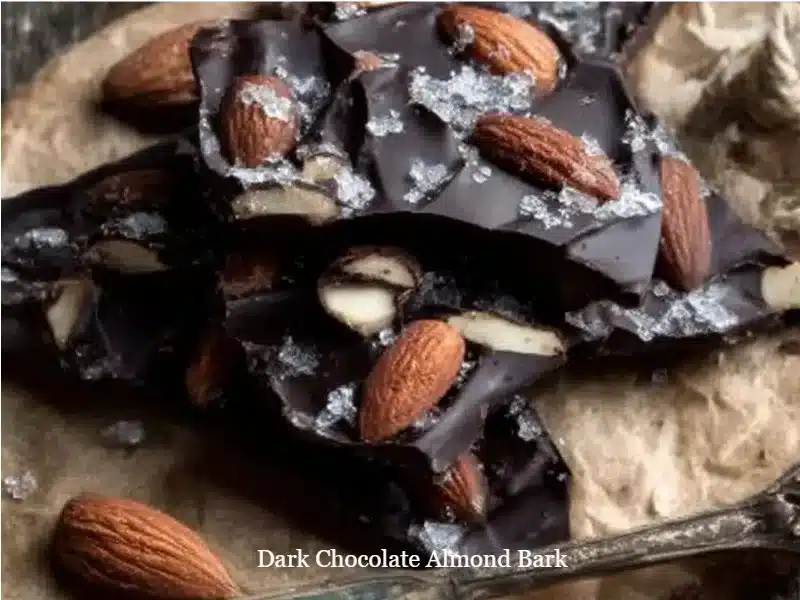
Dark Chocolate Almond Bark
The first bite is a clean snap and bitter-sweet shimmer on the tongue — this dark chocolate almond bark delivers bold chocolate flavor with a crunchy almond crunch and a salty finish. I developed this version after testing melt-and-pour methods 10 times and tasting dozens of chocolate-to-nut ratios; the balance here is deliberate. This recipe uses just three main ingredients and a simple temper-free method so home cooks can get glossy, stable bark without fancy equipment. If you love layered chocolate desserts, see how this bark pairs with richer treats like dark chocolate mousse cake for an elegant dessert plate. Read on for exact measurements, timing, and pro tips so your bark sets perfectly every time.
Why This Recipe Works
- High chocolate-to-nut ratio gives a glossy surface and clean snap without being overly sweet.
- Toasting the almonds brings out oils and aroma, which improves crunch and mouthfeel.
- A small amount of neutral oil (if used) smooths melting and helps the chocolate set with a better sheen.
- Chilling the bark on parchment prevents bloom (pale streaks) and preserves the glossy finish.
- Coarse flaky salt added at the end heightens chocolate bitterness and balances sweetness.
Ingredients Breakdown
- 300 g (10.5 oz) good-quality dark chocolate (70% cacao recommended): The chocolate is the flavor backbone. Choose chocolate you like eating by the bar. Avoid compound chocolate with vegetable fats.
- Substitution: Use 55–62% dark chocolate for milder bitterness; expect a slightly softer set.
- 180 g (1 1/4 cups) whole almonds, toasted: Almonds add crunch and a nutty note. Toasting concentrates flavor and releases oils.
- Substitution: Use hazelnuts or pecans 1:1 — flavor will change but technique stays the same.
- Impact warning: If you use raw almonds without toasting, the bark tastes flatter and the nuts will be less aromatic.
- 1/2 tsp (2–3 g) flaky sea salt (such as Maldon), plus extra for sprinkling: Flake salt adds texture and a clean finish. Avoid fine table salt; it dissolves completely and loses the crunch.
- Optional: 1 tbsp (15 ml) neutral oil (grapeseed or light olive) if you want extra shine and slightly softer break.
- Impact warning: Oil will make the chocolate set a touch softer; omit if you want the firmest snap.
Essential Equipment
- Baking sheet (quarter-sheet or similar) lined with parchment or a silicone mat — the chocolate spreads thin and needs an even, non-stick surface.
- Heatproof bowl for a double boiler or a microwave-safe bowl. A double boiler provides gentler heat; the microwave is faster.
- Instant-read thermometer (digital) recommended for tempering or accurate melting. If you don’t have one, use short microwave bursts and rely on texture cues.
- Offset spatula or flexible silicone spatula for spreading chocolate smoothly.
- Food processor or chopping knife for roughly chopping almonds if you prefer bite-sized pieces.
- Rack or cool surface to chill the sheet pan evenly. If you lack a baking sheet, a rimmed plate will work for smaller batches.
- Workaround: No thermometer? Use the microwave method: heat in 15–20 second bursts, stirring between bursts until almost melted, then stir until fully smooth.
Step-by-Step Instructions
Prep Time: 15 minutes. Cook Time: 5–10 minutes active. Inactive Time: 20–30 minutes to set. Total Time: about 45 minutes. Servings: makes 12 pieces; serving size 1 piece (~40 g).
Step 1: Toast the Almonds
Preheat your oven to 175°C (350°F). Spread 180 g (1 1/4 cups) whole almonds on a baking sheet and toast for 8–10 minutes, stirring once, until fragrant and lightly browned. Remove and let cool; chop if you prefer smaller pieces — the nuts should be warm or at room temperature when added.
Step 2: Chop the Chocolate
Chop 300 g (10.5 oz) dark chocolate into small, uniform pieces so it melts evenly. Place two-thirds of the chocolate in a heatproof bowl and reserve the rest for stirring in or for a scatter topping. Small pieces melt faster and reduce the risk of scorching.
Step 3: Melt the Chocolate (Microwave Method)
Microwave the bowl of chocolate in 15–20 second bursts at 50% power, stirring between bursts, until about 90% melted — small lumps should remain. Stir for 30–60 seconds until completely smooth. Total active microwave time is usually 1–2 minutes depending on wattage. Do not overheat — chocolate burns easily.
Step 4: Melt the Chocolate (Double Boiler Option)
Set the bowl over a saucepan of barely simmering water (do not let the bowl touch the water). Stir the chocolate until melted and smooth, about 3–5 minutes. Remove from heat. For a shinier finish, add 1 tbsp (15 ml) neutral oil now and stir until incorporated.
Step 5: Add Reserved Chocolate and Cool Slightly
Stir in the reserved 100 g (3.5 oz) chopped chocolate to lower temperature and stabilize shine; this acts like seeding. If tempering, cool to 27–28°C (80–82°F) then gently rewarm to 31–32°C (88–90°F) for dark chocolate. For a temper-free method, simply let the melted chocolate sit 3–4 minutes to cool slightly before spreading.
Step 6: Assemble and Spread
Pour the melted chocolate onto the prepared parchment-lined sheet and spread to an even 5–7 mm (about 1/4 inch) thickness using an offset spatula, working quickly — the chocolate begins to set as it cools. Scatter the toasted almonds evenly over the surface and press lightly so they adhere. Sprinkle 1/2 tsp (2–3 g) flaky salt across the top for finish.
Step 7: Set and Break
Let the bark set at room temperature for 10–15 minutes, then move to the refrigerator for 15–20 minutes until fully firm. Break into 12 uneven pieces by hand or score with a knife for cleaner edges. Store as directed below.
Expert Tips & Pro Techniques
- Avoid bloom (white streaks): Rapid temperature swings or condensation cause bloom. Let bark come to room temperature before moving it between environments.
- Common mistake: overheating chocolate. If it smells acrid or grainy, it was scorched. Stop heating at the first sign of steam and stir gently.
- Make-ahead: Bark stores well — make it up to 3 days ahead and keep in an airtight container in a cool place. For longer storage, freeze (see below).
- Professional technique for home cooks: Tempering adds a professional snap. Try basic seeding tempering (heat, cool, reheat) with an instant-read thermometer for glossy, stable bark.
- Knife vs. hand break: For gift boxes, score lines with a ruler and a warm knife for uniform pieces.
- Nut prep tip: Toss whole toasted almonds in a splash of melted chocolate before scattering to ensure even adhesion and coverage.
Storage & Reheating
- Refrigerator: Store bark in an airtight container in a single layer separated by parchment for up to 10 days. Keep it away from strong odors.
- Freezer: Bark freezes well for up to 3 months. Flash-freeze on a sheet until solid (about 30 minutes), then transfer to a freezer-safe bag with parchment between layers. Thaw in the refrigerator for 30–60 minutes before serving.
- Reheating: Avoid microwaving — heat makes chocolate bloom. If you need softened chocolate for drizzling, gently warm in a double boiler or in short microwave bursts, stirring frequently until fluid.
Variations & Substitutions
- Salted Orange Bark: Add 1 tsp (2 g) orange zest to the melted chocolate and swap almonds 1:1 for candied orange peel pieces. No change to chill time.
- Nut-Free Version: Replace almonds with 180 g (1 1/4 cups) toasted pumpkin seeds or puffed quinoa for crunch. Texture will be lighter; press seeds gently into chocolate so they stick.
- Vegan / Dairy-Free: Ensure chocolate is dairy-free and use plant-based neutral oil if adding shine. No other changes.
- Spiced Bark: Stir 1/4 tsp ground cinnamon and a pinch of cayenne into the melted chocolate for warm spice. Flavor intensifies slightly as it sets — start small.
- Chunky Mix-In: For texture variety, fold in 50 g (1/3 cup) dried cherries or 30 g (1/4 cup) chopped crystallized ginger at Step 6; this adds chew without changing set time.
Serving Suggestions & Pairings
- Serve with espresso or a bold black tea to contrast the bitter chocolate.
- For a dessert board, pair pieces with soft cheeses and sliced pears for a sweet-salty plate — try it alongside our Belgian chocolate cake for a chocolate-forward dessert spread.
- Garnish trays with whole roasted almonds and extra flake salt; the sparkle makes for elegant gifting.
- Pair with fortified wine like tawny port or a smoky single-malt whisky to emphasize bitter and nutty notes.
Nutrition Information
Per serving (1 piece). Recipe makes 12 pieces; serving size ~40 g.
- Calories: 240 kcal
- Total Fat: 18 g
- Saturated Fat: 5 g
- Cholesterol: 0 mg
- Sodium: 45 mg
- Total Carbohydrates: 15 g
- Dietary Fiber: 5 g
- Sugars: 7 g
- Protein: 5 g
Nutrition values are estimates. Actual values may vary based on specific ingredients and preparation methods.
Frequently Asked Questions
Q: Why did my bark turn out dull or streaky?
A: Dull or streaky chocolate is usually bloom from temperature swings or condensation. Keep the melted chocolate at a steady warm temperature and avoid rapid cooling. If it blooms, it’s still safe to eat.
Q: Can I make this without nuts?
A: Yes. Replace almonds with toasted pumpkin seeds or pretzel pieces 1:1 for crunch and similar mouthfeel.
Q: Can I double this recipe for a party?
A: Yes, you can double the recipe. Spread the chocolate across two baking sheets rather than crowding one sheet to ensure even thickness and setting.
Q: Can I prepare the bark the night before?
A: Absolutely. Make it the night before and store in an airtight container at room temperature or in the fridge if your kitchen is warm. Bring to room temperature before serving for best texture.
Q: How long does this keep in the fridge?
A: Stored in an airtight container, the bark stays fresh in the fridge for up to 10 days. For longer storage, freeze up to 3 months.
Q: Do I need to temper the chocolate?
A: Tempering is not required for good results; the seeding or chill method here produces a glossy, stable bark. Temper if you want professional-level snap and shine — see Step 5 for temperatures.
Q: Can I use chocolate chips instead of a bar?
A: You can, but chips often include stabilizers that make melting slower and can affect texture. Using chopped chocolate bars tends to give a smoother melt and better flavor.
Conclusion
If you want another riff on salted chocolate and nuts, try the recipe inspiration at Fork Knife Swoon’s salted dark chocolate almond bark for a different take on finishing salts and nut ratios. For a super-simple, three-ingredient version, see Healthful Blondie’s dark chocolate almond bark which demonstrates how few ingredients you need for a quick treat.
Print
Dark Chocolate Almond Bark
- Total Time: 45 minutes
- Yield: 12 pieces 1x
- Diet: Vegetarian
Description
This dark chocolate almond bark delivers bold chocolate flavor with a crunchy almond crunch and a salty finish. A simple temper-free method for glossy, stable bark.
Ingredients
- 300 g (10.5 oz) good-quality dark chocolate (70% cacao recommended)
- 180 g (1 1/4 cups) whole almonds, toasted
- 1/2 tsp (2–3 g) flaky sea salt, plus extra for sprinkling
- 1 tbsp (15 ml) neutral oil (optional)
Instructions
- Preheat your oven to 175°C (350°F). Spread almonds on a baking sheet and toast for 8–10 minutes, stirring once, until fragrant and lightly browned.
- Chop the dark chocolate into small, uniform pieces.
- Microwave the bowl of chocolate in 15–20 second bursts at 50% power until 90% melted, stirring between bursts.
- Set the bowl over a saucepan of barely simmering water and stir until melted and smooth, about 3–5 minutes.
- Stir in the reserved chopped chocolate to cool slightly and stabilize shine.
- Pour the melted chocolate onto the prepared sheet and spread to an even thickness.
- Let the bark set at room temperature for 10–15 minutes, then refrigerate for 15–20 minutes until firm.
Notes
Store in an airtight container for up to 10 days. Bark can be frozen for up to 3 months.
- Prep Time: 15 minutes
- Cook Time: 10 minutes
- Category: Dessert
- Method: Baking
- Cuisine: American
Nutrition
- Serving Size: 1 piece
- Calories: 240
- Sugar: 7g
- Sodium: 45mg
- Fat: 18g
- Saturated Fat: 5g
- Unsaturated Fat: 8g
- Trans Fat: 0g
- Carbohydrates: 15g
- Fiber: 5g
- Protein: 5g
- Cholesterol: 0mg