
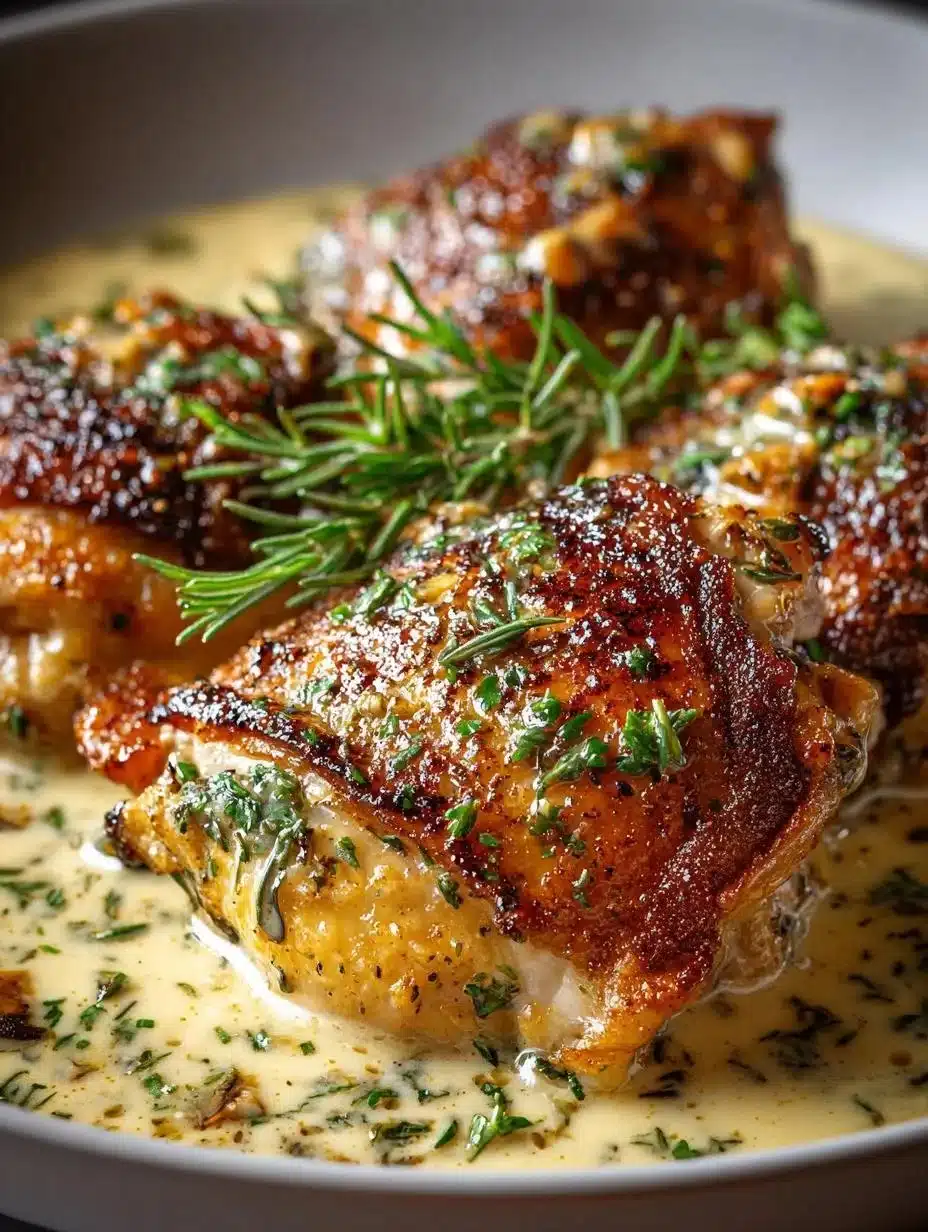
Traditional Creamy Garlic Chicken Thighs guide
A warm pan, the sizzle of seasoned chicken skin, and a glossy, garlicky cream sauce that clings to each tender bite—this is the immediate promise of a great creamy garlic chicken dish. In this Traditional Creamy Garlic Chicken Thighs guide you’ll learn not only how to make a reliably delicious meal, but also why each step matters and how to adapt the technique to your skill level and kitchen.
By the end of this guide you’ll be able to: execute a foolproof creamy garlic chicken thigh recipe, troubleshoot texture and flavor problems, adapt the dish for dietary needs, and invent tasteful variations. Whether you’re cooking your first pan-seared chicken or looking to refine an advanced braise, this guide is built to be a long-term reference.
(For a mushroom-forward twist or to explore similar comforting preparations, see a related recipe for Creamy Garlic Mushroom Chicken Thighs.)
Background & Context
Creamy garlic chicken is familiar across home kitchens because it combines simple, accessible ingredients with cooking techniques that amplify flavor: browning, deglazing, and gentle simmering. The dish sits at the intersection of pan-searing and short braising—fast enough for weeknights, rich enough for guests.
If you search the "Authentic Creamy Garlic Chicken Thighs origin," you’ll find many regional adaptions rather than a single provenance. Variants appear in French-style cream sauces, Italian garlic-forward dishes, and modern American skillet meals. Its adaptability explains the dish’s widespread popularity: it can be rustic or refined.
Personal note: cooks often discover the dish through improvisation—leftover cream, a few garlic cloves, and chicken thighs. That improvisational origin is part of why the method is so forgiving and teachable.
For context on anti-inflammatory comfort soups that use similar flavor foundations, take a look at this Anti-Inflammatory Creamy Chicken Soup or its earlier variant at this link.
Why This Approach Works
This guide favors a classical technique: brown the chicken for flavor, build the sauce on those browned bits (fond), and finish gently so the cream stays silky. There are three core advantages to this method.
- Flavor concentration: Browning produces Maillard flavors. Skipping it reduces depth.
- Texture control: Short, controlled cooking keeps thighs tender while allowing sauce to thicken without curdling.
- Flexibility: The method works with bone-in or boneless thighs, stovetop or oven finishes.
Common doubts addressed:
- “Is cream necessary?” Not strictly—milk + a starch can suffice, but cream yields stability and mouthfeel.
- “Won’t garlic burn and become bitter?” Use whole or smashed garlic early when sautéing aromatics, or add minced garlic later; both approaches work if timed right.
Practical takeaway: this approach is resilient; it lets you trade ingredients without breaking the technique.
Core Concepts Explained
Breaking the dish into its fundamental components helps you control outcome and improvise confidently.
- Protein selection: bone-in, skin-on thighs give more flavor and stay moist. Boneless cooks faster.
- Maillard reaction: browning creates complex savory flavors. Pat chicken dry and use a hot pan.
- Fond and deglazing: browned bits on the pan are flavor anchors. Deglaze with wine, stock, or water to mobilize them.
- Emulsification: cream binds with pan juices; a brief simmer and gradual incorporation prevents separation.
- Aromatics: garlic is central, but onions, shallots, or chives complement it. Add herbs late for freshness.
Alternatives and substitutions:
- Dairy-free: use canned coconut milk (full-fat) and a splash of lemon for brightness.
- Low-fat: use low-fat milk plus a slurry (cornstarch or flour) to thicken; avoid high heat to reduce curdling.
- Herb swaps: thyme and rosemary are classic; parsley or tarragon give a lighter profile.
For ideas on transforming the basic sauce into handhelds, see these Cheesy Garlic Chicken Wraps.
Tools, Resources, or Foundations
Essentials:
- Heavy skillet (cast iron or stainless steel) for even heat and fond development.
- Tongs for safe flipping.
- Instant-read thermometer to reliably judge doneness.
- Wooden spoon or silicone spatula.
Optional enhancements:
- Ovenproof skillet for finishing in the oven.
- Blender or immersion blender for a smoother sauce.
- Deglazer choices: dry white wine, dry vermouth, or low-sodium chicken stock.
Budget-friendly or beginner alternatives:
- Nonstick skillet works for beginners but won’t produce as much fond.
- Use a digital probe thermometer sold inexpensively online; it saves guesswork.
Useful resource: a sauce thickening primer—if you prefer to thicken without flour, a cornstarch slurry (1:1 cornstarch to cold water) added in small doses works well.
Step-by-Step Process
This section walks you through a reliable method, with time estimates and troubleshooting notes.
Total active time: ~35–45 minutes.
Serves: 4.
Ingredients (baseline):
- 6–8 chicken thighs, bone-in skin-on (or 8 boneless)
- Salt and freshly ground black pepper
- 1–2 tbsp olive oil or neutral oil
- 1 tbsp butter (optional for flavor)
- 4–6 garlic cloves, minced (plus 2 whole cloves for gentle sauté)
- 1 small shallot or 1/2 small onion, minced (optional)
- 1/2 cup dry white wine or 3/4 cup chicken stock (for deglazing)
- 1 to 1 1/2 cups heavy cream
- 1–2 tsp Dijon mustard or lemon juice (acid to balance)
- Fresh herbs (thyme, rosemary, parsley)
- Optional: mushrooms, spinach, sun-dried tomatoes
Prep (10 minutes):
- Pat the thighs dry and season liberally with salt and pepper.
- Mince garlic and shallot. Gather cream and deglazing liquid.
Step 1 — Sear the chicken (8–12 minutes)
- Heat skillet over medium-high until hot. Add oil.
- Place thighs skin-side down, press to ensure contact. Cook until skin is deep golden, 6–8 minutes.
- Flip and sear the other side 2–3 minutes. Transfer to a plate.
Common mistake: overcrowding the pan reduces browning. Solution: cook in batches.
Step 2 — Build the flavor base (3–4 minutes)
- Lower heat to medium. Add butter if using. Sauté shallot until translucent.
- Add minced garlic and cook 30–45 seconds until fragrant; don’t let it brown excessively.
- Deglaze with wine or stock, scraping browned bits (fond) from the pan.
Pro tip: deglazing while pan is hot lifts maximum flavor quickly.
Step 3 — Finish with cream and simmer (8–12 minutes)
- Return chicken to pan, skin-side up.
- Add cream and a teaspoon of Dijon or lemon. Bring to a gentle simmer.
- Cover partially and simmer until internal temperature reaches 165°F (74°C) for boneless, or 175–180°F (79–82°C) for bone-in for fall-off-the-bone tenderness—about 8–12 minutes depending on size.
H3 — Thickening options and textures
- For a light sauce: reduce by simmering uncovered until desired thickness.
- For a thicker sauce: remove chicken, reduce sauce, or stir in a small slurry (½ tsp cornstarch mixed with cold water) and simmer 1–2 minutes.
- For silky cream: finish with a knob of cold butter whisked in off heat.
Common mistake: high boil causes cream to split. Solution: keep simmer gentle and add cream off heat if worried.
Step 4 — Finish and rest (2–3 minutes)
- Taste and adjust salt, pepper, and acid. Add chopped herbs.
- Let the chicken sit 3–5 minutes before serving to let juices redistribute.
For a complete one-pot approach that emphasizes simplicity, you might compare techniques with this One Pot Creamy Garlic Chicken – Cook With Dana (see conclusion for full link).
Expert Techniques & Insights
Small technique changes elevate the dish significantly.
- Salt early, adjust later: Seasoning the chicken before searing develops better crust; always adjust sauce salt after reduction.
- Layered garlic: Use one whole clove early for gentle aromatics and minced garlic at the end for a brighter garlic punch.
- Temperature control: Use medium heat when adding cream. Too hot → separation. Too cool → no reduction.
- Resting matters: Let the dish sit briefly off heat for sauce viscosity to settle and flavors to meld.
- Make-ahead: Cook fully, cool, and refrigerate. Reheat gently over low heat with a splash of cream or stock to revive sauce.
Lessons from experience:
- Bone-in thighs are more forgiving; the bone insulates meat and keeps it tender.
- Freshly cracked pepper adds nuance—pre-ground pepper can be one-note.
Variations & Adaptations
Different contexts and dietary needs call for flexible approaches.
- Weeknight quick version (beginner): Use boneless thighs and skip wine; reduce cook time by 5–8 minutes.
- Dinner-party upgrade (advanced): Finish sauce with a tablespoon of mascarpone or grated Parmesan and a few drops of truffle oil.
- Low-carb: Serve over roasted cauliflower or sautéed greens instead of starches.
- Dairy-free: Full-fat coconut milk plus lemon juice and a spoon of mustard gives a pleasing tang.
- Mushroom addition: Add sliced mushrooms after searing chicken; they absorb sauce and deepen umami. (See a mushroom-focused adaptation at Creamy Garlic Mushroom Chicken Thighs.)
Skill-level adaptations:
- Beginner: Stick to one pan, use boneless thighs, follow base recipe.
- Intermediate: Add wine deglaze and herbs; practice temperature control.
- Advanced: Make a pan sauce reduction with cream and finish with butter and cheese for gloss and depth.
Analysis & Benefits Breakdown
A structured comparison helps choose when this dish is best.
| Aspect | Strengths | Limitations | Considerations |
|—|—:|—|—|
| Flavor | Rich, garlicky, complex from fond | Can be heavy if over-creamed | Use acid (lemon/Dijon) to balance |
| Ease | Simple technique; forgiving | Requires timing to avoid curdling | Use thermometer and low simmer |
| Time | Ready in 40–50 mins | Not the fastest for bone-in | Use boneless for weeknights |
| Cost | Uses pantry staples | Heavy cream adds cost | Use milk + slurry as budget option |
| Versatility | Adapts to proteins and diets | Some substitutions change character | Choose substitutes intentionally |
Quick quantitative note: using boneless thighs shaves 8–12 minutes; bone-in rewards with deeper flavor but increases cook time.
Preparation, Retention & Long-Term Use
How to prepare effectively:
- Mise en place: Have garlic, shallot, cream, and liquids measured before you start.
- Preheat the pan: Ensures immediate sear.
- Use an instant-read thermometer to avoid guesswork.
Retention/reuse strategies:
- Reinforce learning by cooking the recipe three times with small tweaks: once as written, once with mushrooms, once dairy-free.
- Keep a cooking journal noting times, pan types, and changes—this speeds learning.
Longevity of the skill:
- Mastering fond, deglazing, and gentle emulsification transfers directly to many other dishes: pan sauces for pork, steak, or fish.
Troubleshooting & Common Problems
Problem → Cause → Solution
- Sauce is thin → Not reduced enough → Simmer uncovered until it coats the spoon; or add a 1:1 cornstarch slurry in tiny amounts.
- Sauce separated/curdled → Too-high heat or sudden temperature change → Remove from heat; whisk in a spoonful of cool cream or cold butter off heat to bring it back.
- Garlic tastes bitter → Burned garlic → Start again with fresh garlic; add minced garlic later in the process.
- Chicken dry → Overcooked or pan too hot → Use an instant-read thermometer and aim for 165–175°F; for bone-in, allow extra time at gentle simmer rather than high heat.
- Bland sauce → Under-seasoned or insufficient fond → Increase salt carefully, add acidity (lemon or Dijon), and ensure proper deglazing to pull up fond.
Reassurance: most issues are fixable with small adjustments; practice reduces frequency.
FAQ
- How can I make this dish lighter without losing flavor?
- Use low-fat milk with a small cornstarch slurry for thickness and add more acid (lemon or mustard) to brighten flavors.
- Can I use chicken breasts instead of thighs?
- Yes, use breasts carefully: sear quickly and finish in oven to avoid dryness; reduce simmer time.
- Is wine necessary for deglazing?
- No. Chicken stock works fine. Wine adds acidity and flavor complexity but is optional.
- How long will leftovers keep?
- Refrigerate in an airtight container up to 3 days. Reheat gently with a splash of stock or cream.
- Can I freeze this dish?
- Freeze cooked chicken and sauce for up to 2 months. Reheat slowly; the texture of cream can change slightly.
- What if I don’t have heavy cream?
- Use whole milk plus 1 tbsp butter to add fat, or use a slurry to thicken low-fat milk.
- How do I prevent burned garlic?
- Add minced garlic once aromatics are softened and keep heat moderate. Alternatively, add garlic toward the end of cooking.
- Should I serve skin-on or remove skin before serving?
- Serve skin-on if you want texture and flavor; remove if serving to someone who prefers lower fat.
Related Topics & Next Steps
- Pan sauces and deglazing techniques: refine your ability to build flavor quickly.
- Sauces and emulsions: practice finishing sauces with butter and acid.
- Other creamy chicken dishes: explore variations like creamy mushroom or herb-forward versions.
- Bread and starch pairings: learn which sides balance creaminess (roasted potatoes, polenta, rice).
For a sauce-forward burger or condiment angle, explore this Caramelized Onion and Garlic Burger Creamy Herb Sauce.
Quick Reference Summary
- Key steps: pat dry → season → high-heat sear → remove → sauté aromatics → deglaze → add cream → simmer gently → rest.
- Timing: 35–45 minutes total; 10 minutes prep.
- Temperature targets: chicken 165–175°F; gentle simmer for sauce.
- Troubleshooting quick fixes: for thin sauce reduce; for split sauce add cold butter off heat.
Conclusion
This guide connected technique with reason so you can move from following a recipe to understanding and adapting it. You’ve learned the fundamentals of browning, deglazing, and finishing a creamy garlic sauce, plus practical adaptations for dietary needs and time constraints.
For simple, homestyle inspiration and another classic take on a creamy garlic chicken, try the Creamy Garlic Chicken recipe at The Country Cook: Creamy Garlic Chicken – The Country Cook.
If you prefer a one-pot, minimal cleanup version with step-by-step visuals, see this One Pot Creamy Garlic Chicken by Cook With Dana: One Pot Creamy Garlic Chicken – Cook With Dana.
If you’d like, I can convert this into a printable recipe card, a step-by-step video script, or a reusable system prompt for content creation. Which would you prefer next?
Traditional Creamy Garlic Chicken Thighs
- Total Time: 40 minutes
- Yield: 4 servings 1x
- Diet: Gluten-Free
Description
A reliable recipe for creamy garlic chicken thighs, combining seasoned chicken and a rich garlic cream sauce.
Ingredients
- 6–8 chicken thighs, bone-in skin-on (or 8 boneless)
- Salt and freshly ground black pepper
- 1–2 tbsp olive oil or neutral oil
- 1 tbsp butter (optional for flavor)
- 4–6 garlic cloves, minced (plus 2 whole cloves for gentle sauté)
- 1 small shallot or 1/2 small onion, minced (optional)
- 1/2 cup dry white wine or 3/4 cup chicken stock (for deglazing)
- 1 to 1 1/2 cups heavy cream
- 1–2 tsp Dijon mustard or lemon juice (acid to balance)
- Fresh herbs (thyme, rosemary, parsley)
- Optional: mushrooms, spinach, sun-dried tomatoes
Instructions
- Pat the thighs dry and season liberally with salt and pepper.
- Mince garlic and shallot. Gather cream and deglazing liquid.
- Heat skillet over medium-high until hot. Add oil, then place thighs skin-side down, pressing to ensure contact. Cook until skin is deep golden, about 6–8 minutes.
- Flip and sear the other side for 2–3 minutes before transferring to a plate.
- Lower heat to medium. Add butter if using. Sauté shallot until translucent, then add minced garlic and cook for 30–45 seconds.
- Deglaze with wine or stock, scraping browned bits (fond) from the pan.
- Return chicken to the pan skin-side up. Add cream and a teaspoon of Dijon or lemon, and bring to a gentle simmer.
- Cover partially and simmer until the internal temperature reaches 165°F (74°C) for boneless or 175–180°F (79–82°C) for bone-in, about 8–12 minutes.
- Taste and adjust salt, pepper, and acid. Add chopped herbs and let sit for 3–5 minutes before serving.
Notes
For a lighter version, use low-fat milk with a cornstarch slurry. Adjust seasoning according to taste after simmering.
- Prep Time: 10 minutes
- Cook Time: 30 minutes
- Category: Main Course
- Method: Pan-Seering and Simmering
- Cuisine: American
Nutrition
- Serving Size: 1 serving
- Calories: 450
- Sugar: 5g
- Sodium: 500mg
- Fat: 30g
- Saturated Fat: 15g
- Unsaturated Fat: 10g
- Trans Fat: 0g
- Carbohydrates: 5g
- Fiber: 0g
- Protein: 35g
- Cholesterol: 90mg