
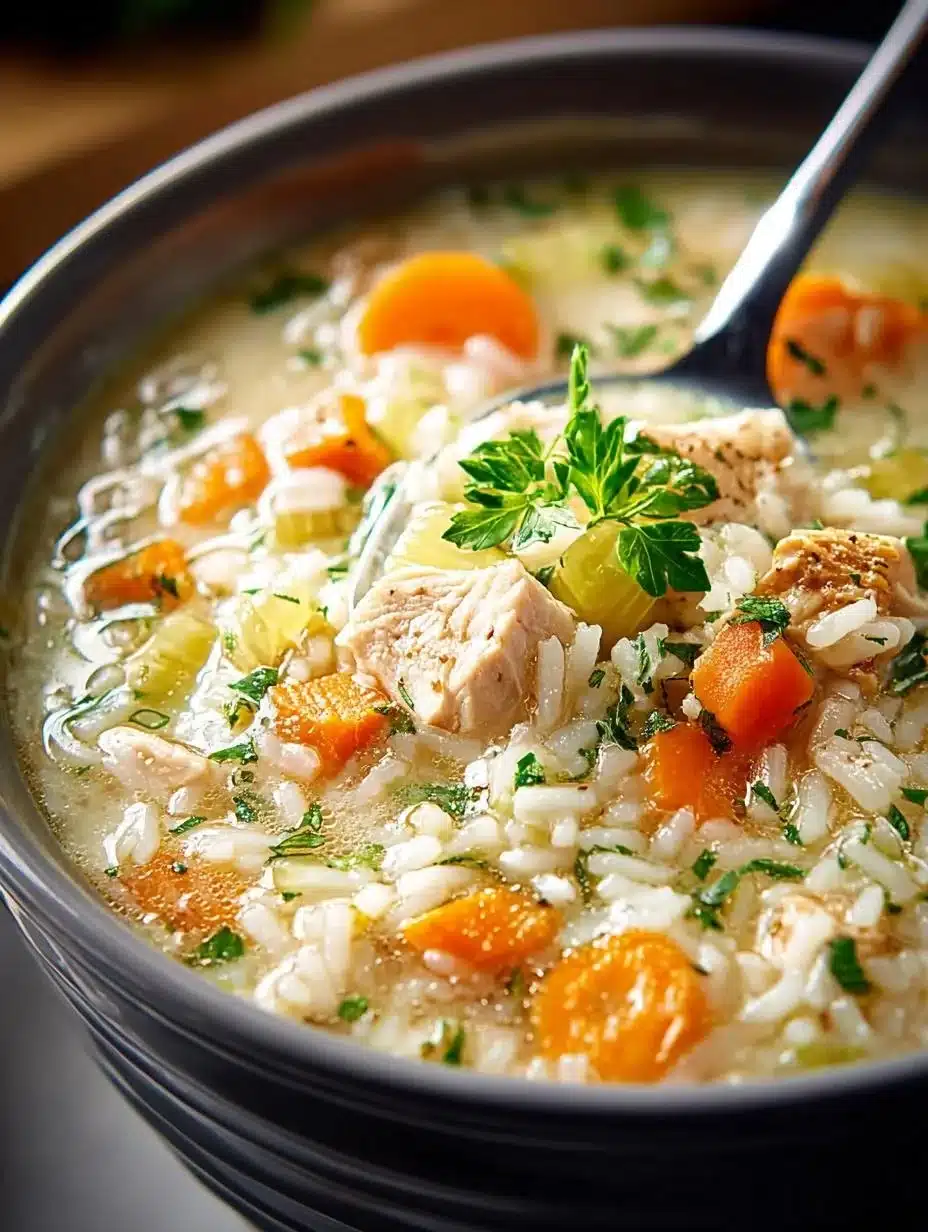
Traditional Comforting Turkey Rice Soup guide
There’s a particular kind of comfort that arrives in a bowl: warm broth, tender turkey, and rice that swells with flavor. If you’ve ever held a spoon to your lips and felt a day’s worries soften, you’ve met this soup. This guide is a practical, step-by-step companion for anyone who wants to master a Traditional Comforting Turkey Rice Soup — from the origins and technique to creative variations and troubleshooting.
What you’ll gain: a clear understanding of why ingredients and methods matter, a repeatable step-by-step recipe progression (beginner → intermediate → advanced), plus preservation, make-ahead strategies, and troubleshooting. You’ll also find links to related recipes and quick references to return to when you need direction.
For cooks who love classic broths, this guide complements other poultry-and-rice recipes like Chicken and Rice Soup, offering a turkey-specific approach that maximizes depth, texture, and nostalgia.
Background & Context
Turkey-and-rice soups are part of a long culinary tradition: using leftover cooked poultry and simple pantry staples to create nourishing meals. Across cultures, rice in soup appears as congee, arroz caldo, khichdi-like variations, and classic Western chicken-and-rice broths. The turkey version grew in prominence in households that roast or smoke whole birds for celebrations, then stretch the bounty into weekday meals.
Historically, using rice as a thickening and sustaining agent dates back centuries. In colder climates or times of scarcity, rice provided calories and body, while leftover meat supplied protein and flavor. In the United States, the “post-holiday turkey soup” is a ritual — transforming Thanksgiving remnants into something restorative.
Practical relevance: this soup is economical, adaptable to ingredient availability, and provides an easy entry point to learning stock-making and gentle simmering techniques. If you enjoy richer, creamy versions, see how techniques from creamy chicken–mushroom–wild-rice preparations can be adapted to turkey.
Personal note: I often teach this recipe when mentoring new cooks — it’s forgiving, teaches important skills (skimming, deglazing, timing rice), and always returns a satisfying bowl. The process turns leftovers into an intentional, flavorful meal rather than a rushed throw-together.
Why This Approach Works
This guide favors a fundamentals-first approach that balances flavor and accessibility.
- Building flavor from stock: Real depth comes from slow-extracted aromatics, not excessive seasoning.
- Rice timing as texture control: You can control body and mouthfeel by when and how you add rice.
- Leftovers-first efficiency: Using cooked turkey reduces cooking time and preserves moisture.
Accessibility and flexibility: the method works whether you start with raw parts for stock or leftover carved turkey. That means this soup adapts to budgets, time constraints, and dietary preferences.
Common objections addressed:
- “Is making stock worth it?” Yes—homemade stock transforms the soup. That said, good-quality store-bought stock or broth is a practical alternative for busy cooks.
- “Does rice get mushy?” Not if you follow rice-type timings and add rice later if making leftovers.
- “Can I make it dairy-free?” Absolutely — the core technique is brothy and naturally dairy-free.
Core Concepts Explained
Break the soup down into logical components: stock, aromatics, body (rice), turkey, seasoning, and finishing.
Stock (foundation)
- Purpose: carries the core flavor and determines mouthfeel.
- Example: turkey carcass roasted and simmered with onion, carrot, and celery for 1–3 hours yields a clear, flavorful stock.
Aromatics (flavor layers)
- Onions, carrots, celery (mirepoix) are classic. Garlic, ginger, or bay leaf add nuance.
- Tip: sweat aromatics briefly to unlock sweetness before adding stock.
Rice (texture + sustenance)
- Types: long-grain (separate, less starchy), medium-grain (plump), short-grain (creamier).
- Substitute: wild rice blends add chew and earthy notes; see creamy wild-rice examples like creamy chicken–wild-rice–mushroom soup for texture ideas.
Turkey (protein)
- If using raw: cook on bone for maximum flavor and remove, shred meat after.
- If using leftover: add later to prevent drying.
Seasoning & finishing
- Salt late and taste; acid (lemon, vinegar) brightens.
- Herbs (parsley, dill, thyme) added at end preserve freshness.
Simplifications and substitutions:
- No time for stock? Use high-quality low-sodium broth, then concentrate flavor with a roasted turkey neck or a bouillon cube.
- No leftover turkey? Chicken or rotisserie chicken works equivalently.
Tools, Resources, or Foundations
Essentials:
- Large stockpot (6–8 qt) or Dutch oven.
- Fine-mesh strainer for clear stock.
- Sharp knife and sturdy cutting board.
- Wooden spoon and ladle.
Optional enhancements:
- Immersion blender for a lightly thickened finish.
- Fat separator for leaner stock.
- Rice cooker for precise rice timing if making a rice-first approach.
Budget-friendly alternatives:
- Use a smaller pot and scale recipe down.
- Frozen veggies and pre-cooked rice reduce prep time.
- Store-bought low-sodium turkey or chicken stock can stand in for homemade stock.
A brief commentary: invest in a good pot and a reliable thermometer. Good equipment elevates consistent results more than fancy gadgets.
Step-by-Step Process
Below is a progression from beginner to advanced, with time estimates and common pitfalls.
Beginner method (1–1.5 hours)
- Prepare stock:
- Combine turkey bones or carcass (leftover or raw) with 8 cups of water, 1 onion (quartered), 1 carrot, 1 celery stalk, and 1 bay leaf.
- Simmer gently 45–60 minutes. Skim foam once or twice. (Time: 45–60 min)
- Strain and return broth to pot.
- Add mirepoix (1 cup diced onion, 1 cup diced carrot, 1 cup diced celery). Simmer 10 minutes.
- Add rice (1 cup long-grain) and simmer 15–20 minutes until tender.
- Stir in shredded turkey (2 cups). Season with salt and pepper. Finish with chopped parsley. (Total: ~1–1.5 hrs)
Intermediate method (1.5–3 hours)
- Roast turkey bones first at 425°F for 30–40 minutes to deepen flavor.
- Make stock 2–3 hours on low simmer for richer extraction.
- Use medium-grain rice and add in stages: half at 15 minutes, rest at 5 minutes for more controlled texture.
- Deglaze roasting pan with a splash of white wine and add to stock for complexity.
(Time: ~2–3 hrs including roast)
Advanced method (3+ hours, restaurant-level)
- Clarify stock using egg-white raft for remarkable clarity and a refined mouthfeel.
- Use aromatic reductions: sweat and caramelize vegetables separately, then add to stock.
- Finish with a liaison (egg yolk + cream) for silkiness, or an emulsified herb oil.
(Time: 3–6 hrs depending on clarifying and reductions)
H3: Step details — timing for different rice types
- Long-grain white rice: 15–20 minutes.
- Short/medium-grain white rice: 18–25 minutes (creamier).
- Brown rice: 40–50 minutes — consider pre-cooking or par-cooking.
- Wild rice/blends: 40–60 minutes or pre-cook separately.
Common mistakes + how to avoid them
- Adding rice too early: wait until stock is simmering; add rice when liquid is at a gentle simmer.
- Burning aromatics: sweat over medium-low heat and stir.
- Overseasoning early: salt lightly during stock, adjust fully at the end.
Pro tips
- Reserve some shredded turkey to add right before serving to keep pieces moist and tender.
- For clearer broth, strain through cheesecloth or a fine-mesh sieve twice.
- Use a ladle to skim fat after chilling for easier removal.
Expert Techniques & Insights
Advanced strategies that refine quality and efficiency:
- Roasted-bone stock: oven-roast bones and veg until deeply browned to produce a richer, caramelized stock base with added depth.
- Reduction for intensity: reduce stock by one-third to concentrate flavors, then thin as needed before serving.
- Two-stage rice: cook rice separately and hold; add to individual bowls, then ladle hot broth over to avoid rice swelling further when reheating.
- Textural layering: combine two rice types (e.g., long-grain for body and wild rice for chew) for complex mouthfeel.
- Acid and aromatics at finish: small amounts of lemon or vinegar added at the end brighten without souring, while herbs added last retain freshness.
Lessons learned:
- Slow and low yields better clarity and mouthfeel in stock.
- Managing starch is the key to avoiding gluey soups.
Variations & Adaptations
This soup is a platform for many cultural and dietary twists.
- Creamy version: stir in a roux or finish with a liaison for a richer bowl. Inspiration can be taken from creamy chicken–mushroom wild rice techniques like creamy comfort chicken–mushroom–wild-rice soup.
- Ginger-turkey fusion: add sliced ginger, soy, and bok choy for a lighter, Asian-influenced broth (see related approach in ginger chicken soup with rice & bok choy).
- Gluten-free: skip thickening roux; rely on rice for body.
- Vegetarian adaptation: swap turkey with smoked tofu and use mushroom stock; wild rice adds hearty texture.
- Skill-level adaptations:
- Beginner: use leftover turkey and store-bought stock.
- Intermediate: roast bones for homemade stock.
- Advanced: clarify stock and finish with reduced emulsions.
Analysis & Benefits Breakdown
A quick comparative view of methods and outcomes to decide what suits your needs.
| Approach | Flavor Depth | Time Required | Texture Control | Best For |
|—|—:|—:|—:|—|
| Store-bought broth + leftover turkey | Moderate | 30–60 min | High (control rice) | Weeknight, beginner |
| Homemade roasted-bone stock | High | 2–4 hrs | Very High | Weekend cooking, entertaining |
| Reduced stock + liaison | Very High | 3–6 hrs | Silky, restaurant-style | Special occasions |
| Two-stage rice (separate cooking) | Medium | 45–90 min | Excellent for reheating | Meal prep, leftovers |
Strengths and limitations:
- Strengths: adaptable, economical, nourishing, easy to scale.
- Limitations: rice can overcook in leftovers; stock takes time if made from scratch.
- Considerations: plan rice strategy (cook separate if storing), and manage salt across stock and final seasoning.
Preparation, Retention & Long-Term Use
How to prepare effectively:
- Plan: roast bones immediately after a holiday meal and freeze stock for later soups.
- Portion: store stock in 2–4 cup containers for easy thawing.
Retention strategies:
- Freeze in ice cube trays for small-flavor boosts.
- Cool quickly: use an ice bath for the stock before refrigerating to keep it safe and clear.
Longevity:
- Refrigerate stock: 3–4 days.
- Freeze stock: 3–6 months for optimal quality.
- Cooked turkey in soup: 3–4 days refrigerated; freeze soups with rice separately (or freeze without rice and add freshly cooked rice after thawing).
Practical tip: for make-ahead meals, freeze soup without rice; cook rice freshly when reheating for the best texture.
Troubleshooting & Common Problems
Problem → Cause → Solution
Mushy, gluey texture
- Cause: rice overcooked or starch released into soup.
- Solution: cook rice separately next time or add rice at the last possible moment. Use long-grain rice for less starch.
Bland flavor
- Cause: under-extracted stock or under-seasoning.
- Solution: simmer stock longer, roast bones for depth, reduce stock to concentrate, or finish with acid and fresh herbs.
Oily surface
- Cause: fat rendered from turkey skin.
- Solution: chill and skim fat, use a fat separator, or skim with a spoon during simmer.
Cloudy broth
- Cause: boiling stock or insufficient straining.
- Solution: simmer gently and strain through a fine sieve or cheesecloth.
Dry shredded turkey
- Cause: overcooking or adding too early.
- Solution: reserve some turkey and add at end; warm gently rather than simmering.
If you encounter a different problem, describe it specifically and the likely cause will almost always relate to either timing, heat control, or ingredient proportions.
FAQ
Q1: Can I use leftover Thanksgiving turkey for this soup?
A1: Absolutely. Leftover roasted turkey is ideal. Add shredded pieces near the end to keep them tender.
Q2: Should I use white rice or wild rice?
A2: Use white long-grain for classic texture and quicker cooking. Wild rice adds chew and depth but requires longer cooking or pre-cooking.
Q3: How long should I simmer stock for best flavor?
A3: For a simple stock, 1–2 hours is adequate. For deep flavor, 3–4 hours. Longer yields more extraction but also more reduction.
Q4: Can I make this in a slow cooker or Instant Pot?
A4: Yes. Slow cooker: 6–8 hours low for stock. Instant Pot: 30–60 minutes under pressure for concentrated stock.
Q5: Is the soup freezer-friendly?
A5: Yes—freeze without rice, or freeze with rice but expect texture changes. Reheat gently.
Q6: How do I adjust salt if the stock is already seasoned?
A6: Use low-sodium stock or reduce added salt during final seasoning. Taste at the end and adjust.
Q7: What herbs best complement turkey rice soup?
A7: Parsley, thyme, dill, and chives work well. Add delicate herbs at the end.
Q8: Can I thicken the soup without dairy?
A8: Yes — reduce the stock, use a slurry (cornstarch + cold water), or purée some cooked vegetables for body.
Related Topics & Next Steps
If you enjoyed learning about turkey rice soup, next learnings include:
- Mastering bone broths and gelatin extraction techniques.
- Rice-specific cookery: differences in absorbent vs. non-absorbent grains.
- Soup preservation and meal-prep planning.
- Complementary recipes: try other comforting brothy meals like some of the chicken-and-rice variants listed earlier.
These skills will widen your repertoire for all kinds of one-pot, restorative meals.
Quick Reference Summary
- Foundation: good stock → controls final flavor.
- Rice timing: critical for texture; long-grain = less starch, wild = chewy.
- Turkey: add late if pre-cooked; cook on-bone for deeper stock.
- Season last; finish with acid and fresh herbs.
- For leftovers: freeze soup without rice or store rice separately.
Bookmark this section for a quick checklist before you cook.
Conclusion & Further Reading
You now have a complete, practical framework for mastering a Traditional Comforting Turkey Rice Soup — from stock foundations to finishing touches and advanced techniques. Try the two accessible quick recipes below for inspiration on working with leftovers and a fast weeknight approach:
- For a quick transformation of holiday leftovers, see this Leftover Turkey and Rice Soup (30 Minute Meal Ideas) – Girl and the ….
- If you want a simple, speedy method that still tastes homey, try this Turkey and Rice Soup (30 Minutes!)- Pinch and Swirl.
If you’d like, I can convert this guide into a reusable system prompt, adapt it into a printable recipe card, or create a checklist to evaluate your soup the next time you cook. Which would be most useful for you?

Traditional Comforting Turkey Rice Soup
- Total Time: 75
- Yield: 4 servings 1x
- Diet: None
Description
A warm and nourishing soup combining tender turkey, aromatic broth, and flavorful rice, perfect for using up holiday leftovers.
Ingredients
- 8 cups water
- 1 turkey carcass or 2 cups cooked turkey, shredded
- 1 onion, quartered
- 1 carrot, diced
- 1 celery stalk, diced
- 1 bay leaf
- 1 cup long-grain rice
- 1 cup diced onion
- 1 cup diced carrot
- 1 cup diced celery
- Salt and pepper, to taste
- Chopped parsley, for garnish
Instructions
- Combine turkey bones or carcass with 8 cups of water, 1 quartered onion, 1 diced carrot, 1 diced celery stalk, and 1 bay leaf in a large pot.
- Simmer gently for 45–60 minutes, skimming foam occasionally.
- Strain and return the broth to the pot.
- Add mirepoix (1 cup diced onion, carrot, celery) and simmer for 10 minutes.
- Add 1 cup long-grain rice and simmer for 15–20 minutes until tender.
- Stir in 2 cups shredded turkey; season with salt and pepper, and finish with chopped parsley.
Notes
Using leftover turkey is ideal for this recipe. For a richer broth, roast turkey bones before simmering.
- Prep Time: 15
- Cook Time: 60
- Category: Soup
- Method: Simmering
- Cuisine: American
Nutrition
- Serving Size: 1 serving
- Calories: 300
- Sugar: 3g
- Sodium: 450mg
- Fat: 10g
- Saturated Fat: 3g
- Unsaturated Fat: 5g
- Trans Fat: 0g
- Carbohydrates: 35g
- Fiber: 2g
- Protein: 20g
- Cholesterol: 60mg