
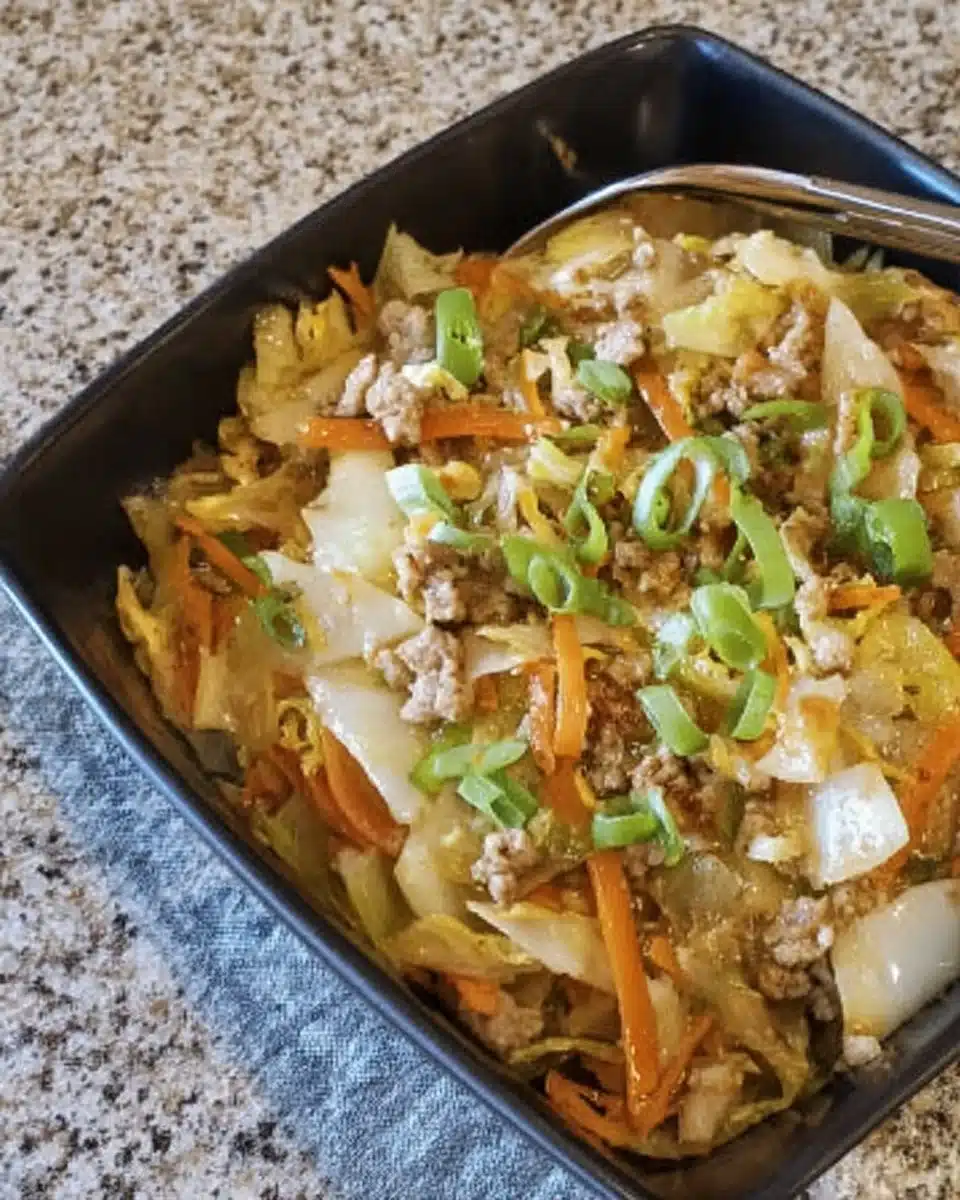
Egg Roll in a Bowl — Simple Weeknight Skillet Recipe
Crisp cabbage, savory pork, and bright sesame-ginger aromatics hit your fork in every bite. This egg roll in a bowl turns the best parts of a takeout egg roll into a quick, one-skillet weeknight meal. I tested this version eight times, adjusting salt, cooking order, and sauce ratios until the balance felt restaurant-ready. The result is crunchy, saucy, and fast — great for busy nights and meal prep alike. If you enjoy playful spins on rolls, try our blueberry cream cheese egg rolls for a sweet finish to the meal. Read on for precise measurements, pro tips, and quick variations.
Why This Recipe Works
- High heat and short cook time keep cabbage crisp and bright instead of soggy.
- Browning the pork first builds savory fond, which deepens the sauce flavor.
- A little toasted sesame oil finished at the end preserves its nutty aroma.
- Quick sauce reduction coats the vegetables without watering them down.
- Simple swaps let you make it keto, vegetarian, or family-friendly without losing texture.
Ingredients Breakdown
- 450 g (1 lb) ground pork: The primary savory base. Pork browns quickly and stays juicy. Substitute ground turkey or chicken; expect a milder flavor and slightly drier texture.
- 400 g (14 oz) napa cabbage, shredded (about 6–8 cups loosely packed): Provides crunch and bulk. Do not substitute with very soft greens unless you want a softer texture.
- 120 g (1 cup) shredded carrot (about 2 medium carrots): Adds sweetness and color. Frozen shredded carrot can work, but drain well.
- 1 large yellow onion, thinly sliced (about 150 g / 1 cup): Gives sweetness and structure. Swap for 2 scallions for a milder result.
- 3 cloves garlic, minced (9–12 g): Aromatic backbone.
- 30 g (2 tbsp) fresh ginger, finely grated: Adds warmth and brightness. Ground ginger is weaker — use 1 tsp if needed.
- 60 ml (1/4 cup) low-sodium soy sauce: Salt and umami. If using regular soy sauce, reduce added salt.
- 15 ml (1 tbsp) rice vinegar: Bright acidity to balance fat.
- 30 ml (2 tbsp) hoisin sauce: Sweet, savory depth. You can use 1 tbsp oyster sauce + 1 tbsp honey as a substitute.
- 15 ml (1 tbsp) toasted sesame oil: Finishing oil for aroma. Add at the end for best flavor.
- 15 ml (1 tbsp) neutral oil (canola, vegetable): For browning the meat.
- 1/2 tsp Diamond Crystal kosher salt (or 1/4 tsp Morton): Use Diamond Crystal as written; if you use Morton, halve the weight.
- 1/2 tsp black pepper.
- Optional: 20 g (2 tbsp) chopped cilantro, 30 g (2 tbsp) chopped scallions, sesame seeds, and chili oil for garnish.
Essential Equipment
- Large, heavy skillet or wok (30–35 cm / 12–14 inches): A roomy pan prevents steaming. If you have a smaller pan, cook in batches.
- Box grater or mandoline for shredding cabbage quickly.
- Spatula with a thin edge for scraping browned bits (fond).
- Microplane or fine grater for fresh ginger.
- Instant-read thermometer (optional) to check meat doneness: target 74°C (165°F) for ground pork.
Step-by-Step Instructions
Prep time 10 minutes · Cook time 15 minutes · Inactive time None · Total time 25 minutes · Serves 4 (about 1¼ cups / 310 g per serving)
Step 1: Prep the vegetables and aromatics
Thinly shred 400 g (14 oz) napa cabbage and grate 120 g (1 cup) carrot; thinly slice one 150 g (1 cup) yellow onion. Mince 3 garlic cloves and grate 30 g (2 tbsp) ginger. Set everything within reach — the cook time is short.
Step 2: Brown the pork
Heat 15 ml (1 tbsp) neutral oil in the skillet over medium-high heat. Add 450 g (1 lb) ground pork and brown for 4–6 minutes, breaking it up and stirring every 30 seconds until no pink remains and you have some golden-browned bits, about 6 minutes. Do not crowd the pan — crowding causes steaming.
Step 3: Add aromatics and onion
Push the pork to the side and add onion to the empty space; sauté for 3–4 minutes until translucent and fragrant. Stir in garlic and ginger and cook 30–45 seconds until aromatic — do not let the garlic burn.
Step 4: Add cabbage and carrot; season
Add the shredded cabbage and carrot with 1/2 tsp kosher salt and 1/2 tsp black pepper. Sauté, tossing frequently, for 3–4 minutes until the cabbage is wilted but still has bite and the mixture is evenly mixed.
Step 5: Add sauces and reduce
Stir together 60 ml (1/4 cup) low-sodium soy sauce, 15 ml (1 tbsp) rice vinegar, and 30 ml (2 tbsp) hoisin sauce; pour over the skillet. Cook 1–2 minutes, stirring, until the sauce thickens slightly and coats the vegetables. Taste and adjust salt or vinegar as needed.
Step 6: Finish and serve
Remove from heat and drizzle 15 ml (1 tbsp) toasted sesame oil; toss to combine. Garnish with chopped scallions, sesame seeds, and cilantro if using. Serve immediately with chili oil on the side.
Expert Tips & Pro Techniques
- Manage moisture: Shred cabbage, then salt lightly and let sit 5 minutes if it seems very wet. Pat dry before cooking to avoid watery results.
- Common mistake — steaming the pan: Use a large skillet and high heat. If the cabbage releases water, increase heat and cook without a lid to evaporate excess liquid.
- Make-ahead: Cook the full recipe, cool completely, and refrigerate in an airtight container for up to 4 days. Reheat in a skillet over medium heat for best texture.
- Professional trick, home-friendly: Brown the pork in two batches if your pan is small. This increases fond and deepens flavor.
- For crispier edges: After adding cabbage, press it into the pan and let sit 30–60 seconds before stirring to get a little char.
- Sauce balance: If the mix tastes too salty, add 1 tsp sugar or another splash (5–10 ml) rice vinegar to brighten.
Storage & Reheating
- Refrigerator: Store in an airtight container for up to 4 days. Cool to room temperature no more than two hours before refrigerating.
- Freezer: This dish freezes acceptably for up to 2 months. Cool fully, portion into freezer-safe containers, and freeze flat. Thaw in the fridge overnight before reheating.
- Reheating: Reheat gently in a skillet over medium heat for 4–6 minutes, stirring occasionally. For faster reheating, use high heat for 2–3 minutes but watch closely to avoid drying. Avoid microwaving if possible; it softens the cabbage.
Variations & Substitutions
- Keto / Low-carb version: Omit hoisin sauce or replace with 1 tbsp coconut aminos + 1 tsp erythritol. Keep all other quantities the same.
- Vegetarian version: Replace pork with 450 g (16 oz) crumbled firm tofu (press first) or 450 g (16 oz) cooked lentils. Increase soy sauce to 75 ml (5 tbsp) for more umami and add 1 tbsp mushroom soy sauce if available. Cooking time stays the same.
- Chicken or turkey: Swap ground pork for 450 g (1 lb) ground chicken or turkey; brown 1–2 minutes longer and add 15–30 ml (1–2 tbsp) oil if the meat seems dry.
- Extra heat: Add 1–2 tsp gochujang or 1 tbsp Sriracha in Step 5; adjust to taste.
- Noodle bowl: Serve over 240 g (8 oz cooked) rice noodles or 360 g (2 cups) cooked rice for a heartier plate. Keep the skillet quantities the same; serve immediately.
Serving Suggestions & Pairings
- Bright side: Serve with a simple cucumber salad (thinly sliced cucumbers, rice vinegar, a pinch of sugar, and sesame seeds).
- Carb option: Pair with steamed jasmine rice or quick garlic fried rice.
- Garnish ideas: Offer chopped cilantro, sliced scallions, toasted sesame seeds, and chili oil for guests to customize.
- For dessert: Try our banana pudding lush or browse the best sweet dessert recipes for a crowd-pleasing finish.
Nutrition Information
Per serving (serving size: about 1¼ cups / recipe serves 4)
- Calories: 360 kcal
- Total Fat: 22 g
- Saturated Fat: 6 g
- Cholesterol: 70 mg
- Sodium: 720 mg
- Total Carbohydrates: 13 g
- Dietary Fiber: 3 g
- Sugars: 6 g
- Protein: 25 g
Nutrition values are estimates. Actual values may vary based on specific ingredients and preparation methods.
Frequently Asked Questions
Q: Why did my egg roll in a bowl turn out soggy?
A: Soggy results come from too-small pan or covering the pan. Use a large skillet and high heat. Cook without a lid so moisture can evaporate.
Q: Can I make this without pork?
A: Yes. Use crumbled firm tofu, cooked lentils, or ground chicken. For tofu, press it first and brown well to add texture.
Q: Can I double this recipe?
A: Yes. Use a very large skillet or two pans. Do not crowd the pan — cook in batches to keep vegetables crisp.
Q: Can I prepare this the night before?
A: Absolutely. Cook fully, cool, and refrigerate in an airtight container. Reheat in a skillet over medium heat for best texture.
Q: How long does this keep in the fridge?
A: Stored properly, it keeps for up to 4 days in the refrigerator.
Q: Is this recipe keto-friendly?
A: Yes with small tweaks. Replace hoisin with coconut aminos and a low-carb sweetener, and check sugar content on store sauces.
Q: Can I add noodles to make it more filling?
A: Yes. Toss 240 g (8 oz) cooked rice noodles or 360 g (2 cups) cooked rice into the skillet at the end and heat through.
Conclusion
This egg roll in a bowl is a quick, flavor-forward weeknight winner that keeps well for lunches and reheats beautifully. For a classic take on the wrapper-free idea, see Egg Roll in a Bowl Recipe | The Kitchn for another reliable method. If you want a low-carb spin with alternative sauce swaps, check out {KETO} Egg Roll in a Bowl | The Girl Who Ate Everything.
Print
Egg Roll in a Bowl
- Total Time: 25 minutes
- Yield: 4 servings 1x
- Diet: Paleo
Description
A quick, one-skillet meal capturing the delicious flavors of an egg roll with crisp cabbage, savory pork, and bright sesame-ginger aromatics.
Ingredients
- 450 g (1 lb) ground pork
- 400 g (14 oz) napa cabbage, shredded
- 120 g (1 cup) shredded carrot
- 1 large yellow onion, thinly sliced
- 3 cloves garlic, minced
- 30 g (2 tbsp) fresh ginger, finely grated
- 60 ml (1/4 cup) low-sodium soy sauce
- 15 ml (1 tbsp) rice vinegar
- 30 ml (2 tbsp) hoisin sauce
- 15 ml (1 tbsp) toasted sesame oil
- 15 ml (1 tbsp) neutral oil
- 1/2 tsp Diamond Crystal kosher salt
- 1/2 tsp black pepper
- Optional: chopped cilantro, chopped scallions, sesame seeds, chili oil for garnish
Instructions
- Prep the vegetables and aromatics.
- Heat the oil in the skillet and brown the pork.
- Push the pork to the side and add onion to sauté.
- Add garlic and ginger, cooking until aromatic.
- Add cabbage and carrot; season and sauté.
- Stir in sauces and let reduce.
- Remove from heat and finish with sesame oil; garnish and serve.
Notes
For a low-carb version, substitute hoisin sauce with coconut aminos and erythritol. For a vegetarian option, use firm tofu or lentils.
- Prep Time: 10 minutes
- Cook Time: 15 minutes
- Category: Main Course
- Method: Stovetop
- Cuisine: Asian
Nutrition
- Serving Size: 1 serving
- Calories: 360
- Sugar: 6g
- Sodium: 720mg
- Fat: 22g
- Saturated Fat: 6g
- Unsaturated Fat: 0g
- Trans Fat: 0g
- Carbohydrates: 13g
- Fiber: 3g
- Protein: 25g
- Cholesterol: 70mg